Support our educational content for free when you purchase through links on our site. Learn more
How Often Should You Water Tea Plants? 💧

How often should I water my tea plants to ensure optimal leaf growth? Check the soil every few days and water when the root zone begins to dry—daily during hot, windy weather, less often in cool or rainy conditions. Tea plants thrive with evenly moist, well-drained soil, not a fixed watering schedule or sogy roots.
We’ve learned to trust a finger in the soil more than a date on the calendar. A sunny patio can turn a small tea-plant pot from comfortably moist to surprisingly dry in a day, while a shaded garden bed may stay damp much longer.
Key Takeaways
- Water when the root zone starts to dry, rather than following a rigid weekly schedule.
- Check more often in hot, sunny, windy weather, especially for container-grown and newly planted tea.
- Water deeply, then let excess drain away; tea roots need moisture and oxygen.
- Use soil condition and drainage as your guide. Droping leaves can signal either dry soil or waterlogged roots, so check before watering.
- Keep the soil evenly moist, not saturated, for healthy roots and steady new leaf growth.
Table of Contents
- ⚡️ Quick Tips and Facts
- 🌱 Tea Plant Watering: Why Consistent Moisture Matters
- 💧 How Often Should You Water Tea Plants?
- Watering Frequency by Season
- Watering Young Plants, Mature Shrubs, and Potted Tea Plants
- Adjusting for Climate, Rainfall, and Growing Conditions
- 🪴 How to Check Whether Your Tea Plant Needs Water
- The Finger Test and Soil Moisture Checks
- Reading Leaves and Other Signs of Water Stress
- 🚿 How to Water Tea Plants for Healthy Leaf Growth
- How Much Water to Apply
- Best Time of Day to Water
- Watering at the Roots vs. Overhead
- 🌿 Soil, Drainage, and Mulch for Tea Plant Roots
- Ideal Soil Moisture and Drainage
- Choosing Mulch to Reduce Water Loss
- ☀️ Watering Tea Plants in Different Growing Setups
- Tea Plants in Garden Beds
- Tea Plants in Containers
- Indoor Tea Plants and Greenhouse Growing
- 🌧️ Rainfall, Irrigation, and Water Quality
- When Rain Counts as a Thorough Watering
- Drip Irrigation, Soaker Hoses, and Hand Watering
- Tap Water, Rainwater, and Soil pH
- 🍃 Watering for Tender Shots and a Healthy Tea Harvest
- ⚠️ Overwatering and Underwatering: Symptoms and Fixes
- Recognizing Root Rot and Waterlogged Soil
- Helping a Drought-Stressed Tea Plant Recover
- 🔧 A Simple Weekly Tea Plant Watering Routine
- ✅ Quick Watering Tips for Better Tea Plant Growth
- Conclusion
- Recommended Links
- FAQ
- Reference Links
⚡️ Quick Tips and Facts
- Water tea plants when the root zone is beginning to dry, not by the calendar. Check the soil regularly; warm weather, wind, full sun, small pots, and fresh growth all speed drying.
- Aim for evenly moist, well-drained soil. Tea (Camellia sinensis) dislikes both prolonged drought and waterlogged roots. The University of Hawaiʻi’s tea-growing guide describes tea as a moisture-loving crop while emphasizing suitable, well-drained growing conditions.
- For a newly planted shrub, check moisture daily during its first week or two, then adjust based on what the root zone tells you. Established plants in the ground usually need less frequent attention than container-grown tea.
- Water deeply at the soil line until the root zone is wetted. In a pot, stop when water runs from the drainage holes, then empty the saucer.
- A finger test at the surface can mislead you: the top may feel dry while deeper soil is still damp. Check farther down, lift the pot, or use a moisture meter.
- We use a simple five-level scale: 1 = bone dry, 2 = drying, 3 = lightly moist, 4 = wet, 5 = saturated. For healthy roots, avoid leaving soil stuck at level 5.
- The first YouTube video recommends allowing soil to move between medium moisture and slight drying rather than keeping it constantly wet. That is useful general container advice, but tea plants still need consistent moisture during active growth.
- Water in the morning when convenient, especially in hot weather. A sunny-day water droplet does not act like a magnifying glass that burns leaves; wet foliage that stays damp for long periods is the more relevant disease concern. See University of Minnesota Extension’s watering guidance.
- The tender shoots we’re trying to grow are only half the story: watering also supports the plant’s roots and future flushes. For picking guidance, see When and how should I harvest tea leaves?.
| What you notice | What to do |
|---|---|
| Soil is dry several centimetres below the surface | Water slowly and thoroughly |
| Soil is cool and lightly moist below the surface | Wait and check again soon |
| Poting mix is sogy or water sits in the saucer | Stop watering; improve drainage |
| Leaves drop while soil is dry | Water the root zone, then reassess |
| Leaves drop while soil is wet | Don’t add more water; check drainage and roots |
🌱 Tea Plant Watering: Why Consistent Moisture Matters
Tea is a broadleaf evergreen shrub, not a drought-loving herb. It grows best when its fine roots can access moisture and oxygen at the same time. That means steady moisture without a swamp—a balance that sounds simple until summer sun, a windy patio, or a thirsty little pot enters the plot.
The plant’s new leaves are the harvest we enjoy, but those leaves depend on a functioning root system. When the root zone repeatedly dries out, growth can slow and young foliage may drop or lose its fresh appearance. When roots stay saturated, oxygen becomes scarce and roots can weaken or rot. The Royal Horticultural Society’s advice for camellias is relevant because tea belongs to the Camellia genus: it recommends moisture-retentive, acidic growing conditions while warning against unsuitable, waterlogged ground.
We grow tea with one eye on the leaves and the other on the soil. A shrub can look perfectly perky in the morning while the centre of its rootball is still dry—or look thirsty when the real problem is a saturated, poorly drained pot. The soil tells the story more reliably than a rigid watering timetable.
The tea plant’s moisture sweet spot
Tea plants generally prefer:
- Consistent moisture while actively growing, particularly as new shoots develop.
- Good drainage so water moves through the root zone instead of pooling around roots.
- Acidic, organic-rich soil suited to camellias. The University of Hawaiʻi guide to tea cultivation provides practical information on tea’s growing requirements.
- Extra attention when young, recently transplanted, grown in containers, or exposed to heat and drying wind.
If you’re planning a broader growing setup, our Green Tea Cultivation and Organic Farming Techniques resources cover related care practices.
Why “water every Tuesday” is a shaky plan
A weekly reminder can help you remember to check your plant. It cannot tell you whether the root zone is dry. A seven-day interval might be sensible in one cool, shaded garden and wildly too long for a small pot in hot sun.
The spider-plant article from Joy Us Garden gives a useful general lesson—not a tea-plant schedule: even for spider plants, its watering intervals vary with pot size and growing conditions. Spider plants also tolerate drying more readily than moisture-loving tea plants, so copying their timing directly would be a botanical mix-up.
💧 How Often Should You Water Tea Plants?
Check the root zone every few days, and water when it is beginning to dry. In hot or windy weather, check daily. In cool, rainy weather, you may go much longer between waterings. The right interval is the one your plant and soil actually need—not a number printed on a calendar.
As a starting point, use these checks rather than treating the ranges as a promise:
| Growing situation | How often to check | What to expect |
|---|---|---|
| Newly planted in a garden bed | Daily at first | The original rootball can dry faster than surrounding soil |
| Established tea shrub in the ground | Every few days during dry spells | Deep roots and garden soil often buffer short gaps |
| Container outdoors in warm weather | Daily, sometimes more than once during extreme heat | Pots dry quickly, especially in sun and wind |
| Container outdoors in cool weather | Every few days | Water use slows, but sheltered pots can still dry |
| Indoor or greenhouse tea plant | Every few days | Heating, airflow, light, and pot size determine drying |
| Rainy period | Check before watering | Rain may wet foliage without reaching the full root zone |
These are inspection intervals, not automatic watering intervals. A moisture check prevents the classic gardening error of watering the date instead of the plant.
Watering Frequency by Season
Spring: new shoots raise the stakes
As temperatures rise and fresh growth appears, check soil more frequently. New growth needs water, but don’t respond to every warm afternoon by soaking the plant. Feel the soil below the surface first.
Summer: containers can dry at surprising speed
Heat, direct sun, and wind increase water loss. A container may need checking every day, especially if it is small or made from porous terracotta. Water early when the root zone is dry, then check again during prolonged heat.
Autumn: ease off as growth and evaporation slow
Cooler weather usually reduces water use. Keep checking, particularly for recently planted shrubs, but don’t maintain a summer routine after conditions change.
Winter: water only when the soil needs it
Cold, wet soil dries slowly. Waterlogged roots are a greater concern than a missed watering in many cool, rainy climates. In a sheltered pot or heated indoor space, however, the mix may still dry out; check rather than assume.
Watering Young Plants, Mature Shrubs, and Potted Tea Plants
Young plants need closer monitoring because their roots occupy a smaller volume of soil. Keep the rootball from drying completely while it establishes, but don’t drown it with frequent, shallow splashes.
Mature shrubs in the ground usually have a larger root zone and can draw on more soil moisture. That does not make them immune to prolonged drought, particularly in sandy soil or during heatwaves.
Container plants are the most demanding. Their roots have limited room, and poting mix can dry quickly. A larger pot can buffer moisture swings, but only if it drains freely. For healthy tea roots, choose a pot with drainage holes rather than a decorative cachepot that traps runoff.
| Plant type | Main watering concern | Best check |
|---|---|---|
| Newly planted tea | Rootball drying before roots spread | Check the original rootball and nearby soil |
| Established garden shrub | Extended dry spells | Check soil several centimetres down near the root zone |
| Container-grown tea | Rapid drying or poor drainage | Check mix below the surface and empty the saucer |
| Indoor tea plant | Dry indoor air or persistently wet mix | Check the pot’s weight and soil at root depth |
Adjusting for Climate, Rainfall, and Growing Conditions
Use a shorter checking interval when conditions are hot, sunny, windy, dry, or crowded with roots. Check less often when the weather is cool, the soil is heavy, or rain has soaked the root zone.
Here’s the twist: rain on leaves does not necessarily mean the roots got a drink. Dense foliage, overhangs, and brief showers can keep much of the water out of the soil. Check below the surface after rain before deciding to skip watering.
🪴 How to Check Whether Your Tea Plant Needs Water
Use more than one clue. Soil feel, pot weight, drainage, and the plant’s condition together give a much better answer than a glance at the topsoil.
The Finger Test and Soil Moisture Checks
- Check below the surface. Push a finger or a clean wooden skewer into the soil several centimetres. In a large pot or garden bed, check deeper with a moisture probe or by carefully opening a small test hole near the root zone.
- Feel the soil. Dry, crumbly soil suggests watering may be due. Cool, lightly moist soil means you can usually wait. Sticky, saturated soil means don’t add more.
- For pots, lift before watering. A pot feels noticeably lighter as it dries. Once you know the difference between “just watered” and “nearly ready,” weight becomes a handy habit.
- Use a moisture meter as a second opinion. A meter can help compare locations and depths, but readings depend on the meter and growing medium. Don’t let a single number overule sogy soil or obvious drainage problems.
- Recheck after watering. Water should reach the root zone, not just wet the top centimetre. In a pot, look for runoff from the drainage holes; in a bed, check the soil near the roots after water has had time to soak in.
The first video’s advice to inspect beyond the surface is sound for container gardening: the top can dry while lower mix remains damp. Its suggestion to allow some drying is also a useful guardrail against overwatering. For tea, interpret “some dryness” as slightly drying between thorough waterings, not repeated, severe wilt.
Reading Leaves and Other Signs of Water Stress
Leaves can warn you, but they aren’t a moisture meter.
- Droping with dry soil: likely water stress. Water slowly and check that the rootball absorbs it.
- Droping with wet soil: could signal oxygen-starved roots or root damage. Adding more water may make matters worse.
- Dry or scorched leaf edges: may follow drought, heat, wind, salt buildup, or other stress. Check soil and growing conditions before choosing a fix.
- Yellowing leaves: can have several causes, including excess moisture, poor drainage, nutrient issues, or normal leaf turnover. Don’t diagnose by colour alone.
- Loss of gloss or a slight temporary drop: use as a prompt to inspect soil, not as a target to repeatedly push the plant toward distress.
A small amount of temporary drop can help you learn how quickly your plant uses water, as the first video notes. But tea grown for tender leaves benefits from stable care; don’t deliberately stress it to prove a point. Severe or repeated wilting can compromise growth.
🚿 How to Water Tea Plants for Healthy Leaf Growth
The goal is a thoroughly moistened root zone followed by enough drainage and air exchange for roots to function.
How Much Water to Apply
There isn’t one dependable volume for every plant: a small pot, a large shrub, and a newly planted rootball hold different amounts of soil. Water based on the root zone:
- For a container: pour slowly over the soil until water drains from the bottom. If water runs straight through a very dry poting mix, pause briefly, then water again so the mix can absorb moisture.
- For a garden bed: apply water slowly around the root area, not just beside the trunk. Check that moisture has penetrated rather than running off the surface.
- For a new transplant: water the rootball and the surrounding backfill so both areas stay evenly moist as roots establish.
- After watering: empty standing water from a saucer and verify that the container drains freely.
A slow pour is often better than a quick splash. Water that rushes off the top may leave the deeper root zone dry—a cruel little magic trick that fools both gardener and shrub.
Best Time of Day to Water
Morning is a dependable choice: plants have water available as the day warms, and wet foliage has time to dry. If morning isn’t practical and the plant needs water, don’t leave it thirsty just to obey a clock. Water at soil level and avoid routinely leaving leaves wet overnight.
The first video also debunks the claim that water droplets on sunlit leaves automatically burn them. The more useful concern is prolonged leaf wetness, which can encourage disease in suitable conditions. The University of Minnesota Extension likewise recommends practices that direct water to roots and help foliage dry.
Watering at the Roots vs. Overhead
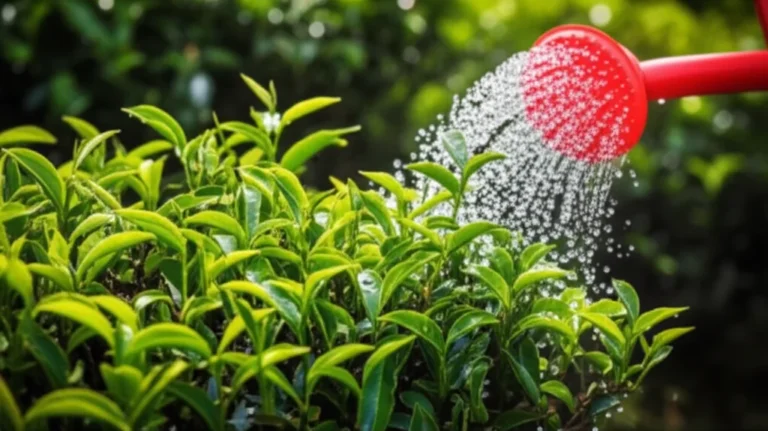
For routine care, aim water at the soil and root zone. A watering can with a gentle rose, a drip line, or a soaker hose helps deliver moisture without blasting soil around.
Overhead watering can be useful for rinsing dust from foliage, but it is less precise and can leaves wet. Bottom watering a container is another option, not a magic upgrade: set the pot in water only long enough for the mix to draw up moisture, then remove it and let it drain. Leaving the pot standing in water risks saturating the root zone.
🌿 Soil, Drainage, and Mulch for Tea Plant Roots
Good watering starts before you pick up the hose. Soil that holds some moisture but drains excess water makes the job far easier.
Ideal Soil Moisture and Drainage
Tea is a camellia, and camellias generally prefer acidic, moisture-retentive, well-drained soil. The RHS camellia growing guide is a helpful reference for the genus, while the University of Hawaiʻi tea guide addresses tea cultivation specifically.
Before planting, check how quickly water drains from your site. In a container, use an acidic, free-draining mix intended for ericaceous plants or camellias, and make sure drainage holes remain open. Avoid compacted soil and pots without drainage.
If the mix dries too quickly, improve its moisture-holding capacity with suitable organic matter or choose a larger container. If it stays sogy, fix drainage or repot into an airier medium instead of watering less and hoping for a miracle.
Choosing Mulch to Reduce Water Loss
A layer of organic mulch can slow evaporation and help moderate soil temperature. Apply it over the root zone, but keep it away from the stem so moisture does not remain piled against the plant’s base.
Mulch is a moisture buffer, not a substitute for checking soil. Under a mulch layer, the surface may look dry while the soil beneath remains moist. Lift the mulch and check the actual root zone before watering.
☀️ Watering Tea Plants in Different Growing Setups
The same tea shrub can have very different watering needs in a sheltered bed, a sunny patio pot, or a heated room. Location changes the rules; the moisture check stays useful.
Tea Plants in Garden Beds
Water newly planted tea more attentively than established shrubs. Check the rootball and nearby soil, especially during dry weather. Once established, water deeply during prolonged dry spells rather than giving frequent, shallow sprinkles that only wet the surface.
Rainfall, soil texture, slope, and nearby trees all matter. A tea plant under a broad eave or beside thirsty roots may need water even when the rest of the garden looks fine.
Tea Plants in Containers
Container-grown tea is easier to move and often easier to manage, but its limited soil volume dries faster than a garden bed. Check it frequently in summer and after hot, windy days.
- Choose a pot with working drainage holes.
- Don’t let the pot sit in runoff.
- Water the whole rootball, not one small patch.
- If water streams through without weting the mix, rehydrate gradually.
- Consider pot material: porous terracotta generally dries faster than plastic or glazed ceramic.
A larger pot can reduce rapid drying, but oversized containers filled with dense, wet mix can create a different problem: roots sitting in excess moisture. Pot size and drainage should work together.
Indoor Tea Plants and Greenhouse Growing
Indors, warmth from heating, sunny windows, and air movement can dry pots faster than expected. In a cool room, a large container may stay wet for a long time. Greenhouse humidity may slow evaporation, while strong light and ventilation can increase it.
Check the mix at root depth and use pot weight as a quick comparison. Don’t water an indoor plant simply because it hasn’t rained; its soil still follows its own schedule.
🌧️ Rainfall, Irrigation, and Water Quality
Watering tools can save time, but the best system is the one that wets the root zone without keeping it saturated.
When Rain Counts as a Thorough Watering
Rain counts when it reaches the roots. A short shower may dampen leaves and mulch while leaving the soil beneath dry. After significant rain, check below the surface before deciding the plant is set for the week.
In containers, a sheltered position can block rainfall entirely. Conversely, a pot left in a storm may become saturated, so check that it drains and empty its saucer.
Drip Irrigation, Soaker Hoses, and Hand Watering
| Method | Benefits | Watch-outs |
|---|---|---|
| Hand watering | Easy to adjust and inspect as you go | Can miss deep moisture if applied too quickly |
| Drip irrigation | Directs water toward roots and can be automated | Emiters can clog or deliver unevenly |
| Soaker hose | Waters a bed gradually along its length | Coverage depends on hose placement and soil |
| Bottom watering | Can wet container mix without splashing foliage | Easy to leave pots soaking too long |
Whichever method you use, test the result. An irrigation timer knows how long it ran; it does not know whether roots are wet.
Tap Water, Rainwater, and Soil pH
Tea prefers acidic growing conditions, so water quality can matter over the long term. Rainwater is often a convenient option where safe collection is possible. If your tap water is very hard or your soil pH is drifting upward, consult local water data or test the soil before making changes.
Avoid treating every yellow leaf as proof that tap water is the culprit. Drainage, root health, nutrition, and other growing conditions can create similar symptoms. For broader soil-care topics, see Fertilizers for Tea Plants and Organic Farming Techniques.
🍃 Watering for Tender Shots and a Healthy Tea Harvest
Healthy moisture supports steady growth, but more water does not automatically mean more harvest. The aim is vigorous, balanced growth, not constantly wet roots or a shrub pushed into stress.
When fresh shoots are developing, check moisture consistently and avoid letting the root zone swing from very dry to saturated. A stable routine helps the plant keep growing, while careful harvesting gives it room to recover. For timing and picking technique, follow our guide to when and how to harvest tea leaves. Explore our Green Tea Cultivation articles for more growing advice.
⚠️ Overwatering and Underwatering: Symptoms and Fixes
Both problems can make leaves drop, which is why adding water on sight alone can backfire. Check soil first, then act.
| Clue | More likely issue | First response |
|---|---|---|
| Dry soil and droping leaves | Underwatering | Water slowly and thoroughly |
| Wet soil and droping leaves | Overwatering or poor drainage | Pause watering; check drainage |
| Water sitting in a saucer | Excess runoff or poor drainage | Empty saucer and inspect pot holes |
| Soil pulls away from pot edges | Severely dry poting mix | Rewet in stages and check the centre |
| Persistent yellowing with wet mix | Root-zone stress is possible | Improve drainage and inspect roots if safe |
Recognizing Root Rot and Waterlogged Soil
Warning signs include soil that stays wet for too long, a sour smell, declining growth, or dark, soft roots. These symptoms can have other causes, so inspect carefully rather than assuming every yellow leaf means rot.
If the pot is waterlogged:
- Stop watering until the mix begins to dry.
- Empty standing water and clear blocked drainage holes.
- Move the pot somewhere bright and sheltered, not into harsh heat as a quick “drying” fix.
- If the mix remains saturated or roots appear damaged, remove the plant carefully and assess the rootball.
- Repot into a suitable, free-draining acidic mix if needed.
Helping a Drought-Stressed Tea Plant Recover
For dry soil, water slowly so the rootball has time to absorb it. If water races down the gap between the soil and pot, apply a little at a time, pause, then repeat. Avoid compensating with constant tiny splashes; aim to moisten the root zone evenly.
After watering, shade a severely stressed container from the hottest afternoon sun temporarily and check moisture again. Don’t fertilize a badly drought-stressed plant straight away. Stabilize water and roots first; fertilizer cannot replace hydration. Our Fertilizers for Tea Plants resources can help you assess feeding once the plant has recovered.
🔧 A Simple Weekly Tea Plant Watering Routine
Think of this as a weekly inspection routine, not a weekly watering order:
- Check the weather. Note heat, wind, rain, and changes in exposure.
- Inspect the soil. Check beneath the surface near the root zone; don’t rely on the top alone.
- Lift the pot, if applicable. Compare its weight with how it feels after a thorough watering.
- Look at the leaves. Treat drop or discoloration as clues, then verify them against soil moisture.
- Water deeply if the root zone is beginning to dry. Apply water slowly and evenly.
- Check drainage. Confirm excess water can escape and empty any saucer.
- Record what happened. A simple note—date, weather, soil condition, and response—will reveal your plant’s pattern faster than guesswork.
The first video’s central lesson is worth keeping: plant size, pot size, roots, light, temperature, humidity, and location all affect water use. Build your own record, and your tea plant’s routine becomes much less mysterious.
✅ Quick Watering Tips for Better Tea Plant Growth
- Check moisture before watering.
- Water thoroughly, then let excess drain away.
- Pay extra attention to young plants and outdoor pots during heat.
- Don’t confuse wet leaves with wet roots.
- Keep the soil moist but not saturated.
- Use drainage holes, and never leave a container standing in water.
- Adjust your routine when seasons, weather, or location change.
- Use leaf symptoms as clues—not as a replacement for checking soil.
- For more growing and care advice, visit Green Tea Cultivation, Organic Farming Techniques, and Health Benefits of Tea.