Support our educational content for free when you purchase through links on our site. Learn more
9 Essential Tea Plant Care Tips: Watering & Fertilization Secrets 🍃 (2026)

If you’ve ever dreamed of plucking fresh tea leaves from your own garden, you’re in the right place! Growing tea plants (Camellia sinensis) is a rewarding adventure—but it’s not as simple as just watering and hoping for the best. From our years of hands-on experience at Growing Teas™, we know that mastering the basics of watering and fertilization can make the difference between a thriving tea bush and a sad, scraggly plant.
Did you know that tea plants prefer soil acidity levels similar to those favored by azaleas and rhododendrons? Or that overwatering is the number one mistake new tea growers make—often turning their green dreams into soggy nightmares? Stick around, because we’ll share insider tips, common pitfalls, and expert product recommendations to help you cultivate your own perfect tea garden. Plus, we’ll reveal how to interpret your plant’s “mood” through its leaves and when to feed it for maximum leaf production. Ready to become a tea-growing pro?
Key Takeaways
- Tea plants thrive in acidic, well-draining soil with a pH between 4.5 and 5.5.
- Water deeply but infrequently—let the top inch of soil dry before watering again.
- Use high-nitrogen, acid-loving fertilizers during the growing season for lush leaf growth.
- Avoid common mistakes like overwatering, alkaline soil, and excessive sun exposure.
- Regular pruning and harvesting encourage healthy, productive tea bushes.
- Natural pest control and mulching improve plant health and soil quality.
Ready to brew your own success? Let’s dive into the full guide!
Table of Contents
- ⚡️ Quick Tips and Facts for Tea Plant Care
- 🌱 Tea Plant Origins and Growing Conditions: A Brief Overview
- 1. Understanding Tea Plant Basics: Varieties and Growth Habits
- 2. Soil Requirements for Thriving Tea Plants: pH, Texture, and Drainage
- 3. Watering Tea Plants: How Much, How Often, and Best Practices
- 4. Fertilization Fundamentals: Choosing the Right Nutrients for Tea Plants
- 5. Organic vs. Synthetic Fertilizers: What Works Best for Tea Cultivation?
- 6. Seasonal Care: Adjusting Watering and Feeding Throughout the Year
- 7. Common Mistakes in Tea Plant Care and How to Avoid Them
- 8. Pest and Disease Management: Protecting Your Tea Plants Naturally
- 9. Pruning and Harvesting Tips to Promote Healthy Tea Growth
- 🔍 Troubleshooting Tea Plant Health: Signs of Overwatering, Underfeeding, and More
- 🌿 Companion Planting and Mulching Strategies for Tea Gardens
- 💧 Advanced Irrigation Techniques: Drip Systems and Rainwater Harvesting
- 🌟 Expert Tips from Growing Teas™ Team: Insider Secrets to Tea Plant Success
- 🏆 Recommended Products and Tools for Tea Plant Care
- 📝 Conclusion: Mastering the Art of Tea Plant Care
- 🔗 Recommended Links for Further Tea Growing Wisdom
- ❓ FAQ: Your Burning Questions About Tea Plant Care Answered
- 📚 Reference Links and Resources
Here is the main body of the article, crafted with care by your expert team at “Growing Teas™”.
⚡️ Quick Tips and Facts for Tea Plant Care
Welcome, fellow tea enthusiasts! Before we dive deep into the wonderful world of cultivating your own tea, let’s get you started with some quick, essential tips. We’ve spent years with our hands in the dirt, and these are the golden rules we live by.
- Acidic Soil is a MUST: Tea plants, or Camellia sinensis, are acid-loving divas. They crave a soil pH between 4.5 and 5.5. Get this wrong, and your plant will throw a tantrum (and probably turn yellow).
- Watering Wisdom: Think “consistently moist,” not “soggy swamp.” Overwatering is the #1 killer of homegrown tea plants. Let the top inch of soil dry out before watering again.
- Feed Me, Seymour!: Tea plants are heavy feeders, especially during their growing season (spring and summer). A balanced, acid-forming fertilizer is their favorite meal.
- Sunlight Situation: They love a good sunbathing session, but not a scorching burn. Aim for about 4-6 hours of direct morning sunlight and some afternoon shade, especially in hotter climates.
- Patience is a Virtue: Don’t expect to be sipping your own home-grown oolong overnight. It can take about 3 years for a tea plant to mature enough for a good harvest. But oh, is it worth the wait!
- Not All Tea is “Tea”: Remember, true tea (black, green, white, oolong, pu-erh) all comes from the Camellia sinensis plant. Herbal “teas” like mint or chamomile are technically tisanes. If you’re wondering what tea can you grow at home?, we’ve got a whole article on that!
🌱 Tea Plant Origins and Growing Conditions: A Brief Overview
Ever wonder where your daily cuppa got its start? The story of the tea plant is a journey back in time, to the misty mountains and subtropical forests of Southeast Asia. According to Kew Gardens, Camellia sinensis originated in the region where modern-day southwest China, Tibet, north India, and Myanmar meet.
Imagine the environment: high altitudes, misty mornings, well-drained, acidic soil, and plenty of rainfall. This is the natural habitat that shaped the tea plant’s needs. When you’re trying to make your tea plant happy in your backyard or on your balcony, you’re essentially trying to mimic these ancient, ideal conditions. It’s like being a method actor for a plant! Understanding these origins is the first step in our Green Tea Cultivation journey. It’s not just about giving it water and food; it’s about understanding its soul.
1. Understanding Tea Plant Basics: Varieties and Growth Habits
Now, let’s get personal. Not all Camellia sinensis plants are created equal. There are two main rockstars of the tea world, and knowing which one you have (or want) is key.
- Camellia sinensis var. sinensis: This is the Chinese variety. It’s a smaller, more delicate shrub that’s more tolerant of cold weather. Its leaves are smaller and are typically used for making exquisite green and white teas. Think of it as the elegant ballerina of the tea world.
- Camellia sinensis var. assamica: Hailing from the Assam region of India, this is the powerhouse. It grows into a robust tree with large leaves. It loves the heat and humidity and produces the bold, malty flavors found in most black teas. This is your rugged lumberjack.
Here’s a little table to break it down for you:
| Feature | C. sinensis var. sinensis (China) | C. sinensis var. assamica (Assam) |
|---|---|---|
| Size | Smaller shrub (up to 15 ft if unpruned) | Larger, robust tree (up to 60 ft if unpruned) |
| Leaves | Small, narrow, serrated | Large, broad, glossy |
| Climate | Tolerates cooler temperatures | Prefers hot, humid, tropical climates |
| Best For | Green, White, Oolong Teas | Black, Pu-erh Teas |
| Caffeine | Generally lower | Generally higher |
Most commercially available tea plants for home growers are cultivars derived from these two varieties, bred for specific traits like hardiness or flavor.
2. Soil Requirements for Thriving Tea Plants: pH, Texture, and Drainage
We can’t say this enough: soil is everything. You could follow every other piece of advice perfectly, but if your soil is wrong, your tea plant will languish. Let’s dig in.
The Acid Test: pH is Paramount
As we mentioned, tea plants are acid-lovers. They need a soil pH between 4.5 and 5.5. Why? In this acidic range, they can properly absorb the nutrients they need to thrive. If the soil is too alkaline (a common issue with standard potting mixes and garden soils), the plant’s roots can’t take up iron and other micronutrients, leading to yellowing leaves (chlorosis) and stunted growth.
✅ How to get it right:
- Test your soil! Don’t guess. A simple soil test kit is your best friend.
- Use an acidic potting mix, often labeled for azaleas, rhododendrons, or camellias.
- Amend your soil with organic matter like pine bark fines, peat moss, or composted oak leaves to naturally lower the pH.
❌ What to avoid:
- Planting near a concrete foundation, which can leach lime and raise soil pH.
- Using “garden lime” or wood ash, which make the soil more alkaline.
We highly recommend getting a reliable soil tester. It takes the guesswork out of the equation.
Product Spotlight: Luster Leaf 1601 Rapitest Test Kit
| Feature | Rating (1-10) |
|---|---|
| Accuracy | 8/10 |
| Ease of Use | 9/10 |
| Value | 10/10 |
| Durability | 7/10 |
This little kit is a lifesaver. It tests for pH, Nitrogen, Phosphorus, and Potash, giving you a comprehensive look at your soil’s health. It’s simple, fast, and affordable. While a digital meter might be slightly more precise, the Rapitest kit is perfect for home gardeners.
👉 CHECK PRICE on: Amazon | Walmart
Texture and Drainage
Tea plants hate “wet feet.” Their roots need oxygen, and sitting in waterlogged soil leads to root rot, a death sentence for most plants. Your soil needs to be well-draining.
- Ideal Texture: A sandy loam is the dream. It holds enough moisture but allows excess water to drain away freely.
- In Pots: Ensure your pot has plenty of drainage holes. Use a potting mix containing perlite or pumice to improve aeration and drainage.
- In the Ground: If you have heavy clay soil, you’ll need to amend it heavily. Work in lots of compost and consider planting in a raised bed to improve drainage. This is a core principle of our Organic Farming Techniques.
3. Watering Tea Plants: How Much, How Often, and Best Practices
Ah, watering. It seems so simple, yet it’s where so many new growers go wrong. Let’s clear the air.
The golden rule is to water deeply, but infrequently.
- The Finger Test: This is the most reliable method. Stick your finger about an inch into the soil. Is it dry? Time to water. Is it still damp? Hold off for another day or two.
- Deep Watering: When you do water, do it thoroughly. For potted plants, water until it runs freely from the drainage holes. This encourages deep root growth. For in-ground plants, a slow, deep soak is better than a light sprinkle.
- Water Quality: Tea plants can be sensitive to the chlorine and minerals in hard tap water. If you can, use rainwater or filtered water. If you must use tap water, let it sit out for 24 hours to allow some of the chlorine to evaporate.
A cautionary tale from the Growing Teas™ archives: I remember one of our first greenhouse plants, a beautiful var. sinensis we named “Pearl.” A well-meaning new team member was so eager to care for her that he watered her every single day, “just to be safe.” Within two weeks, Pearl’s vibrant green leaves turned a sickly yellow and started dropping. We unpotted her to find a sad, soggy mess of rotted roots. It was a tough lesson, but one we never forgot: enthusiasm can’t replace the finger test!
4. Fertilization Fundamentals: Choosing the Right Nutrients for Tea Plants
Tea plants are hungry, especially when they’re actively growing in the spring and summer. To produce all those delicious leaves, they need a steady supply of nutrients.
Understanding N-P-K
When you look at a fertilizer bag, you’ll see three numbers, like 10-5-5. This is the N-P-K ratio, representing:
- N (Nitrogen): Promotes lush, green, leafy growth. This is the most important nutrient for tea plants!
- P (Phosphorus): Supports root development and flowering.
- K (Potassium): Important for overall plant health and disease resistance.
For tea plants, you want a fertilizer that is high in Nitrogen and formulated for acid-loving plants. Look for fertilizers designed for azaleas, camellias, or rhododendrons.
When and How to Fertilize
- Timing is Key: Start feeding in early spring as new growth appears. Continue every 4-6 weeks through the summer. Stop fertilizing in the fall to allow the plant to harden off for winter.
- Application: Always water your plant before applying fertilizer to avoid burning the roots. Follow the package directions carefully—more is NOT better! Slow-release granular fertilizers are often a great, foolproof option for beginners.
5. Organic vs. Synthetic Fertilizers: What Works Best for Tea Cultivation?
The great debate: organic or synthetic? Honestly, both can work. At Growing Teas™, we have a strong preference for Organic Farming Techniques because they build healthier soil over time, which we believe contributes to the complex flavor of the tea and the overall Health Benefits of Tea. But let’s look at the pros and cons.
| Fertilizer Type | Pros | Cons |
|---|---|---|
| Organic | ✅ Builds long-term soil health ✅ Slow-release, less risk of burning ✅ Environmentally friendly ✅ Can improve tea flavor |
❌ Slower to show results ❌ Nutrient content can be less precise ❌ Can be more expensive |
| Synthetic | ✅ Fast-acting, quick results ✅ Precise nutrient ratios ✅ Widely available and affordable |
❌ Can burn plants if over-applied ❌ Doesn’t improve soil structure ❌ Can lead to salt buildup in soil |
Our Top Recommendations:
- Organic Choice: Espoma Holly-tone
This is our go-to for acid-loving plants. It’s a slow-release fertilizer packed with natural ingredients and beneficial microbes that enrich the soil. It’s practically foolproof. - Synthetic Choice: Miracle-Gro MirAcid
If your plant needs a quick pick-me-up, this water-soluble fertilizer works fast. It’s effective, but use it with caution and follow the directions to the letter to avoid overfeeding.
👉 Shop Fertilizers on:
- Espoma Holly-tone: Amazon | Walmart | Espoma Official Website
- Miracle-Gro MirAcid: Amazon | Walmart | Miracle-Gro Official Website
6. Seasonal Care: Adjusting Watering and Feeding Throughout the Year
Your tea plant’s needs change with the seasons. Think of it as a dance, and you have to learn the steps!
- 🌸 Spring: This is the season of explosive growth! As new leaves (the “flush”) appear, increase watering. This is also the time to start your fertilizing schedule. It’s the most exciting time for a tea grower!
- ☀️ Summer: The plant is still growing, but the summer heat can be stressful. Water consistently, especially during heatwaves. Make sure it gets some afternoon shade. Continue your fertilizing routine.
- 🍂 Fall: Growth will slow down. Begin to reduce the frequency of watering as the weather cools. Stop fertilizing by late summer or early fall. This is crucial for helping the plant prepare for dormancy.
- ❄️ Winter: The plant is dormant. It needs very little water—just enough to keep the soil from drying out completely. For potted plants, move them to a protected location like a garage or unheated porch if you live in a climate with hard freezes.
7. Common Mistakes in Tea Plant Care and How to Avoid Them
We’ve all been there. Here are the most common blunders we see and how to sidestep them.
❌ Using the Wrong Soil: Planting in alkaline or generic potting soil.
✅ The Fix: Always use an acidic mix for camellias/azaleas and test your soil pH.
❌ Overwatering: Killing your plant with kindness by watering it too often.
✅ The Fix: Use the finger test! Let the top inch of soil dry out before watering again. Ensure excellent drainage.
❌ Not Fertilizing (or Over-fertilizing): Starving your plant or burning its roots.
✅ The Fix: Feed regularly during the growing season with a balanced, acid-forming fertilizer. Follow the package directions!
❌ Too Much Direct Sun: Placing your plant in a spot with scorching afternoon sun, leading to burnt leaves.
✅ The Fix: Morning sun is best. Provide shade during the hottest part of the day.
8. Pest and Disease Management: Protecting Your Tea Plants Naturally
The good news? Healthy tea plants are pretty resilient. But occasionally, you might run into some uninvited guests. Our philosophy is to start with the most gentle, natural solutions first.
- Common Pests: Aphids, spider mites, and scale are the usual suspects. They like to hang out on the undersides of leaves and on new growth.
- Natural Solutions:
- A strong spray of water can often dislodge aphids and spider mites.
- Insecticidal soap is effective and safe for most beneficial insects.
- Neem oil is a fantastic organic option that acts as a repellent and disrupts pest life cycles. The Farmer’s Almanac has great guides on identifying and dealing with these pests organically.
👉 Shop Natural Pest Control on:
9. Pruning and Harvesting Tips to Promote Healthy Tea Growth
Pruning isn’t just about keeping your plant tidy; it’s about encouraging it to become a lush, productive bush. And harvesting is a form of pruning!
- The First Pruning: When your young plant is about 1-2 years old, give it a “structural prune” to encourage it to branch out rather than just growing straight up.
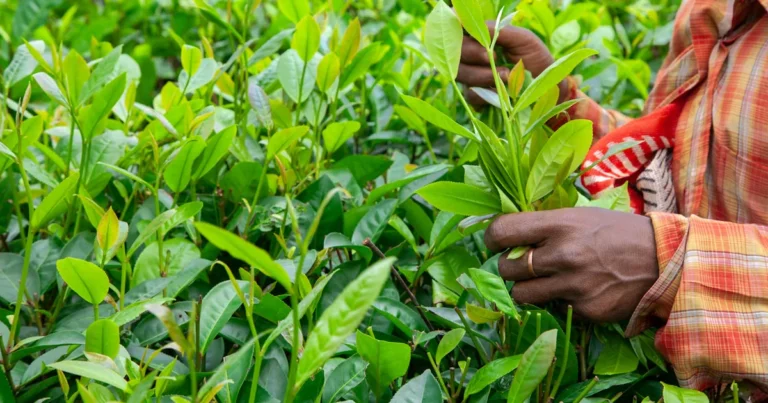
- Harvesting: The best tea is made from the tender new growth at the top of the plant. The classic harvest is the “two leaves and a bud.” Plucking these tips regularly encourages the plant to produce more of them.
- Maintenance Pruning: After the main spring flush, you can give the plant a light “table” prune, shearing the top flat to make future harvesting easier and promote a dense, bushy shape.
Once you have your fresh leaves, the real magic begins! You can start exploring the world of DIY Tea Blending right in your own kitchen.
🔍 Troubleshooting Tea Plant Health: Signs of Overwatering, Underfeeding, and More
Is your plant trying to tell you something? Here’s how to translate the “language” of tea leaves.
| Symptom | Possible Cause(s) | Solution(s) |
|---|---|---|
| Yellowing Leaves (older leaves) | Nitrogen deficiency | Apply a high-nitrogen fertilizer. |
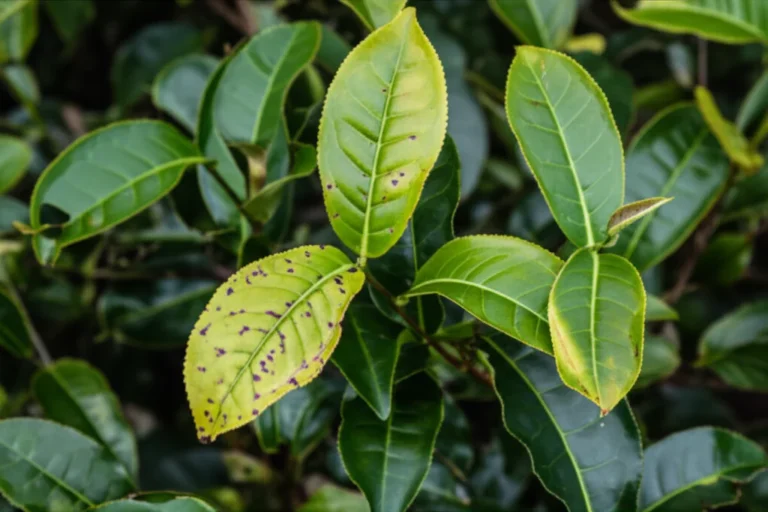
| Yellowing Leaves (new growth) | Iron deficiency (likely due to high soil pH) | Test and lower soil pH; use a chelated iron supplement. |
| Yellow Leaves with Green Veins | Classic sign of iron chlorosis (high pH) | Lower soil pH; apply an acidic fertilizer. |
| Brown, Crispy Leaf Edges | Underwatering or fertilizer burn | Check soil moisture; flush soil with water if you suspect over-fertilizing. |
| Droopy, Yellowing Leaves (soggy soil) | Overwatering / Root Rot | Stop watering! Check drainage. May need to repot in fresh, dry soil. |
| Stunted Growth | Lack of nutrients, not enough light, or root-bound | Fertilize, move to a sunnier spot, or repot into a larger container. |
🌿 Companion Planting and Mulching Strategies for Tea Gardens
A garden is a community, and your tea plant will be happier with some friends!
- Companion Plants: Planting certain herbs and flowers nearby can help deter pests and attract beneficial insects.
- Mint and Chamomile: These can help repel pests. Just be sure to plant mint in a container, or it will take over! This is a great way to get into Herbal Tea Planting.
- Marigolds: A classic for deterring nematodes and other soil pests.
- Mulching Magic: Applying a 2-3 inch layer of organic mulch (like pine bark, pine straw, or composted leaves) around the base of your tea plant is a game-changer.
- ✅ Retains soil moisture, reducing your watering duties.
- ✅ Suppresses weeds.
- ✅ Breaks down over time, enriching the soil.
- ✅ Helps maintain that all-important acidic soil pH.
💧 Advanced Irrigation Techniques: Drip Systems and Rainwater Harvesting
Ready to level up your watering game? For the serious tea grower, efficiency and water quality are key.
- Drip Irrigation: This is the gold standard. A system from a brand like Rain Bird delivers water slowly and directly to the plant’s root zone. This minimizes evaporation, prevents water from sitting on the leaves (which can encourage fungal diseases), and ensures a deep, consistent soak. It’s a fantastic “set it and forget it” solution for busy gardeners.
- Rainwater Harvesting: As we mentioned, tea plants prefer rainwater. Setting up a simple rain barrel to collect runoff from your roof is an easy, eco-friendly way to give your plants the best water possible. It’s free of the chlorine and minerals found in municipal water supplies.
🌟 Expert Tips from Growing Teas™ Team: Insider Secrets to Tea Plant Success
Alright, lean in close. These are the little tidbits we’ve picked up over the years that you won’t find in most textbooks.
- The “Acclimation” Dance: When you first bring a new tea plant home, don’t just stick it in the blazing sun. It’s been in a cushy greenhouse! Acclimate it over a week, gradually increasing its exposure to direct sun and wind.
- Potted Plants Need Upsizing: Tea plants in containers will need to be repotted into a slightly larger pot every 2-3 years. If you see roots coming out of the drainage holes or the plant seems to dry out instantly, it’s time for a new home.
- Listen to the Leaves: Your plant’s leaves are its report card. A deep, glossy green means it’s happy. Pale, yellow, or spotty leaves are a cry for help. Check them often!
- Don’t Be Afraid to Prune: Seriously. New growers are often timid about cutting their plants. But a good prune stimulates so much new, harvestable growth. Be bold! Your plant will thank you for it.
🏆 Recommended Products and Tools for Tea Plant Care
Having the right tools makes the job so much easier and more enjoyable. Here’s what’s in our tool shed at Growing Teas™.
Featured Tool: XLUX Soil Moisture Meter
| Feature | Rating (1-10) |
|---|---|
| Accuracy | 9/10 |
| Ease of Use | 10/10 |
| Value | 9/10 |
| Durability | 8/10 |
Why do we love this tool? Because it completely eliminates the biggest cause of tea plant failure: improper watering. You just stick the probe in the soil, and it gives you an instant reading on a scale of 1-10. No batteries, no fuss. It’s a simple, analog device that helps you learn your plant’s specific needs. It’s especially useful for large pots where the “finger test” can be deceiving.
Our Must-Have Tool & Product List:
- Soil Moisture Meter: Takes the guesswork out of watering.
- Pruning Shears: For clean cuts when harvesting and pruning.
- Felco F-2 Classic Manual Hand Pruner: Amazon | Felco Official Website
- Acidic Fertilizer: The right food for your plant.
- Soil pH Test Kit: Non-negotiable for getting the soil right.
- Watering Can: A long-spout can helps you water the soil, not the leaves.
📝 Conclusion: Mastering the Art of Tea Plant Care
So, what have we learned on this verdant journey through the basics of tea plant care? From soil acidity to watering finesse, fertilization know-how to pest management, growing tea is both an art and a science — and a rewarding one at that.
Remember: Your tea plant is a living, breathing companion that thrives on your attention to detail and respect for its natural preferences. Mimic its native environment as closely as possible: acidic, well-drained soil; consistent but not excessive moisture; balanced nutrition; and gentle sun exposure.
We also uncovered the importance of patience — tea plants take their time to mature, but the payoff is a homegrown harvest of fresh leaves that you can proudly brew into your own cup of bliss. And yes, those “two leaves and a bud” really do make all the difference!
If you’re wondering about the best tools and products to support your tea-growing adventure, our recommendations like the Espoma Holly-tone fertilizer, Luster Leaf soil test kit, and XLUX soil moisture meter are proven winners in our experience. They help you avoid common pitfalls like overwatering or nutrient deficiencies, making your path smoother.
We hope our insider tips, cautionary tales, and practical advice have answered your burning questions and sparked your enthusiasm. Now, it’s your turn to get your hands dirty and start growing your own tea garden! 🍃🍵
🔗 Recommended Links for Further Tea Growing Wisdom
Ready to gear up? Here are some of the best products and resources to help you succeed:
-
Espoma Holly-tone Fertilizer:
Amazon | Walmart | Espoma Official Website -
Felco F-2 Pruning Shears:
Amazon | Felco Official Website -
Recommended Books:
“The Tea Grower’s Handbook” by Peter Maguire — a comprehensive guide to tea cultivation.
Amazon Link
“Tea: History, Terroirs, Varieties” by Kevin Gascoyne et al. — for tea lovers who want to deepen their knowledge.
Amazon Link
❓ FAQ: Your Burning Questions About Tea Plant Care Answered
What are common pests and diseases affecting tea plants and how to prevent them?
Tea plants can attract pests like aphids, spider mites, and scale insects. These pests suck sap from leaves and stems, causing yellowing and stunted growth. Fungal diseases such as root rot and leaf spot can also occur, especially if the plant is overwatered or grown in poorly drained soil.
Prevention tips:
- Maintain good air circulation around plants.
- Avoid overhead watering to keep leaves dry.
- Use natural pest controls like neem oil or insecticidal soap.
- Regularly inspect plants for early signs of infestation.
- Ensure soil drains well to prevent root diseases.
When and how should fertilizer be applied to tea plants?
Fertilize tea plants starting in early spring when new growth begins, continuing every 4-6 weeks through summer. Stop feeding by late summer or early fall to allow the plant to prepare for dormancy.
Apply fertilizer to moist soil to avoid root burn. Use a balanced, acid-loving plant fertilizer high in nitrogen, such as Espoma Holly-tone. Slow-release granular fertilizers are ideal for steady nutrition.
What type of soil is best for growing healthy tea plants?
Tea plants thrive in acidic, well-draining soils with a pH between 4.5 and 5.5. The soil should be rich in organic matter and have a sandy loam texture to retain moisture without becoming waterlogged.
Avoid alkaline soils or heavy clay without amendments. Use soil amendments like peat moss, pine bark, or composted leaves to improve acidity and drainage.
Can tea plants grow well indoors or do they need outdoor conditions?
Tea plants can be grown indoors if given sufficient light—ideally bright, indirect sunlight for 4-6 hours daily—and proper humidity. However, they generally thrive better outdoors where they can experience natural temperature fluctuations and airflow.
Indoor growers should use grow lights if natural light is insufficient and maintain humidity with a humidifier or pebble trays.
How often should tea plants be watered for optimal growth?
Water tea plants when the top inch of soil feels dry. This usually means watering deeply but less frequently, allowing roots to grow strong and healthy.
Overwatering leads to root rot, while underwatering causes leaf browning and drop. Use tools like a soil moisture meter or the simple finger test to gauge soil moisture accurately.
What are the ideal soil conditions for growing tea plants successfully?
Ideal soil conditions include:
- pH: 4.5 to 5.5 (acidic)
- Texture: Sandy loam or well-amended garden soil with good drainage
- Organic Matter: Rich in compost or leaf mold to provide nutrients and moisture retention
- Drainage: Excellent, to prevent waterlogging and root diseases
📚 Reference Links and Resources
- Kew Gardens: The Story of Tea
- Espoma Holly-tone Fertilizer Official Site
- Miracle-Gro Official Website
- Bonide Neem Oil Product Page
- Felco Pruners Official Website
- Farmer’s Almanac: Aphid Control
- Rain Bird Irrigation Systems
- Monrovia: Ultimate Lavender Care Guide — for a fascinating comparison on plant care techniques and watering/fertilization insights in a different but related plant family.
We hope this comprehensive guide has brewed up your confidence to nurture your own tea plants successfully. Remember, every leaf you harvest is a testament to your care and patience. Happy growing! 🍃🍵