Support our educational content for free when you purchase through links on our site. Learn more
🌿 7 Deadly Tea Plant Nutrient Deficiencies (2026)

Have you ever stared at your prized Camellia sinensis, watching its vibrant green leaves turn a sickly yellow or develop mysterious brown edges, wondering if you’ve accidentally poisoned your own tea garden? You aren’t alone. At Growing Teas™, we’ve seen more “zombie tea bushes” than we can count, often caused not by a lack of water or sun, but by a silent starvation of essential nutrients. While scientific studies like the one on soil acidification in tea plantations provide the heavy data, the real story happens in your backyard, where a simple pH imbalance can lock away the very food your plant needs to survive.
In this comprehensive guide, we’re ditching the jargon to give you a field-tested diagnosis for every symptom you might see. From the classic “interveinal chlorosis” of Iron deficiency to the “scorched edges” of Potassium starvation, we’ll walk you through exactly what your tea plant is trying to tell you. We’ll even reveal why adding more fertilizer might actually make things worse and share the one simple test that saves thousands of dollars in wasted products. By the end, you’ll know exactly how to turn those sad, yellow leaves back into the lush, flavorful harvest you’re dreaming of.
Key Takeaways
- Diagnosis is Key: Mobile nutrients (Nitrogen, Potassium, Magnesium) show symptoms on older leaves first, while immobile nutrients (Iron, Calcium, Boron) attack the newest growth.
- pH is the Gatekeeper: Even if your soil is full of nutrients, a pH outside the 4.5–5.5 range can lock them away, causing deficiency symptoms regardless of how much you fertilize.
- Don’t Over-Fertilize: Blindly adding nitrogen can lead to bitter tea and root burn; always test your soil before applying any amendments.
- Symptom Matching: Learn to distinguish between pest damage, root rot, and true nutrient deficiencies to avoid treating the wrong problem.
Table of Contents
- ⚡️ Quick Tips and Facts
- 🌱 From Ancient Roots to Modern Roots: A Brief History of Tea Plant Nutrition
- 🔍 The Big Six: Identifying Primary Macronutrient Deficiencies in Camellia sinensis
- 1. Nitrogen (N): The Leafy Green Lifeline
- 2. Phosphorus (P): The Root System Rocket Fuel
- 3. Potassium (K): The Stress-Proof Shield
- 🔬 The Micronutrient Mystery: Spoting Secondary and Trace Element Shortages
- 4. Magnesium (Mg): The Chlorophyll Conductor
- 5. Calcium (Ca): The Cell Wall Architect
- 6. Iron (Fe): The Yellowing Enigma
- 7. Boron (B), Zinc (Zn), and Manganese (Mn): The Tiny Troubleshooters
- 🧪 Soil Science 101: How pH and Acidification Dictate Nutrient Availability
- 🚫 False Alarms: Distinguishing Nutrient Deficiencies from Pests and Diseases
- 🛠️ The Grower’s Toolkit: Diagnosis, Soil Testing, and Foliar Analysis
- 🌿 Organic vs. Synthetic: Choosing the Right Fertilizer Strategy for Your Tea Garden
- 🌍 Global Case Studies: Lessons from Major Tea-Producing Regions
- 💡 Pro Tips and Common Mistakes to Avoid
- 🏁 Conclusion
- 🔗 Recommended Links
- ❓ FAQ: Your Burning Questions About Tea Plant Nutrition Answered
- 📚 Reference Links
⚡️ Quick Tips and Facts
Before we dive into the deep end of soil chemistry and leaf morphology, let’s get the low-hanging fruit (pun intended) out of the way. Here at Growing Teas™, we’ve seen more yellow leaves than autumn forest, and we’ve learned that diagnosis is 90% observation and 10% guessing.
- The Golden Rule of Mobility: If the yellowing starts at the bottom of the plant, it’s likely a mobile nutrient (Nitrogen, Potassium, Magnesium) being stolen by new growth. If the top leaves are the problem, it’s an immobile nutrient (Iron, Calcium, Boron) that the plant can’t move around. 🧠
- pH is King: Tea plants (Camellia sinensis) are acid-lovers, but there’s a fine line! A pH between 4.5 and 5.5 is the sweet spot. Go too low, and Aluminum toxicity kills you; go too high, and Iron deficiency turns your tea into a sad, yellow mess. 📉
- Don’t Blame the Plant: Sometimes, what looks like a nutrient deficiency is actually root rot from overwatering or pest damage from spider mites. Always check the roots first! 🕵️ ♂️
- The “Scorched” Look: If your leaf edges look like they’ve been dipped in fire, you’re likely looking at Potassium deficiency or salt burn from too much fertilizer. 🔥
- Real Data Point: A study in Bangladesh found that healthy tea leaves should contain between 2.95% and 5.18% Nitrogen. Anything below that, and your bush is throwing a tantrum! 📊
For more on how we apply these principles in our own backyard, check out our guide on Growing Teas.
🌱 From Ancient Roots to Modern Roots: A Brief History of Tea Plant Nutrition

Did you know that for thousands of years, tea growers were essentially guessing games masters? In ancient China and India, tea was cultivated in forest clearings where the natural leaf litter provided a slow, steady drip of nutrients. The concept of “fertilizer” as we know it didn’t exist; nature was the only agronomist.
Fast forward to the colonial era, and the game changed. As tea plantations expanded into monocultures, the soil began to scream for help. The “Green Revolution” brought synthetic fertilizers, and suddenly, yields skyrocketed. But with that boom came a new problem: nutrient imbalances.
“Tea requires a lot of macro and micronutrients for growth because it cannot be grown without the usage of fertilizer and other nutrient supplies.” — Agrifood Science Study on Tea Nutrition
We’ve come a long way from just throwing compost on the ground. Today, we understand ecological stoichiometry—the delicate balance of Carbon, Nitrogen, Phosphorus, and Potassium ratios. However, the history of tea nutrition is also a history of soil acidification. Decades of heavy nitrogen fertilization have lowered soil pH in many major tea regions, locking away essential nutrients like Calcium and Magnesium.
Understanding this history helps us realize that deficiency isn’t always a lack of food; sometimes, it’s a locked door caused by the wrong pH key.
🔍 The Big Six: Identifying Primary Macronutrient Deficiencies in Camellia sinensis
When we talk about the “Big Six,” we aren’t referring to a wrestling match. We are talking about the primary macronutrients that your tea plant needs in the largest quantities: Nitrogen (N), Phosphorus (P), Potassium (K), Calcium (Ca), Magnesium (Mg), and Sulfur (S).
Let’s break down the drama of the first three, which are the usual suspects in most deficiency cases.
1. Nitrogen (N): The Leafy Green Lifeline
Nitrogen is the engine of your tea plant. It drives photosynthesis and the production of those tender, flavorful leaves we all crave. Without it, your tea bush looks like it’s seen a ghost.
-
The Symptoms:
Uniform Chlorosis: The entire leaf, especially the older, lower leaves, turns a pale yellow. It’s not just the veins; the whole thing goes beige.
Stunted Growth: New shoots are tiny, sparse, and slow to emerge.
Premature Leaf Drop: The plant, in a panic, sheds its old leaves to save energy for the few new ones it can support. -
The Cause: Often due to heavy harvesting (you take the leaves, the plant loses the nitrogen), leaching from heavy rains, or simply not replenishing the soil.
-
The Fix: A balanced nitrogen fertilizer organic alternatives like blood meal. But be careful! Too much nitrogen makes the tea taste bitter and reduces the polyphenol content.
2. Phosphorus (P): The Root System Rocket Fuel
Phosphorus is the architect of the root system and the energy currency (ATP) of the plant. If Nitrogen is the engine, Phosphorus is the fuel line.
-
The Symptoms:
Purpling: Look for a distinct purple or reddish tint on the leaf margins and undersides, particularly in cooler weather.
Dark Green Leaves: Paradoxically, the leaves might look darker green than usual because the plant is hoarding nitrogen it can’t use without phosphorus.
Root Stunting: The root system becomes weak and shallow, making the plant susceptible to drought. -
The Cause: Phosphorus is notoriously immobile in the soil. If your soil is too cold, too acidic, or has high levels of iron/aluminum, the phosphorus gets “locked up” and becomes unavailable.
-
The Fix: Bone meal, rock phosphate, or a balanced NPK fertilizer. Ensure your soil pH is in the optimal range to unlock the phosphorus.
3. Potassium (K): The Stress-Proof Shield
Potassium is the bodyguard. It regulates water, opens and closes stomata, and helps the plant fight off pests and diseases.
-
The Symptoms:
Marginal Necrosis: The edges of the older leaves turn brown and crispy, looking like they’ve been scorched by a blowtorch.
Yellowing: A yellow halo often appears around the brown edges.
Weak Stems: The plant becomes floppy and prone to lodging (falling over). -
The Cause: Heavy leaching in sandy soils or excessive harvesting. Potassium is highly mobile, so the plant moves it from old leaves to new ones, leaving the old ones to die.
-
The Fix: Potash, wood ash (use sparingly as it raises pH), or kelp meal.
🔬 The Micronutrient Mystery: Spoting Secondary and Trace Element Shortages
While the Big Six get the glory, the micronutrients are the unsung heroes. A deficiency here can be subtle, confusing, and devastating.
4. Magnesium (Mg): The Chlorophyll Conductor
Magnesium is the centerpiece of the chlorophyll molecule. Without it, photosynthesis stops.
-
The Symptoms:
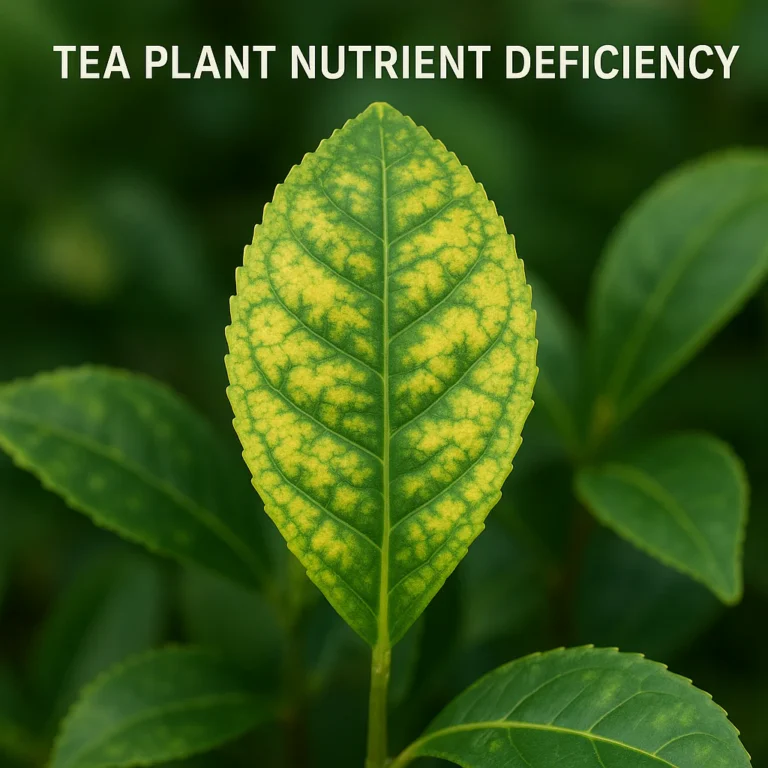
Interveinal Chlorosis: This is the classic sign. The veins stay green, but the tissue between them turns bright yellow. It looks like a green spiderweb on a yellow background.
Location: Starts on older leaves first (because Mg is mobile).
Necrosis: If ignored, the yellow areas turn brown and die. -
The Cause: Acidic soils often lack Magnesium, or high levels of Potassium can “block” Magnesium uptake (antagonism).
-
The Fix: Epsom salts (Magnesium Sulfate) applied as a foliar spray or soil drench.
5. Calcium (Ca): The Cell Wall Architect
Calcium builds the walls of the plant cells. It’s crucial for structural integrity.
-
The Symptoms:
Distorted New Growth: Since Calcium is immobile, the symptoms show up on the youngest leaves and growing tips.
Hooked Leaves: New leaves may curl up or look twisted.
Tip Burn: The tips of new leaves turn brown and die. -
The Cause: Often not a lack of Calcium in the soil, but a watering issue. Calcium moves with water; if the plant isn’t transpiring (due to drought or high humidity), Calcium can’t reach the new leaves.
-
The Fix: Consistent watering and, if necessary, a calcium supplement like gypsum (which doesn’t alter pH).
6. Iron (Fe): The Yellowing Enigma
Iron is essential for chlorophyll synthesis, but unlike Magnesium, it’s immobile.
-
The Symptoms:
Severe Interveinal Chlorosis: Similar to Magnesium, but the yellowing is much brighter, almost white, and strictly on the newest leaves.
Green Veins: The veins remain a deep, dark green, creating a high-contrast pattern.
Stunted Growth: The plant stops producing new shoots. -
The Cause: High pH is the #1 culprit. In alkaline soils, Iron precipitates and becomes unavailable. It can also be caused by waterlogging.
-
The Fix: Lower the soil pH with sulfur or use chelated iron (Fe-EDTA) which is available even in slightly higher pH soils.
7. Boron (B), Zinc (Zn), and Manganese (Mn): The Tiny Troubleshooters
- Boron: Essential for cell division. Deficiency causes britle, distorted new leaves and “die-back” of growing tips.
- Zinc: Deficiency leads to rosetting (leaves clustered tightly together) and small, narrow leaves. Common in high-pH soils.
- Manganese: Causes interveinal chlorosis on newer leaves, but the yellowing is less intense than Iron deficiency, and the veins are less distinct.
🧪 Soil Science 101: How pH and Acidification Dictate Nutrient Availability
Here is the plot twist you’ve been waiting for: Your soil might be full of nutrients, but your plant can’t eat them.
This is the concept of nutrient availability. Think of nutrients as food in a locked fridge. If the pH is wrong, the fridge is locked, and the plant starves.
- The pH Scale: Tea plants thrive in acidic soils (pH 4.5–5.5).
Below 4.0: Aluminum and Manganese become toxic.
Above 6.0: Iron, Zinc, Copper, and Boron become unavailable.
The Sweet Spot: At pH 5.0, almost all nutrients are accessible.
Pro Tip: A study on soil acidification in tea plantations highlights that long-term nitrogen fertilization can drop pH levels, leading to a loss of base cations like Calcium and Magnesium. This creates a vicious cycle where the soil becomes more acidic, locking up the very nutrients the plant needs to survive.
The Aluminum Paradox: Tea plants are unique because they love Aluminum. In fact, they accumulate it in their leaves. However, if the soil is too acidic, Aluminum can become toxic to the roots, inhibiting the uptake of other nutrients. It’s a delicate dance!
🚫 False Alarms: Distinguishing Nutrient Deficiencies from Pests and Diseases
Not every yellow leaf is a hungry plant. Sometimes, it’s a bug party or a fungal infection.
| Symptom | Likely Cause | How to Tell the Difference |
|---|---|---|
| Yellowing with spots | Pests (Spider Mites, Thrips) | Check the undersides of leaves for tiny moving dots or webing. Nutrient deficiency is usually uniform. |
| Yellowing with holes | Insect Damage | Physical holes mean bugs. Nutrient issues don’t eat holes. |
| Wilting + Yellowing | Root Rot / Fungal Disease | If the plant wilts despite wet soil, check the roots. They should be white/tan, not black/mushy. |
| Interveinal Chlorosis | Iron/Magnesium Deficiency | Check the age of the leaf. New = Iron; Old = Magnesium. |
| Curling + Stipling | Aphids / Mites | Sticky residue (honeydew) or webing indicates pests. |
Real Story: We once had a client who was frantically adding Iron to his tea bushes because of yellow leaves. It turned out he had a severe spider mite infestation. The mites were sucking the chlorophyll out, mimicking an Iron deficiency. Once he treated the mites, the leaves turned green again. Don’t guess; test!
🛠️ The Grower’s Toolkit: Diagnosis, Soil Testing, and Foliar Analysis
How do we, at Growing Teas™, solve these mysteries? We don’t rely on guesswork. We use a three-pronged approach:
- Visual Inspection: The first step. Look at the pattern (old vs. new leaves) and the specific symptoms (yellowing, purpling, necrosis).
- Soil Testing: This tells us what’s in the soil. We recommend sending a sample to a lab like Logan Labs or Waypoint Analytical. They will give you a detailed report on pH, N-P-K, and micronutrients.
Action: Test your soil every 1-2 years. - Foliar (Leaf) Analysis: This tells us what the plant has actually absorbed. Even if the soil has nutrients, the plant might not be taking them up. This is crucial for confirming a deficiency.
Step-by-Step Diagnosis:
- Step 1: Identify the affected leaves (Old vs. New).
- Step 2: Match the symptom to the nutrient chart (see above).
- Step 3: Test soil pH.
- Step 4: If pH is off, adjust it first!
- Step 5: Apply the specific nutrient correction.
🌿 Organic vs. Synthetic: Choosing the Right Fertilizer Strategy for Your Tea Garden
The great debate: Organic or Synthetic?
-
Synthetic Fertilizers:
Pros: Fast-acting, precise ratios, immediate results. Great for correcting acute deficiencies.
Cons: Can burn roots if overused, may lead to soil acidification over time, doesn’t improve soil structure.
Best For: Quick fixes and large-scale commercial operations. -
Organic Fertilizers:
Pros: Improves soil structure, feeds beneficial microbes, slow-release (less risk of burn), sustainable.
Cons: Slower to act, nutrient ratios vary, can be bulky.
Best For: Long-term soil health and home growers.
Our Recommendation: A hybrid approach. Use organic matter (compost, manure) to build the soil foundation, and use synthetic or liquid organic fertilizers for targeted corrections.
Top Brands & Products:
- Espoma Organic Tea & Acid Plant Food: A great organic option for home growers.
- Miracle-Gro All Purpose Plant Food: A reliable synthetic option for quick boosts.
- Dr. Earth Organic 3: Excellent for micronutrients.
👉 CHECK PRICE on:
- Espoma Organic Tea & Acid Plant Food: Amazon | Walmart | Espoma Official
- Miracle-Gro All Purpose Plant Food: Amazon | Walmart | Miracle-Gro Official
🌍 Global Case Studies: Lessons from Major Tea-Producing Regions
What can we learn from the giants?
- Bangladesh (Moulvibazar & Sylhet): A recent study here highlighted that Magnesium and Zinc deficiencies are rampant due to intensive harvesting and leaching. They found that leaf Mg levels often drop below 0.07%, leading to severe interveinal chlorosis. The solution? Regular soil testing and targeted Mg supplementation.
- China (Xishuangbanna): Long-term tea plantations here have suffered from severe soil acidification. Researchers found that replacing 30-50% of chemical fertilizers with organic manure significantly improved soil pH and nutrient availability.
- India (Darjeling): The high altitude and cool temperatures often lead to Phosphorus lock-up. Growers here have found success with foliar sprays of phosphorus during the cool spring flush.
The Takeaway: One size does not fit all. Your local climate, soil type, and tea variety dictate your nutrient strategy.
💡 Pro Tips and Common Mistakes to Avoid
- Mistake #1: Over-fertilizing. More is not better. Excess nitrogen can actually reduce the flavor quality of your tea, making it bitter and astringent.
- Mistake #2: Ignoring pH. You can pour all the Iron in the world on your soil, but if the pH is 7.0, your plant will starve. Test pH first!
- Mistake #3: Using Fresh Manure. Fresh animal waste can burn roots and introduce pathogens. Always use composted manure.
- Mistake #4: Treating Symptoms, Not Causes. If your leaves are yellow because of root rot, adding Nitrogen won’t help. Fix the drainage first.
- Pro Tip: Apply foliar sprays in the early morning or late evening to prevent leaf burn and maximize absorption.
👉 CHECK PRICE on:
🏁 Conclusion

Navigating the world of tea plant nutrient deficiencies can feel like solving a complex puzzle, but with the right tools and knowledge, you can keep your Camellia sinensis thriving. Remember, the key lies in observation, soil testing, and understanding the pH balance.
Whether you’re dealing with the classic yellowing of Nitrogen deficiency or the mysterious interveinal chlorosis of Iron, the solution is rarely just “add more fertilizer.” It’s about creating a balanced ecosystem where your tea plant can access the nutrients it needs.
Final Recommendation: Start with a soil test. If you’re unsure, consult a local extension service or a professional agronomist. And don’t forget, Growing Teas™ is here to help you on your journey to cultivating the perfect cup.
For more on specific cultivation techniques, check out our Green Tea Cultivation and Organic Farming Techniques categories.
🔗 Recommended Links
- Espoma Organic Tea & Acid Plant Food: Amazon | Walmart | Espoma Official
- Miracle-Gro All Purpose Plant Food: Amazon | Walmart | Miracle-Gro Official
- Dr. Earth Organic 3: Amazon | Walmart | Dr. Earth Official
- Logan Labs Soil Testing: Logan Labs
- Waypoint Analytical: Waypoint Analytical
- Book: The Tea Tree: A Guide to Growing and Caring for Camellia sinensis on Amazon
❓ FAQ: Your Burning Questions About Tea Plant Nutrition Answered

What organic fertilizers help correct nutrient deficiencies in tea cultivation?
Organic fertilizers like blood meal (for Nitrogen), bone meal (for Phosphorus), kelp meal (for Potassium and trace minerals), and Epsom salts (for Magnesium) are excellent choices. They release nutrients slowly and improve soil structure.
Read more about “Tea’s Sweet Spot: Ideal Growing Temperatures! 🌿”
How to prevent and treat magnesium deficiency in tea plants?
Prevention involves maintaining a soil pH between 4.5 and 5.5. If deficiency occurs, apply Epsom salts (Magnesium Sulfate) as a foliar spray for quick results or mix it into the soil for a slower release.
Read more about “💧 Water & Feed Tea Plants: The 12-Step Guide (2026)”
What are the symptoms of potassium deficiency in tea bushes?
Look for marginal necrosis (brown, crispy edges) on older leaves, often accompanied by a yellow halo. The plant may also show weak stems and reduced disease resistance.
How can I identify nitrogen deficiency in tea plants?
Nitrogen deficiency presents as uniform yellowing of older leaves, stunted growth, and premature leaf drop. The entire leaf turns pale, not just the veins.
Read more about “🌱 Tea Plant Root Care & Management: 7 Secrets to Thriving Roots (2026)”
Which soil nutrients are essential for healthy tea plants?
The essential nutrients are Nitrogen (N), Phosphorus (P), Potassium (K), Calcium (Ca), Magnesium (Mg), Sulfur (S), and micronutrients like Iron (Fe), Zinc (Zn), Boron (B), and Manganese (Mn).
Read more about “🌧️ Tea Humidity Secrets: The 70% Rule You Can’t Ignore (2026)”
How do nutrient deficiencies affect tea plant growth and yield?
Deficiencies lead to stunted growth, reduced leaf quality, lower yields, and increased susceptibility to pests and diseases. Severe deficiencies can kill the plant.
What organic fertilizers help prevent nutrient deficiencies in tea plants?
Regular application of compost, well-roted manure, and green manure crops helps maintain a balanced nutrient profile and prevents deficiencies.
Read more about “🌱 The Ultimate Tea Plant Fertilization Schedule (2026)”
Can nutrient deficiencies affect the flavor of homegrown tea leaves?
Absolutely! Nitrogen deficiency can make tea taste weak and bland, while excess nitrogen can make it bitter. Balanced nutrition is key to developing the complex flavors of tea.
Read more about “Is It Easy to Grow Your Own Tea? 🌿 The Truth Revealed (2026)”
Which soil nutrients are essential for healthy tea plant cultivation?
(See answer to “Which soil nutrients are essential…”)
Read more about “🌍 How Climate Change Is Rewriting Tea’s Future (2026)”
How to treat magnesium deficiency in tea plants naturally?
Use Epsom salts or dolomitic lime (if pH is also low) to naturally replenish Magnesium. Foliar sprays are effective for immediate correction.
What are the effects of nitrogen deficiency on tea plant growth?
Nitrogen deficiency causes pale yellow leaves, slow growth, and reduced leaf production. It directly impacts the yield and quality of the tea harvest.
Read more about “🌿 Tea Plant Fertilization & Pruning: The 5-Step Guide to Perfect Leaves (2026)”
How can I identify nutrient deficiencies in my tea garden?
Start by observing the pattern of yellowing (old vs. new leaves) and the specific symptoms (interveinal chlorosis, purpling, necrosis). Confirm with a soil test and foliar analysis.
Read more about “🌱 Perfect Tea Soil & Fertilizer Guide (2026)”
What are the common nutrient deficiencies in tea plants?
The most common deficiencies are Nitrogen, Potassium, Magnesium, and Iron, often caused by soil acidification, leaching, or improper fertilization.
Read more about “🌱 10 Best Tea Plant Companions (2024 Guide!)”
📚 Reference Links
- Agrifood Science: Nutritional status and deficiency symptoms of tea plants in Moulvibazar and Sylhet districts of Bangladesh – Read Study
- Soil Copernicus: Status and influential factors of soil nutrients and acidification in tea plantations – Read Article
- Growing Teas™: Green Tea Cultivation
- Growing Teas™: Herbal Tea Planting
- Growing Teas™: Organic Farming Techniques
- Growing Teas™: Health Benefits of Tea
- Growing Teas™: DIY Tea Blending
- Growing Teas™: About Us
- Espoma: Organic Tea & Acid Plant Food
- Miracle-Gro: All Purpose Plant Food
- Dr. Earth: Organic Fertilizers