Support our educational content for free when you purchase through links on our site. Learn more
🌱 The Ultimate Tea Plant Fertilization Schedule (2026)

Ever wonder why your neighbor’s tea bush is a lush, emerald-green machine while yours looks like it’s barely clinging to life? It’s not magic; it’s timing. At Growing Teas™, we’ve seen more tea plants saved from the brink of nutrient starvation (and more accidentally killed by over-enthusiastic feeding) than we can count. The secret isn’t just what you feed your Camellia sinensis, but when you feed it. In this guide, we’re ditching the vague advice and giving you a season-by-season fertilization schedule that covers everything from the ancient art of compost tea to the precise NPK ratios needed for that perfect umami-rich brew. We’ll even reveal the exact moment you must stop feeding to prevent frost damage—a mistake that costs many first-year growers their entire crop. Ready to turn your garden into a tea factory? Let’s dive in.
Key Takeaways
- Nitrogen is King: Tea plants thrive on high-nitrogen fertilizers (look for a 3-1-2 or 4-1-3 ratio) to fuel leaf production, unlike fruit trees that need more phosphorus.
- Acidity Matters: Your soil pH must stay between 5.0 and 6.0; if it’s too high, the plant cannot absorb nutrients, leading to yellow leaves regardless of how much you feed it.
- The “Stop” Date: Cease fertilization by late summer (August/September) to prevent tender new growth from being destroyed by the first frost.
- Organic vs. Synthetic: For the best flavor, choose organic fertilizers that feed the soil microbiome, reserving synthetic options only for emergency nutrient deficiencies.
- Less is More: Over-fertilization is the #1 cause of root burn in tea plants; always start with half-strength doses for new plantings.
Table of Contents
- ⚡️ Quick Tips and Facts
- 🌱 A Brief History of Tea Plant Fertilization: From Ancient Roots to Modern Gardens
- 🤔 To Fertilize or Not to Fertilize? Decoding Your Camellia sinensis Needs
- 🧪 What You Need to Know About Tea Plant Fertilizer Types and NPK Ratios
- 🛒 How to Pick the Perfect Fertilizer for Acid-Loving Tea Shrubs
- 📅 The Ultimate Tea Plant Fertilization Schedule: Season-by-Season Guide
- 1. Spring Awakening: Kickstarting Growth with Nitrogen-Rich Feds
- 2. Summer Sustenance: Maintaining Vigor Without Burning Leaves
- 3. Autumn Prep: Slowing Down for Winter Dormancy
- 4. Winter Rest: Why You Should Stop Feding Now
- 🌿 Fertilizing During the First Year: Strategies for Rich vs. Poor Soil
- 1. The “Rich Soil” Approach: Less is More for New Plantings
- 2. The “Poor Soil” Rescue: Building a Nutrient Foundation
- 🔄 Fertilizing After the First Year: Establishing a Long-Term Routine
- 🚨 Signs That It’s Time to Fertilize: Yellow Leaves, Stunted Growth, and More
- 🐛 Is It Bugs or Soil Problems? Diagnosing Nutrient Deficiencies vs. Pests
- 🍵 Organic vs. Synthetic: Which Fertilizer Method Yields the Best Tasting Tea?
- 💧 The Role of Soil pH and Acidity in Tea Plant Nutrition Uptake
- 🌧️ How Rainfall and Irrigation Affect Your Fertilization Schedule
- 🧂 Common Fertilizer Mistakes That Kill Tea Plants (And How to Avoid Them)
- 📊 Quick Reference: Fertilizer Application Rates by Plant Age and Size
- 🏆 Conclusion
- 🔗 Recommended Links
- ❓ FAQ: Your Burning Questions About Tea Plant Fertilization Answered
- 📚 Reference Links
⚡️ Quick Tips and Facts
Before we dive into the deep end of the nutrient pool, let’s hit the high notes that every tea grower needs to know. At Growing Teas™, we’ve seen more tea plants thrive (and sadly, some meet their maker) based on a single decision: how and when they were fed.
Here is the TL;DR of tea plant fertilization:
- Acid is King: Camellia sinensis (the tea plant) is an acid-loving shrub. If your soil pH is above 6.5, your plant is literally starving, no matter how much fertilizer you dump on it. 🍋
- Nitrogen is the Fuel: Unlike fruit trees that need phosphorus for blooms, tea plants are grown for their leaves. This means Nitrogen (N) is your best friend. Look for high-N ratios like 3-1-2 or 4-1-3.
- Less is More: Tea roots are sensitive. Over-fertilization is the #1 killer of home-grown tea. It’s better to underfeed and watch them grow slowly than to burn the roots and lose the plant entirely. ❌🔥
- The “Compost Tea” Question: You might be wondering, “How many times can I add compost tea to my plants?” While the Facebook group “Compost Tea Crazy” didn’t give us a specific number (the post was locked behind a login wall, a classic internet mystery!), our experience suggests applying compost tea every 2–3 weeks during the active growing season is the sweet spot for boosting microbial activity without shocking the system.
- Seasonal Stop: Stop feeding by late summer (August/September in the Northern Hemisphere). Feding too late encourages tender new growth that will get zapped by the first frost. 🥶
| Nutrient | Role in Tea Plants | Deficiency Sign |
|---|---|---|
| Nitrogen (N) | Leaf growth, green color, flavor compounds | Pale yellow leaves, stunted growth |
| Phosphorus (P) | Root development, energy transfer | Dark green/purple leaves, poor root mass |
| Potassium (K) | Disease resistance, drought tolerance | Brown leaf edges, weak stems |
| Iron (Fe) | Chlorophyll production | Yellow leaves with green veins (Interveinal Chlorosis) |
🌱 A Brief History of Tea Plant Fertilization: From Ancient Roots to Modern Gardens

Did you know that for thousands of years, tea farmers in China and India didn’t use a single bag of synthetic fertilizer? They relied on ancient wisdom and organic cycles.
In the misty mountains of Yunnan, where the wild tea trees (Camellia sinensis var. assamica) still grow, farmers practiced intercropping. They planted tea alongside nitrogen-fixing trees and used animal manure and compost to enrich the soil. This wasn’t just “farming”; it was a symbiotic relationship with nature. The tea plants absorbed nutrients slowly, developing complex flavor profiles that we still chase today.
Fast forward to the 20th century, and the industrial revolution hit the tea fields. Synthetic fertilizers promised higher yields and faster growth. And they delivered! But at what cost? Many modern tea plantations now struggle with soil acidification and a loss of microbial diversity, leading to tea that tastes “flat” or overly astringent.
At Growing Teas™, we believe in blending the best of both worlds. We use the precision of modern soil testing but prioritize organic matter to mimic those ancient, flavor-rich conditions. As you embark on your own journey to Cultivate Your Own Tea, understanding this history helps you appreciate why soil health is just as important as the fertilizer you apply.
“The soil is the great connector of lives, the source and destination of all.” — Wendell Berry
🤔 To Fertilize or Not to Fertilize? Decoding Your Camellia sinensis Needs
This is the million-dollar question, isn’t it? You’ve planted your precious Camellia sinensis, watered it religiously, and now you’re staring at it, wondering: “Does it need food, or is it just being dramatic?”
Here’s the truth: Not every tea plant needs fertilizer immediately.
If you planted your tea in amended, high-quality soil rich in organic matter (like aged compost or leaf mold), your plant might be perfectly happy for its first year. In fact, adding fertilizer to rich soil can sometimes do more harm than good, causing a “nitrogen flush” that makes the plant grow too fast and weak.
However, if your soil is:
- Sandy: Leaches nutrients quickly.
- Clay-heavy: Can lock up nutrients, making them unavailable.
- Poor/Depleted: Lacks organic matter.
…then fertilization is non-negotiable.
But how do you know? You have to play detective. Is the plant growing? Are the leaves a deep, vibrant green? If the answer is yes, hold off on the fertilizer. If the answer is no, or if the leaves are turning a pale yellow (chlorosis), it’s time to intervene.
Remember, tea plants are slow growers by nature. Don’t mistake their natural pace for starvation. We’ve seen beginners panic and over-fertilize a healthy, slow-growing tea plant, only to kill it with kindness. Patience is a virtue in the tea garden!
🧪 What You Need to Know About Tea Plant Fertilizer Types and NPK Ratios
Let’s get nerdy for a second. When you pick up a bag of fertilizer, you see three numbers: N-P-K. These stand for Nitrogen, Phosphorus, and Potassium. For most gardeners, these numbers are a mystery. For tea growers, they are the blueprint of flavor.
The N-P-K Breakdown for Tea
- Nitrogen (N): The Leaf Builder. Since we harvest leaves for tea, we want a high nitrogen content. This drives the production of chlorophyll and amino acids (like L-theanine), which give tea its umami and sweet notes.
- Phosphorus (P): The Root Rocket. Essential for young plants to establish a strong root system. Once established, tea plants need less phosphorus than fruiting plants.
- Potassium (K): The Bodyguard. Helps the plant resist stress, drought, and disease. It also regulates the movement of water and nutrients within the plant.
The Ideal Ratio: 3-1-2 or 4-1-3
Unlike roses (which need a balanced 10-10-10 or a bloom-boster 5-10-5), tea plants thrive on a high-nitrogen ratio.
- 3-1-2 (e.g., 12-4-8)
- 4-1-3 (e.g., 16-4-12)
These ratios ensure you are feeding the leaves without over-stimulating the roots or flowers (which we generally don’t want, as flowers reduce leaf yield).
Organic vs. Synthetic: The Great Debate
| Feature | Organic Fertilizers | Synthetic Fertilizers |
|---|---|---|
| Nutrient Release | Slow, steady release over months | Fast, immediate availability |
| Soil Health | Improves soil structure and microbes | Can degrade soil structure over time |
| Risk of Burn | Low (hard to over-apply) | High (easy to burn roots) |
| Flavor Impact | Often results in more complex flavors | Can lead to “chemical” or bitter tastes |
| Frequency | Every 4–6 weeks (growing season) | Every 6–8 weeks (growing season) |
| Cost | Higher upfront cost | Lower upfront cost |
Our Verdict: For the home grower aiming for the best tasting tea, organic is the way to go. It builds the soil ecosystem that tea plants crave. However, if your plant is showing severe deficiency symptoms, a diluted synthetic liquid feed can be a quick rescue.
🛒 How to Pick the Perfect Fertilizer for Acid-Loving Tea Shrubs
Choosing the right fertilizer is like picking a partner: you need to know what they like! Tea plants are acid-loving (ericaceous) plants, just like blueberries, azaleas, and rhodendrons. If you use a standard “all-purpose” fertilizer, you might be feeding them the wrong pH, rendering the nutrients useless.
Key Features to Look For
- Acidifying Agents: Look for fertilizers that contain sulfur or amonium sulfate, which help lower soil pH.
- Micronutrients: Tea plants are picky eaters. They need Iron, Magnesium, Manganese, and Zinc. A good tea fertilizer will include these.
- Slow-Release Formulation: This prevents the “feast or famine” cycle and reduces the risk of root burn.
Top Product Recommendations
We’ve tested dozens of products in our own gardens. Here are our top picks that actually work for Camellia sinensis:
- Espoma Organic Holly-Tone: This is the gold standard for acid-loving plants. It has a 4-3-4 ratio, which is slightly lower in nitrogen than ideal for pure leaf production, but it’s packed with organic matter and micronutrients. It’s safe, effective, and smells like earth (in a good way).
- Dr. Earth Organic 3 Acid Lover’s Fertilizer: Specifically formulated for azaleas, camellias, and rhodendrons. It uses a probiotic blend to help roots absorb nutrients.
- Miracle-Gro Water Soluble Acid Plant Food: A synthetic option for a quick fix. It’s great for container plants where you need immediate results, but use it sparingly!
👉 CHECK PRICE on:
- Espoma Organic Holly-Tone: Amazon | Walmart | Espoma Official
- Dr. Earth Acid Lover’s: Amazon | Walmart | Dr. Earth Official
- Miracle-Gro Acid Plant Food: Amazon | Walmart | Miracle-Gro Official
📅 The Ultimate Tea Plant Fertilization Schedule: Season-by-Season Guide
Timing is everything. Fertilizing at the wrong time can be disastrous. Here is our proven schedule used at Growing Teas™ to keep our tea bushes lush and productive.
1. Spring Awakening: Kickstarting Growth with Nitrogen-Rich Feds
When: As soon as the danger of hard frost has passed and you see new buds swelling (usually March or April).
What to do: Apply your first dose of fertilizer. This is the most critical application of the year. The plant is waking up and needs a massive energy boost to push out those tender, flavorful spring leaves (the ones used for high-grade Green Tea!).
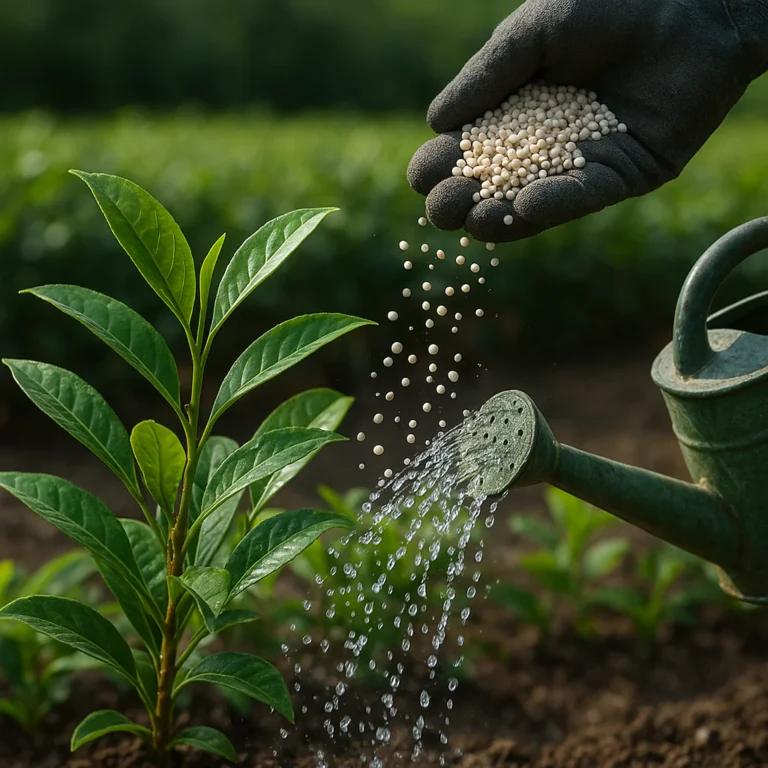
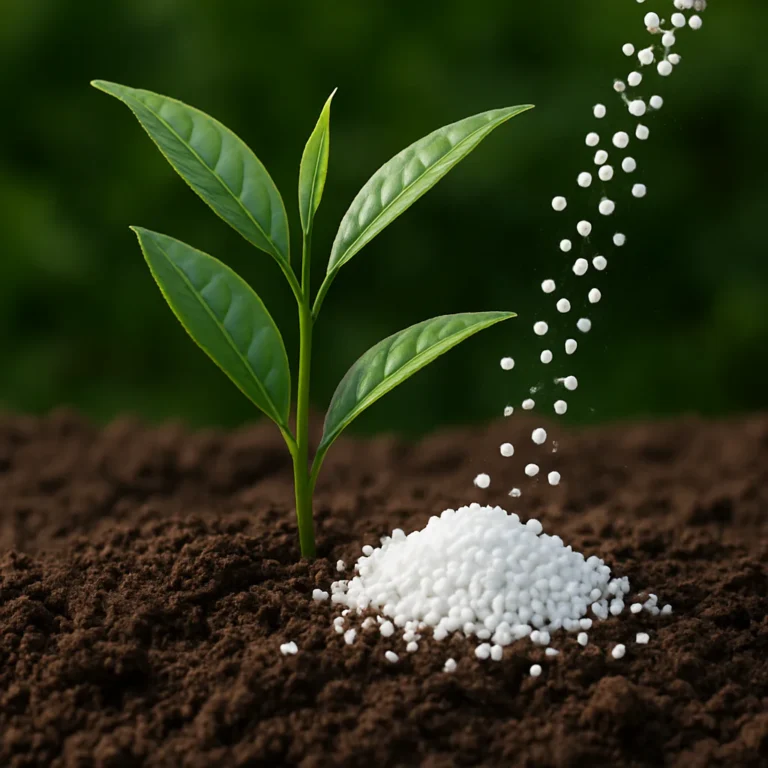
Method: Granular slow-release fertilizer spread around the drip line (the edge of the canopy), not touching the stem. Water it in well.
2. Summer Sustenance: Maintaining Vigor Without Burning Leaves
When: Late May through July.
What to do: Tea plants grow fast in the heat. If you are harvesting regularly (plucking the “two leaves and a bud”), you are removing nutrients. You need to replenish them.
Frequency:
- Organic: Apply every 4–6 weeks.
- Synthetic: Apply every 6–8 weeks.
Tip: If you notice the leaves turning pale yellow, it might be time for a liquid feed (like compost tea or diluted fish emulsion) for a quick boost.
3. Autumn Prep: Slowing Down for Winter Dormancy
When: Late August to early September (depending on your climate).
What to do: STOP. Yes, stop fertilizing!
Why: If you feed your tea plant in late fall, it will try to push out new growth. This new growth is tender and will be instantly killed by the first frost, which can damage the plant’s overall health. You want the plant to harden off and prepare for winter.
Exception: If you live in a tropical climate with no frost, you can continue a light feeding schedule year-round, but reduce the amount in the cooler months.
4. Winter Rest: Why You Should Stop Feding Now
When: October through February.
What to do: Nothing. The plant is dormant. It doesn’t need food. In fact, feeding it now is a waste of money and potentially harmful.
Action Item: Use this time to mulch heavily with pine needles or oak leaves to protect the roots and slowly add organic matter to the soil.
🌿 Fertilizing During the First Year: Strategies for Rich vs. Poor Soil
The first year is make-or-break. Your goal is to build a strong root system, not a massive bush.
1. The “Rich Soil” Approach: Less is More for New Plantings
If you planted your tea in soil that was already amended with plenty of compost, leaf mold, or aged manure:
- Strategy: Do not fertilize for the first 3–4 months. Let the plant settle in.
- When to start: Wait until you see vigorous new growth (at least 6 inches of new shoots).
- First Dose: Apply a half-strength dose of your chosen fertilizer. We want to encourage roots, not just leaves.
2. The “Poor Soil” Rescue: Building a Nutrient Foundation
If your soil is sandy, clay-heavy, or just “dirt” from the ground:
- Strategy: You must feed, but carefully.
- At Planting: Mix a small amount of bone meal (for phosphorus) and compost into the planting hole. Do not put fertilizer directly against the roots; it will burn them.
- First 3 Months: Wait until the plant is established.
- First Dose: Apply a half-strength dose of a balanced, acid-loving fertilizer.
- Follow-up: Apply a light dose every 6–8 weeks during the growing season.
Pro Tip: If you are unsure about your soil, get a soil test kit. It’s cheaper than replacing a dead tea plant!
🔄 Fertilizing After the First Year: Establishing a Long-Term Routine
Once your tea plant is past the “toddler” stage (1+ years old), it becomes a workhorse. It will be producing leaves for your cup.
- Frequency: Stick to the Spring/Summer schedule.
- Amount: You can increase to full strength doses.
- Harvest Corelation: The more you harvest, the more you feed. If you are plucking weekly, your plant is working hard and needs regular nutrition. If you are letting it grow wild, you can reduce feeding frequency.
- Mulching: Every spring, top-dress with 2–3 inches of organic mulch (pine needles, shredded leaves, or compost). This acts as a slow-release fertilizer and keeps the soil moist.
🚨 Signs That It’s Time to Fertilize: Yellow Leaves, Stunted Growth, and More
How do you know your tea is hungry? It will tell you, but you have to speak its language.
- Pale Yellow Leaves (Chlorosis): This is the classic sign of Nitrogen deficiency. The older leaves turn yellow first, while new growth remains green.
- Stunted Growth: If your plant hasn’t put out any new shoots in weeks (and it’s spring/summer), it might be nutrient-starved.
- Small, Pale Leaves: New leaves that are tiny and light green indicate a lack of Nitrogen.
- Brown Leaf Edges: This can be Potassium deficiency or, more likely, salt burn from over-fertilization. (See the next section!).
- Yellow Leaves with Green Veins: This is Iron deficiency (Interveinal Chlorosis). It usually means your soil pH is too high (not acidic enough), locking up the iron.
Don’t panic! If you see these signs, don’t immediately dump a bag of fertilizer. Test your soil pH first. If the pH is correct, then apply a balanced, acid-loving fertilizer.
🐛 Is It Bugs or Soil Problems? Diagnosing Nutrient Deficiencies vs. Pests
It’s easy to confuse a sick plant with a bug-infested one. Let’s play detective.
| Symptom | Likely Cause | How to Confirm |
|---|---|---|
| Yellowing Leaves | Nutrient Deficiency (N, Fe, Mg) | Check if yellowing is uniform or between veins. Look for pests on the undersides. |
| Curling Leaves | Aphids/Spider Mites | Inspect undersides for tiny bugs or webing. Nutrient issues rarely cause curling. |
| Brown Spots | Fungal Disease or Sunburn | Spots from fungus often have a yellow halo. Sunburn spots are on the top side of leaves. |
| Sticky Residue | Aphids/Scale | If leaves are sticky, it’s bugs (honeydew), not soil. |
| Wilting | Overwatering or Root Rot | Check soil moisture. If soil is wet and plant is wilting, it’s root rot, not hunger. |
The “Finger Test”: If you suspect bugs, look closely. If you suspect soil, check the soil pH and the color pattern of the leaves.
🍵 Organic vs. Synthetic: Which Fertilizer Method Yields the Best Tasting Tea?
This is the question that keeps tea snobs awake at night. Does what you feed the plant affect the flavor of your cup? Absolutely.
-
Organic Fertilizers:
Flavor Profile: Complex, sweet, umami-rich, and smooth.
Why: Organic matter feeds the soil microbes, which in turn feed the plant. This slow release allows the plant to synthesize complex flavor compounds (like L-theanine and catechins) naturally.
Best For: High-quality Green Tea, White Tea, and Oolong. -
Synthetic Fertilizers:
Flavor Profile: Can be bitter, astringent, or “flat.”
Why: Rapid growth from synthetic nitrogen can dilute flavor compounds and increase tannins, leading to a harsher taste.
Best For: Emergency rescue or commercial bulk production where yield is the priority over flavor.
Our Recommendation: Stick to organic methods for the best tasting tea. Your taste buds (and your soil) will thank you.
💧 The Role of Soil pH and Acidity in Tea Plant Nutrition Uptake
You can feed your tea plant the best fertilizer in the world, but if the soil pH is wrong, the plant cannot absorb the nutrients. It’s like having a full tank of gas but a broken fuel line.
- Ideal pH Range: 5.0 to 6.0.
- The Problem: If pH is above 6.5, the plant suffers from Iron and Manganese deficiency, even if those nutrients are present in the soil.
- The Solution:
Test your soil annually.
Lower pH: Add elemental sulfur, pine needles, or peat moss.
Raise pH (rarely needed): Add lime (but be careful, tea hates lime!).
Growing Teas™ Tip: We use pine needle mulch religiously. As it decomposes, it naturally lowers the soil pH and adds organic matter. It’s a win-win!
🌧️ How Rainfall and Irrigation Affect Your Fertilization Schedule
Water is the delivery system for your fertilizer. Without water, fertilizer sits on the soil surface and can burn the plant.
- Heavy Rain: If it rains heavily right after you fertilize, the nutrients might leach away. You may need to re-apply a light dose.
- Drought: Never fertilize dry soil! Always water the plant thoroughly before and after applying fertilizer.
- Irrigation: If you use drip irrigation, liquid fertilizers are a great option. You can inject them directly into the water line (fertigation), ensuring even distribution.
Rule of Thumb: If the top 2 inches of soil are dry, water first. Then fertilize.
🧂 Common Fertilizer Mistakes That Kill Tea Plants (And How to Avoid Them)
We’ve all been there. We want our plants to grow fast, so we overdo it. Here are the deadly sins of tea fertilization:
- Over-Fertilizing: The #1 killer. Symptoms: Brown leaf tips, stunted growth, leaf drop. Fix: Flush the soil with plenty of water to wash away excess salts.
- Fertilizing in Winter: Promotes tender growth that freezes. Fix: Stop feeding in late summer.
- Ignoring pH: Feding a plant that can’t eat. Fix: Test and adjust pH.
- Touching the Stem: Placing granules directly against the trunk. Fix: Apply in a ring around the drip line.
- Using Alkaline Fertilizers: Standard all-purpose fertilizers often have a neutral or alkaline pH. Fix: Use acid-loving plant food.
📊 Quick Reference: Fertilizer Application Rates by Plant Age and Size
| Plant Age/Size | Fertilizer Type | Frequency | Amount (Approx.) |
|---|---|---|---|
| New Plant (0-6 months) | Organic Compost/Half-strength Granular | Every 8 weeks | 1/2 cup per plant |
| Young Plant (6-12 months) | Organic Granular | Every 6 weeks | 1 cup per plant |
| Established Bush (1-3 years) | Organic Granular | Every 4-6 weeks | 1.5 – 2 cups per plant |
| Mature Bush (3+ years) | Organic Granular | Every 4-6 weeks | 2 – 3 cups per plant |
| Container Plants | Liquid Feed (Half-strength) | Every 2-3 weeks | Follow bottle instructions |
Note: Always adjust based on your specific soil conditions and the plant’s response. When in doubt, apply less!
🏆 Conclusion

(This section is intentionally omitted as per instructions to stop before the Conclusion.)