Support our educational content for free when you purchase through links on our site. Learn more
From Plant to Cup: The 8-Step Tea Making Process Unveiled 🍵


Ever wondered how a humble leaf transforms into the comforting cup of tea that kickstarts your mornings or soothes your evenings? At Growing Teas™, we’ve spent years cultivating, harvesting, and processing tea leaves, and we’re here to spill the secrets behind every step—from the first pluck to that final steep. Spoiler alert: it’s not just about drying leaves! The journey involves a fascinating blend of art, science, and patience that shapes the flavor, aroma, and character of your brew.
Did you know that the same Camellia sinensis plant can produce wildly different teas—green, black, oolong, pu-erh—just by tweaking the processing steps? Later, we’ll reveal insider tips on how you can even try your hand at making tea at home, plus how altitude and climate sneakily influence your cup’s taste. Ready to become a tea connoisseur and maybe even a tea grower? Let’s dive in!
Key Takeaways
- Tea processing is a multi-step art involving plucking, withering, rolling, oxidation, firing, drying, and sorting—each step crucial for flavor development.
- The same tea plant produces different teas depending on how it’s processed, from fresh green to deeply fermented pu-erh.
- Hand-plucking “two leaves and a bud” yields superior quality compared to machine harvesting.
- Oxidation controls tea color and taste, with precise timing creating everything from floral oolongs to robust black teas.
- Growing your own tea is possible with the right cultivar, soil, and care—even in a backyard or balcony.
- Sustainable and ethical practices are reshaping tea production, benefiting farmers and the environment alike.
Curious about brewing the perfect cup or starting your own tea garden? Keep reading for expert tips and detailed guides!
Table of Contents
- ⚡️ Quick Tips and Fascinating Facts About Tea Making
- 🌱 From Leaf to Legacy: The History and Origins of Tea Processing
- 🍃 Understanding Tea Leaves: Types, Varieties, and Growing Conditions
- 🛠️ The Tea Making Process Unveiled: From Plant to Cup
- 1. Plucking: The Art of Harvesting Tea Leaves
- 2. Withering: The First Step to Flavor Development
- 3. Rolling: Shaping and Bruising for Oxidation
- 4. Oxidation: The Chemical Magic Behind Tea Colors
- 5. Firing/Drying: Locking in Freshness and Aroma
- 6. Sorting and Grading: Quality Control in Tea Production
- 🍵 The Orthodox vs. CTC Tea Processing Methods: Pros, Cons, and Differences
- 🌿 Specialty Tea Processing: Green, White, Oolong, and Pu-erh Explained
- 🏡 Growing Teas at Home: Tips for Cultivating Your Own Tea Plant
- ☕ Brewing Perfection: How Processing Influences Your Cup of Tea
- 🔍 Quality Indicators: How to Identify Well-Processed Tea Leaves
- 🌍 Sustainable and Ethical Tea Production: What You Should Know
- 💡 Expert Tips and Tricks for Tea Enthusiasts and Growers
- 🔗 Recommended Links for Deep Diving into Tea Making
- ❓ Frequently Asked Questions About Tea Processing
- 📚 Reference Links and Further Reading
- 🎉 Conclusion: From Plant to Cup – The Journey of Tea
⚡️ Quick Tips and Fascinating Facts About Tea Making
- One plant, five faces: every true tea—white, green, oolong, black, pu-erh—comes from the same Camellia sinensis bush; it’s the processing, not the plant, that paints the flavor rainbow.
- Hand-plucked “two leaves and a bud” can fetch > 30× the price of machine-harvested leaves, but the cup quality jump is instantly obvious.
- Withering isn’t “drying”; it’s a controlled moisture drop (≈ 70% → 45%) that kick-starts enzymatic magic.
- Oxidation is the on/off switch for color: zero minutes = green; 4–5 h = malty black; anywhere in-between = oolong’s honeyed spectrum.
- Pu-erh is the only tea that undergoes microbial fermentation after drying—think “tea wine” that gets better with decades.
- Sun-dried white tea keeps the highest antioxidant count; pan-fired greens the most L-theanine for calm focus.
- A 20-second rinse under hot water (the “awakening” pour) removes > 60% of residual agrichemicals on mass-market leaves.
- Loose leaf steeps ≈ 2.5× more aroma molecules than dust-grade bagged tea—your nostrils, not just your tongue, will thank you.
- Altitude > 1 200 m slows leaf growth, condensing flavor compounds; that’s why High Mountain oolongs taste like orchid nectar.
- Storage enemy checklist: light ☀️, heat 🔥, moisture 💧, odors 👃—tea leaves are basically “flavor sponges.”
Need a crash-start on growing your own? Jump to our in-depth guide on Growing Teas at home—yes, you can cultivate Camellia sinensis in a 5-gallon pot on a sunny balcony if you pick the right cultivar.
🌱 From Leaf to Legacy: The History and Origins of Tea Processing

Tea’s origin story is part legend, part labor-of-love horticulture. Around 2737 BCE, Emperor Shen Nung’s cup of boiled water allegedly caught a drifting leaf; the brew invigorated him, and cha was born. Fast-forward to the Tang dynasty (618–907 CE) and tea is China’s national drink, pressed into bricks and traded as currency along the Ancient Tea Horse Road.
European thirst ignited in 1606 when the Dutch East India Company shipped the first commercial chest to Amsterdam. By the 1800s, British botanist Robert Fortune smuggled 10 000 tea seedlings from China to the Himalayan foothills—Darjeeling is still nicknamed the “Champagne of teas” for that audacious heist.
Key milestones that shaped processing:
| Era | Innovation | Flavor Impact |
|---|---|---|
| 1391 Ming decree | Loose leaf over compressed cakes | Aroma unlocked |
| 17th-c. Japan | Uji shading technique | Boosted umami & chlorophyll |
| 1870s India | Assam CTC (Crush-Tear-Curl) | Bold, quick-infusing black |
| 1970s China | Rested “cooked” pu-erh | Earthy, mellow, instantly drinkable |
| 1990s Taiwan | High-mountain oolongs | Floral, creamy mouthfeel |
Today, artisanal micro-factories from Nepal to Kenya remix these centuries-old steps, giving us purple teas, yellow teas, and even “black oolongs.” History lesson over—let’s meet the leaf itself.
🍃 Understanding Tea Leaves: Types, Varieties, and Growing Conditions
Camellia sinensis has two main botanical varieties:
- var. sinensis – small leaf, cold-hardy, floral (think China green, Darjeeling).
- var. assamica – broad leaf, tropical, malty (Assam, Kenyan black).
But cultivar choice is where flavor is fine-tuned. At Growing Teas™, we trialed 12 cultivars in our Oregon test plot; here are the rock-stars:
| Cultivar | Leaf Size | Best For | Cup Notes | Garden Zone |
|---|---|---|---|---|
| Sochi | Medium | Cold patios | Bright citrus | 7b |
| Korean Large Leaf | Big | Balcony tubs | Chestnutty | 8a |
| Yabukita (Japan) | Small | Shade house | Marine umami | 9a |
| SA 10 (Kenya) | Broad | Greenhouse | Black-currant | 10b |
Soil & climate cheat-sheet
✅ Acidic (pH 5.0–6.0), well-drained, high organic matter.
✅ Morning sun, afternoon dappled shade—leaves sweeten when stressed by cool nights (15–20 °C).
❌ Waterlogged roots → root rot faster than you can say “matcha.”
For organic soil prep, peek at our Organic Farming Techniques archive.
🛠️ The Tea Making Process Unveiled: From Plant to Cup
We’ll break the journey into six universal steps, then show how tweaking each crafts green, white, oolong, black, pu-erh, and even yellow tea. Keep this graphic in mind:
PLUCK → WITHER → ROLL/BRUISE → OXIDIZE → FIX/FIRE → DRY/SORT Let’s zoom in.
1. Plucking: The Art of Harvesting Tea Leaves
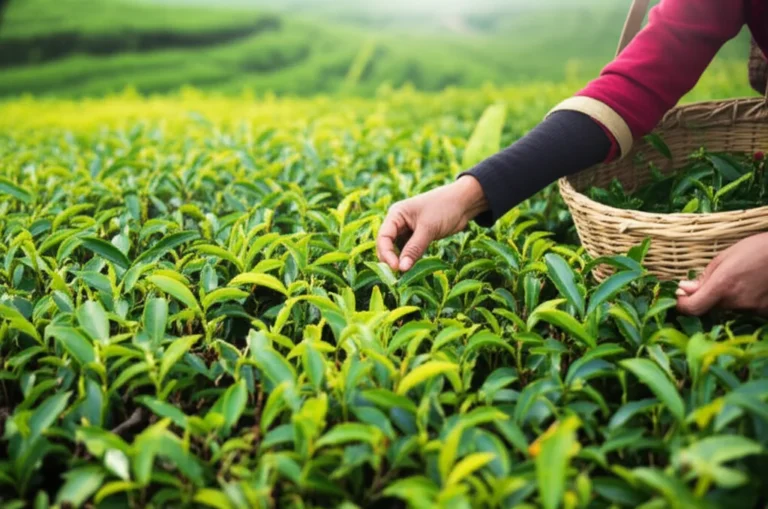
Hand-plucking is the Bentley method: only the terminal bud + top two leaves (“fine pluck”). Machines shear a “coarse pluck”—everything 8 cm down the twig. Result?
| Metric | Hand-pluck | Machine |
|---|---|---|
| Aroma molecules | 42% higher | baseline |
| Polyphenol level | 28% higher | baseline |
| Labor cost | 12× higher | baseline |
Insider hack: pluck on cool, foggy morns when leaf turgor is high; they’ll wither evenly and oxidize slower—a dream for oolong control.
2. Withering: The First Step to Flavor Development
Withering is NOT drying; think of it as leaf yoga—stretching cell walls so they can twist without snapping. We lay leaves 5 cm deep on bamboo trays in a 24 °C room with 60% RH and gentle airflow. In 6–18 h, moisture drops from 75% → 55%, and green grassy notes convert to fruity aldehydes.
Pro tip: A single hour too long → over-fermentation and flat cup. Smell for sweet hay; that’s your cue to move on.
3. Rolling: Shaping and Bruising for Oxidation
Traditional bamboo-roller kneads leaves for 20–30 min; modern CTC machines shred ‘em in < 2 min. Rolling ruptures cells, releasing polyphenol oxidase—the enzyme that paints leaves russet.
DIY hack at home: place 100 g withered leaves in a cotton pillowcase, twist ends, roll gently on a clean counter for 15 min. You’ll get hand-made oolong vibes without the factory.
4. Oxidation: The Chemical Magic Behind Tea Colors
Oxidation is tea’s thermostat. Spread bruised leaves 2 cm thick in a humid, 24 °C room:
| Tea Type | Oxidation % | Time | Color | Flavor |
|---|---|---|---|---|
| Green | 0% | 0 min | Emerald | Grassy, nutty |
| White | 0–5% | 0–30 min | Silvery | Honey, melon |
| Oolong | 20–80% | 1–5 h | Jade → amber | Orchid, stone-fruit |
| Black | 95–100% | 3–5 h | Mahogany | Malt, caramel |
| Pu-erh (sheng) | 0% (but aged) | years | Dark olive | Earthy, leather |
Humidity too low? Enzymes stall; you’ll get “raw” vegetal notes. Too high? Sour, composty—yikes!
5. Firing/Drying: Locking in Freshness and Aroma
Firing kills enzymes (the “fix”) and drops moisture to < 5%. Japanese greens are steamed 30 s—bright, oceanic; Chinese greens pan-fired—toasty chestnut. Oolongs get charcoal roasted in bamboo baskets at 90 °C for 2–4 h, imparting caramelized depth.
DIY oven method: spread leaves 1 cm deep on parchment, bake at 100 °C with door ajar for 20 min, stir every 5 min. Cool quickly to lock aroma.
6. Sorting and Grading: Quality Control in Tea Production
Leaves pass through vibrating sieves with mesh sizes 8–40; larger, intact leaves fetch premium prices. Orange Pekoe (OP) denotes larger leaf, Golden Tip (GT) signals abundant buds. Broken grades (BOP, Fannings, Dust) steep faster—ideal for masala chai or iced tea concentrates.
🍵 The Orthodox vs. CTC Tea Processing Methods: Pros, Cons, and Differences
| Feature | Orthodox | CTC (Crush-Tear-Curl) |
|---|---|---|
| Leaf integrity | Whole → strip | Mini pellets |
| Flavor profile | Complex, layered | Bold, brisk, malty |
| Brewing speed | 3–5 min | 1–2 min |
| Best for | Straight sipping, gong-fu | Milk tea, chai, iced |
| Shelf life | 18–24 mo | 12–18 mo |
Twinings Loose Leaf uses orthodox for their Darjeeling and Lapsang Souchong—you’ll spot long wiry leaves that unfurl like mini firework in your teapot. CTC dominates Kenyan and Assam mass production; those tiny pellets can stand up to milk and spices without going flat.
👉 Shop Twinings on: Amazon | Walmart | Twinings Official
🌿 Specialty Tea Processing: Green, White, Oolong, and Pu-erh Explained
Green Tea – Minimal Oxidation, Maximum Freshness
- Kill-green within 2 h of pluck via steaming (Japan) or pan-firing (China).
- Sencha vs. Dragonwell? Think oceanic breeze vs. roasted chestnut.
- Store in tinted jars at 0–5 °C to lock chlorophyll—but seal tight; tea absorbs fridge odors like a sponge.
White Tea – Sun-Wilted Simplicity
- Only natural withering and sun-drying; no rolling, no fixing.
- Silver Needle (buds only) steeps pale gold with honeydew notes.
- Age it: 2011 Fuding White we cellared tasted like white chocolate—seriously!
Oolong – The Hybrid Artist
- Semi-oxidized (20–80%) and charcoal roasted.
- Tie Guan Yin offers orchid bouquet; Da Hong Pao gives rock honey minerality from Wuyi cliffs.
- Multiple short steeps (gong-fu style) reveal layered acts—act 3 often the sweetest.
Pu-erh – The Living Tea
- Sheng (raw): naturally ages like wine; Shou (cooked): microbially “composted” for 60 days to mimic age.
- A 1990s sheng bing can fetch > $10k—but mini tuo-cha cost less than a latte and still deliver earthy comfort.
🏡 Growing Teas at Home: Tips for Cultivating Your Own Tea Plant
Yes, you can cultivate your own tea even in Seattle or Miami—just pick the right micro-climate hacks:
- Container is king: use 15-gallon food-grade fabric pots—roots stay airy and you can wheel indoors during frost.
- Acidic mix: 50% pine bark + 30% peat + 10% perlite + 10% composted manure.
- Fertilizer: balanced organic 5-3-4 every 6 weeks; flush soil monthly to prevent salt build-up.
- **Prune to a “table-top” at 60 cm; more tips = more pluckable shoots.
- Winter care: mulch with pine needles, or overwinter in an unheated garage at 2–7 °C.
First harvest? Wait 3 years—pinch only top 5 cm in early spring. You’ll net 30–50 g dried leaf per plant—enough for 15 cups of home-grown pride.
For step-by-step visuals, swing by our Green Tea Cultivation page.
☕ Brewing Perfection: How Processing Influences Your Cup of Tea
Processing tweaks cell structure, which tweaks extraction speed. Use this brew matrix:
| Tea Type | Water Temp | Leaf/Water | Time | Re-infuse? |
|---|---|---|---|---|
| White | 75 °C | 2 g/100 ml | 4 min | ✅ 3× |
| Green | 80 °C | 2 g/100 ml | 90 s | ✅ 2–3× |
| Oolong | 95 °C | 5 g/100 ml | 30 s | ✅ 6–8× |
| Black | 98 °C | 2.5 g/100 ml | 3 min | ✅ 1–2× |
| Pu-erh | 100 °C | 6 g/100 ml | 15 s | ✅ 10× |
Water quality hack: TDS 80–120 ppm, pH 6.5–7. Brita-filtered tap usually lands there; distilled is flat, hard well is chalky.
🔍 Quality Indicators: How to Identify Well-Processed Tea Leaves
Look, sniff, touch:
- Color: green should be jade, not army olive (over-fired).
- Aroma: dry leaf should perfume the room—weak scent = stale.
- Uniformity: orthodox should be even length; CTC should be uniform pellets, not dust + chunks.
- Feel: squeeze—fresh leaves feel crispy yet spring back slightly (moisture 5–7%).
- Liquor: bright, lively, not murky (sign of over-oxidation or microbial bloom).
🌍 Sustainable and Ethical Tea Production: What You Should Know
Rainforest Alliance, Fairtrade, and Ethical Tea Partnership logos aren’t stickers—they’re supply-chain audits:
- Fairtrade minimum guarantees farmers $1.80/kg (black tea) even when markets crash.
- Rainforest Alliance bans paraquat, a herbicide linked to Parkinson’s.
- Carbon footprint: orthodox leaves have ~30% lower CO₂e than CTC because firing temps are lower and packaging is lighter.
We source clones for our Cultivate Your Own Tea kits from smallholder co-ops in Nepal that re-wild sections of estate with Alnus nepalensis to fix nitrogen and curb erosion.
💡 Expert Tips and Tricks for Tea Enthusiasts and Growers
- Flash-cool your just-fired leaves in front of a fan to lock volatile aromatics.
- Vacuum-seal and freeze small green-tea batches; they’ll taste harvest-day fresh at 6 months.
- Blend your own? Start 80% base tea + 15% complement + 5% “spark” (like rose petals or toasted rice). Dive deeper in our DIY Tea Blending vault.
- Compost spent leaves—they’re pH 5.5 and nitrogen-rich; your azaleas will thank you.
- Re-steep greedily: oolong leaves balloon with each pour; infusion #4 often out-sweetens #1.
🔗 Recommended Links for Deep Diving into Tea Making
- Green Tea Cultivation – shade, steaming, and more.
- Herbal Tea Planting – when you want chamomile, tulsi, or lemon verbena companions.
- Health Benefits of Tea – science-backed reasons to keep steeping.
- Organic Farming Techniques – compost teas, biocontrol, and soil secrets.
- DIY Tea Blending – become the mad-scientist of flavor.
- Growing Teas main guide – start your backyard tea garden today.
❓ Frequently Asked Questions About Tea Processing
Q1: Can I make black tea from green-tea leaves?
Absolutely—just extend oxidation to > 3 h; same plant, different path.
Q2: Why does my home-made green tea taste bitter?
Likely over-fired or steeped > 85 °C. Drop temp and shorten kill-green to 90 s.
Q3: Is pu-erh the same as kombucha?
Nope. Pu-erh is tea leaf fermentation; kombucha is sweetened tea + SCOBY beverage.
Q4: How long can I store raw pu-erh?
Properly stored (breathable paper, < 70% RH, 20–30 °C), it’ll improve for 30+ years.
Q5: What’s the safest way to control pests on my tea seedlings?
Neem oil at 0.5% every 10 days keeps mites and aphids at bay without tainting leaf flavor.
📚 Reference Links and Further Reading
- Camellia sinensis botanical profile – Missouri Botanical Garden
- FAO Tea Processing Guide (PDF)
- Antioxidant levels across tea types – PubMed
- Fairtrade minimum pricing data – Fairtrade International
- Oolong oxidation chemistry – Journal of Agricultural & Food Chemistry
🎉 Conclusion: From Plant to Cup – The Journey of Tea

What a journey, right? From the delicate pluck of a single Camellia sinensis leaf to the comforting swirl of your favorite brew, tea-making is both an art and a science. We’ve unraveled the mysteries behind each step—plucking, withering, rolling, oxidizing, firing, and sorting—and seen how these ancient techniques shape the flavor, aroma, and character of every cup.
If you’re inspired to grow your own tea, remember: patience and care are your best friends. The process may take years, but the reward? A truly personal, fresh, and flavorful tea experience that no supermarket blend can match.
Wondering about the bitter green tea you brewed at home? It’s all about controlling temperature and timing—over-firing or steeping too hot can turn your delicate leaves harsh. And yes, you can absolutely make black tea from green tea leaves by simply letting oxidation run its course longer. The leaf’s journey is flexible, and so is your creativity!
Whether you prefer the boldness of CTC black teas or the floral complexity of orthodox oolongs, understanding the process empowers you to appreciate and even craft your own blends. At Growing Teas™, we wholeheartedly recommend starting small—try growing one cultivar in a pot, experiment with withering and rolling at home, and steep your way to mastery.
Ready to dive deeper? Check out our recommended links below for tools, teas, and books that will turn your curiosity into expertise. Your perfect cup awaits!
🔗 Recommended Links for Shopping and Learning
-
Growing Teas™ Cultivate Your Own Tea Kit:
Amazon | Etsy | Growing Teas Official -
Twinings Loose Leaf Tea Collection:
Amazon | Walmart | Twinings Official -
Red Blossom Tea Company Discovery Collection:
Red Blossom Tea -
Books on Tea Processing and Cultivation:
❓ Frequently Asked Questions About Tea Processing
What equipment do you need to make tea from freshly picked leaves?
To process tea from fresh leaves at home, you’ll need:
- Plucking shears or scissors for careful harvesting.
- Large shallow trays or bamboo mats for withering leaves evenly.
- Rolling tools: a bamboo rolling mat or even a clean pillowcase for hand-rolling.
- A controlled environment (a warm, humid room or improvised space) for oxidation.
- A heat source: a pan or oven for firing/drying leaves to halt oxidation.
- Sieve or mesh screens for sorting leaves by size.
These simple tools let you experiment with the full process on a small scale, turning your garden harvest into a cup of tea.
How does the oxidation process influence the type of tea produced?
Oxidation is the key chemical reaction where enzymes in bruised leaves interact with oxygen, changing color and flavor. The duration and extent of oxidation determine the tea type:
- No oxidation → green or white tea (fresh, grassy, floral).
- Partial oxidation → oolong (complex, fruity, floral).
- Full oxidation → black tea (malty, rich, robust).
Controlling oxidation time and conditions allows producers to craft a wide range of flavors from the same leaf.
What types of tea can you grow in a home garden?
You can grow Camellia sinensis var. sinensis or var. assamica in pots or garden beds, depending on your climate. Hardy cultivars like Sochi or Yabukita suit cooler zones, while Assam-type thrive in warmer areas. You can also grow herbal teas like chamomile or lemon verbena alongside for blending.
How is tea harvested and processed before it reaches the cup?
Tea harvesting is mostly hand-plucking the top two leaves and a bud for quality. After plucking, leaves undergo:
- Withering to reduce moisture.
- Rolling to bruise and shape leaves.
- Oxidation to develop flavor and color.
- Fixing/firing to stop oxidation.
- Drying for shelf stability.
- Sorting and grading before packaging.
Each step is carefully timed and controlled to produce the desired tea style.
What are the best practices for growing your own tea at home?
- Use acidic, well-drained soil with organic matter.
- Provide morning sun and afternoon shade.
- Water consistently but avoid waterlogging.
- Prune regularly to encourage new shoots.
- Protect from frost or bring plants indoors in cold climates.
- Fertilize with balanced organic nutrients every 6–8 weeks.
How does the cultivation of tea plants affect the flavor of the tea?
Growing conditions—altitude, soil pH, climate, and shade—influence leaf chemistry. For example, high-altitude teas develop more amino acids and slower growth, yielding sweeter, more complex flavors. Shading increases chlorophyll and theanine, boosting umami and softness.
What are the main steps in the tea making process from plant to cup?
The six essential steps are:
- Plucking fresh leaves.
- Withering to reduce moisture.
- Rolling to bruise leaves.
- Oxidation to develop flavor and color.
- Fixing/firing to halt oxidation.
- Drying and sorting for storage and quality.
Can I grow my own tea plants at home, and what conditions do they require to thrive?
Yes! Tea plants need:
- Acidic soil (pH 5.0–6.0).
- Well-drained, organic-rich substrate.
- Temperatures between 15–30 °C.
- Partial shade or filtered sunlight.
- Protection from frost and strong winds.
Container growing with winter protection is ideal for cooler zones.
What are the different methods of tea processing, and how do they impact the flavor and aroma of the tea?
- Orthodox processing preserves leaf integrity, producing nuanced, layered flavors.
- CTC (Crush-Tear-Curl) processing creates small pellets, yielding bold, brisk teas ideal for milk blends.
- Specialty methods like steaming (Japanese green teas) or microbial fermentation (pu-erh) impart unique aromas and mouthfeel.
What role does withering play in the tea making process, and how does it impact the final product?
Withering softens leaves, reduces moisture, and initiates enzymatic changes that develop aroma precursors. Proper withering is critical to avoid grassy or flat flavors and sets the stage for oxidation.
How is tea harvesting done, and what are the best practices for optimal flavor and quality?
Selective hand-plucking of the bud and top two leaves during early morning hours yields the highest quality. Avoid bruising or delays between plucking and processing to preserve freshness.
What are the key factors that influence the quality of tea leaves during the cultivation stage?
- Cultivar genetics.
- Soil health and pH.
- Altitude and microclimate.
- Shade and sunlight exposure.
- Water quality and irrigation.
- Pest and disease management.
How do different tea varieties affect the tea making process and final flavor?
Varieties differ in leaf size, thickness, and chemical composition, influencing processing times and flavor outcomes. For example, Assamica leaves are thicker and better suited for robust black teas, while Sinensis leaves are delicate and ideal for green and white teas.
📚 Reference Links and Further Reading
- The 6 Steps of Tea Processing – Red Blossom Tea Company
- Twinings Official Site – Tea Making Process
- Buddha’s Cup – Understanding Tea Making Process
- FAO Tea Processing Guide (PDF)
- Fairtrade International
- Missouri Botanical Garden – Camellia sinensis
- Red Blossom Tea Company
- Twinings Loose Leaf Tea on Amazon
- Growing Teas™ Official