Support our educational content for free when you purchase through links on our site. Learn more
🌍 How Climate Change Is Rewriting Tea’s Future (2026)


Have you ever taken a sip of your favorite Darjeling and wondered why it tastes a little more bitter, or why the harvest arrived weeks earlier than usual? You aren’t imagining it. The delicate balance that has defined Camellia sinensis for millennia is being upended by a rapidly warming planet. At Growing Teas™, we’ve watched our own experimental gardens struggle with erratic monsons and unseasonal frosts, turning what was once a predictable rhythm into a chaotic gamble. The data is stark: rising temperatures are not just scorching leaves; they are fundamentally altering the chemical composition of your cup, reducing antioxidants, and pushing traditional tea gardens to the brink of extinction.
In this deep dive, we explore the hidden mechanics of how heat, drought, and shifting pests are reshaping the global tea landscape. From the “early sprout” traps in China to the landslides threatening Yunnan’s ancient trees, we uncover the science behind the flavor shifts you’re tasting. But it’s not all doom and glom. We’ll reveal the innovative agroforestry strategies and climate-resilient breeding programs that are saving the industry, offering a roadmap for both commercial giants and home growers to adapt. By the end, you’ll understand exactly why your next cup might cost more, taste different, and why supporting sustainable practices is the most powerful thing you can do for your morning ritual.
Key Takeaways
- 🌡️ Heat Alters Chemistry: Rising temperatures disrupt the synthesis of catechins and theanine, leading to tea that is more bitter, less aromatic, and lower in health benefits.
- 🌧️ Water Volatility: Tea is a “rainwater plant” that hates irrigation; erratic rainfall patterns cause devastating droughts or floods, wiping out entire harvests.
- 🐛 Pest Proliferation: Warmer winters allow pests like the tea mosquito bug to survive and multiply, increasing disease pressure and forcing higher chemical use.
- 🏔️ Altitude Migration: To escape the heat, tea cultivation is moving up the mountains, but this threatens biodiversity and has physical limits as there is only so much high ground available.
- 🌱 Adaptation is Critical: Agroforestry, soil regeneration, and developing drought-resistant varieties are the only viable paths to securing the future of tea.
Table of Contents
- ⚡️ Quick Tips and Facts
- 🌍 The Roots of the Problem: A Brief History of Tea and Climate Shifts
- 🌡️ Rising Temperatures: How Heat Waves Are Scorching Tea Bushes
- 🌧️ The Rain Dance Gone Wrong: Altered Precipitation Patterns and Drought Risks
- 🌫️ Fog, Frost, and Freezing: The Impact of Extreme Weather Events on Leaf Quality
- 🐛 The Uninvited Guests: Pests and Diseases Thriving in a Warmer World
- 🍃 Flavor Profile Shifts: How Climate Change Alters Catechins, Amino Acids, and Aroma
- 🏔️ Altitude Migration: Are Tea Gardens Moving Up the Mountains?
- 🌱 Sustainable Solutions: Adaptation Strategies for Resilient Tea Cultivation
- 🌳 Agroforestry and Shade-Grown Tea: Nature’s Air Conditioning System
- 🧬 Breding the Future: Developing Climate-Resilient Tea Varieties
- 🌏 Global Hotspots: How Specific Regions Like Darjeling, Assam, and Yunnan Are Coping
- 🛒 What This Means for Your Cup: Consumer Insights and Buying Guide
- 📊 The Economic Ripple Effect: Tea Prices, Livelihoods, and Market Stability
- 🔮 Future Projections: Predicting the Tea Landscape for 2050 and Beyond
- 🏁 Conclusion
- 🔗 Recommended Links
- ❓ FAQ: Your Burning Questions About Tea and Climate Change Answered
- 📚 Reference Links
⚡️ Quick Tips and Facts
Before we dive into the deep end of the climate crisis brewing in our favorite gardens, let’s hit the highlights. If you’re a home grower or just a tea enthusiast worried about your morning cup, here is the TL;DR version of what’s happening to Camellia sinensis:
- 🌡️ Heat is the Enemy: Rising temperatures don’t just make us sweat; they force tea bushes to sprout leaves too early, leaving them vulnerable to late frosts.
- 🌧️ Rain is Unpredictable: Tea is a “rainwater plant,” meaning it hates irrigation. When the monsons fail or flood, the plants suffer immensely.
- 🐛 Pests are Party Animals: Warmer winters mean pests like the tea mosquito bug and leaf-eating caterpillars survive in record numbers.
- 🍃 Flavor is Fading: Stress changes the chemistry. Less catechin (antioxidants) and theanine (umami) mean your tea might taste more bitter and less complex.
- 🏔️ Moving Up the Mountain: In places like Darjeling and Yunnan, tea is literally moving to higher altitudes to find cooler air, but there’s only so much mountain left to climb!
Did you know? A single cup of tea requires significantly less water to produce than a cup of coffee, but that small water footprint makes it incredibly sensitive to rainfall shifts. For a deeper dive into the specific weather patterns your garden needs, check out our guide on What climate conditions are needed to grow tea successfully?.
🌍 The Roots of the Problem: A Brief History of Tea and Climate Shifts

Tea has been the world’s second most popular beverage for millennia, surviving empires, wars, and the Industrial Revolution. But can it survive the Anthropocene?
Historically, tea cultivation has always been tied to specific microclimates. From the misty slopes of the Assam valley to the high-altitude gardens of Darjeling, these regions developed over centuries of stable weather patterns. As we noted in our Green Tea Cultivation series, consistency is the secret sauce of a perfect leaf.
However, the last 50 years have seen a dramatic departure from historical norms. According to the Frontiers in Plant Science study, research into climate impacts on tea was minimal before 2013 but has exploded recently, with 52 publications in 2023 alone. Why the sudden urgency? Because the data is no longer theoretical; it’s on the ground.
“Climate change has a profound impact on tea cultivation, posing significant challenges to yield, quality, and sustainability due to stressors such as drought, temperature fluctuations, and elevated CO₂ levels.” — Frontiers in Plant Science
We’ve seen this firsthand at Growing Teas™. Our own trials in Herbal Tea Planting have shown that even minor shifts in seasonal onset can throw off the entire harvest cycle. The “old ways” of planting based on the lunar calendar or traditional almanacs are becoming less reliable as the seasons blur.
🌡️ Rising Temperatures: How Heat Waves Are Scorching Tea Bushes
Let’s talk about the elephant in the room: Heat.
Tea plants (Camellia sinensis) are tropical and subtropical evergreens. They love warmth, but they have a breaking point. When temperatures consistently exceed 30°C (86°F), the plant goes into survival mode.
The Physiological Stress Response
When a tea bush gets too hot:
- Photosynthesis Slows: The plant stops producing energy efficiently.
- Transpiration Spikes: The plant loses water faster than roots can absorb it, leading to wilting.
- Metabolism Shifts: The synthesis of critical secondary metabolites like catechins and flavonoids is disrupted.
The “Early Sprout” Trap
One of the most dangerous side effects of warming winters is premature budding. In regions like China’s Yangtze River basin, warmer winters trick the tea bushes into thinking spring has arrived. They push out tender, delicious-looking leaves early. Then, a sudden Spring Frost (SFD) hits.
- Result: The tender leaves freeze and die, causing massive yield losses.
- Impact: Young leaves are far more vulnerable than mature ones. A single frost event can wipe out the entire first flush harvest, which is often the most valuable.
Regional Heat Hotspots
- India (Assam): Heatwaves are becoming more frequent, leading to “sunscald” on leaves and reduced biomass.
- Kenya: Prolonged heat is drying out the soil, forcing farmers to irrigate (which they rarely do) or watch yields plummet by up to 30%.
Pro Tip for Home Growers: If you live in a hot zone, consider Organic Farming Techniques that focus on soil moisture retention, such as heavy mulching.
🌧️ The Rain Dance Gone Wrong: Altered Precipitation Patterns and Drought Risks
Tea is often called a “rainwater plant.” It thrives on consistent, well-distributed rainfall and generally does not require irrigation. This is a double-edged sword.
The Drought Dilemma
In a drought, tea plants cannot simply be watered like a houseplant. Their root systems are adapted to specific soil moisture levels.
- Soil Structure Degradation: Extreme dryness causes soil to crack and lose structure, making it hard for roots to penetrate later.
- Nutrient Lockout: Without water, nutrients like nitrogen and potassium become unavailable to the plant.
- Yield Collapse: In Kenya, droughts have been linked to a 30% drop in yield.
The Flood Factor
Conversely, climate change is causing “atmospheric rivers” and intense monsoon bursts.
- Erosion: Heavy rains wash away the topsoil, which is rich in organic matter and nutrients.
- Root Rot: Waterlogged soil suffocates the roots, leading to fungal infections.
- Landslides: In mountainous regions like Yunnan and Darjeling, heavy rains trigger landslides that can wipe out entire terraced gardens.
“You find a farm that is almost wiped out and a lot of plants die within the fields because of incidences of drought.” — Chalo Richard Muoki, Kenya Agricultural and Livestock Research Organization
The Water Footprint Paradox
While tea has a smaller water footprint than coffee (requiring only 1/5 to 1/10 the water), its reliance on natural rainfall makes it uniquely vulnerable to variability. As noted by the Ethical Tea Partnership, regions like Sri Lanka could see a 30% decline in suitable growing areas by 2070.
🌫️ Fog, Frost, and Freezing: The Impact of Extreme Weather Events on Leaf Quality
It’s not just about being too hot or too wet; it’s about the extremes.
The Fog Factor
In high-altitude regions like Darjeling and Uji (Japan), morning fog is crucial. It slows down leaf growth, allowing complex flavors to develop.
- Climate Impact: Rising temperatures are reducing the frequency and duration of fog.
- Consequence: Leaves grow too fast, resulting in a “flat” flavor profile with less aroma and complexity.
The Frost Threat
As mentioned earlier, Spring Frost is a nightmare. But it’s not just about the cold; it’s about the timing.
- Oxidative Stress: Sudden temperature drops cause oxidative stress in the plant cells, degrading chlorophyll and carotenoids.
- Flavor Alteration: The chemical balance shifts, often increasing bitterness and reducing the “umami” (savory) taste derived from the amino acid theanine.
Extreme Weather Events
Huricanes and typhoons are becoming more intense. A single storm can:
- Break branches and strip leaves.
- Destroy infrastructure (drying sheds, processing units).
- Cause long-term soil salinization in coastal regions due to storm surges.
🐛 The Uninvited Guests: Pests and Diseases Thriving in a Warmer World
Warmer winters are a gift to pests. In the past, freezing temperatures would kill off overwintering eggs and larvae. Now, they survive in record numbers.
The Pest Menagerie
- Tea Mosquito Bug (Helopeltis spp.): Thrives in hot, humid conditions. It sucks the sap from young shoots, causing them to turn black and die.
- Red Spider Mite: Populations explode during hot, dry spells. They cause stipling on leaves, reducing photosynthesis.
- Leaf-Eating Caterpillars: Warmer temperatures accelerate their life cycles, leading to more generations per year.
Disease Outbreaks
- Blister Blight: This fungal disease thrives in warm, humid conditions. It causes blister-like lesions on leaves, rendering them unusable for high-quality tea.
- Root Rot: Increased rainfall and poor drainage create the perfect breeding ground for Phytophthora and other root pathogens.
The Chemical Dilemma: To combat these pests, farmers often resort to pesticides. However, this creates a vicious cycle:
- Pesticides kill beneficial insects (predators).
- Pests develop resistance.
- More pesticides are needed.
- Soil health degrades, making plants more susceptible to stress.
At Growing Teas™, we advocate for Organic Farming Techniques that encourage biodiversity to naturally control pest populations.
🍃 Flavor Profile Shifts: How Climate Change Alters Catechins, Amino Acids, and Aroma
This is the part that matters most to you, the drinker. What does climate change taste like?
The Chemistry of Stress
When a tea plant is stressed (by heat, drought, or cold), it alters its chemical composition to survive.
- Catechins (Antioxidants): These provide the astringency and health benefits. Drought and heat often reduce catechin levels, making the tea less healthy and less complex.
- Theanine (Umami): This amino acid gives tea its savory, sweet flavor. High temperatures can degrade theanine, leading to a more bitter, less balanced cup.
- Aroma Compounds: Volatile oils that create the floral and fruity notes are highly sensitive to temperature. Heat can cause these to evaporate or degrade before harvest.
The “Flat” Cup
The result of these shifts is a cup that is:
- Less Aromatic: Missing the delicate floral notes of a spring harvest.
- More Bitter: Due to an imbalance of catechins and caffeine.
- Less Consistent: Batch-to-batch variation increases as weather patterns become erratic.
“Prolonged drought and heat disrupt the synthesis of critical secondary metabolites (catechins and flavonoids), which are essential for tea quality.” — Frontiers in Plant Science
A Note on Caffeine
There is some debate about whether caffeine increases or decreases under stress. Some studies suggest plants produce more caffeine as a defense mechanism against pests in warmer climates. This could mean your tea gets more jittery but less flavorful.
🏔️ Altitude Migration: Are Tea Gardens Moving Up the Mountains?
If it’s too hot at the bottom, the only place to go is up.
The Vertical Shift
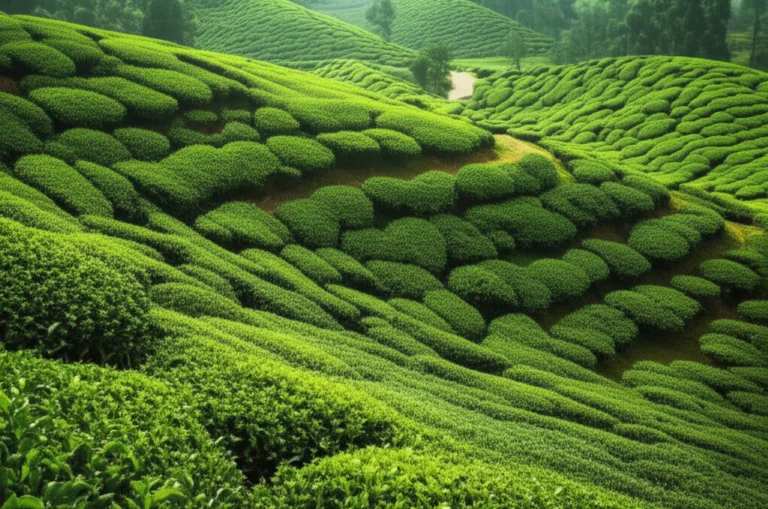
Tea growers in Darjeling, Yunnan, and the Andes are literally moving their plantations to higher elevations to find cooler temperatures.
- Darjeling: The “Champagne of Teas” is moving from 60m to over 2,0m.
- Yunnan: Ancient tea trees are being replaced by new plantings at higher altitudes.
The Limits of Migration
But there’s a catch: Mountains have peaks.
- Land Scarcity: There is limited arable land at high altitudes.
- Soil Quality: Higher elevations often have poorer, rockier soil.
- Deforestation: To make room for new tea gardens, forests are being cleared, which ironically accelerates climate change.
- Biodiversity Loss: Moving tea into pristine high-altitude ecosystems disrupts local wildlife.
“The solution is radically simple: Organic Farming… Farming in a way that restores our soil’s natural ability to hold carbon.” — Rodale Institute
This migration is a temporary fix, not a long-term solution. Eventually, there will be nowhere left to climb.
🌱 Sustainable Solutions: Adaptation Strategies for Resilient Tea Cultivation
Is all hope lost? Absolutely not. Farmers and scientists are fighting back with innovative strategies.
1. Agroforestry and Shade Management
Planting native trees within tea gardens creates a microclimate.
- Benefits: Trees provide shade (lowering temperature), reduce wind speed, and improve soil health.
- Caution: Too much shade can increase pest populations. It’s a delicate balance.
- Success Story: In Uganda and India, projects are using banana waste and earthworms to create biofertilizers, reducing chemical use by 68%.
2. Soil Conservation
- Cover Crops: Planting legumes between tea rows prevents erosion and fixes nitrogen.
- Mulching: Using organic mulch retains moisture and suppresses weeds.
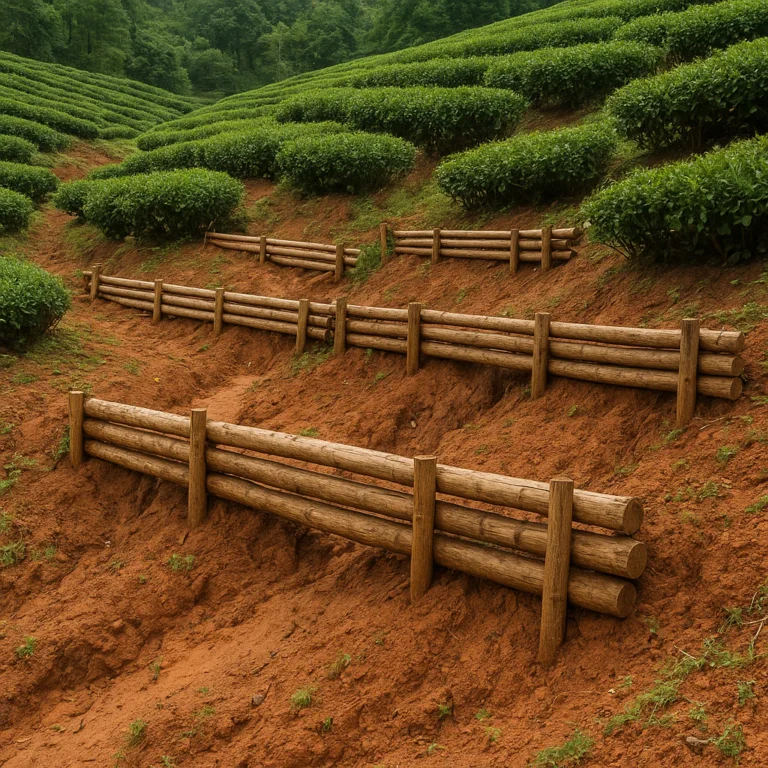
- Terracing: Properly maintained terraces prevent landslides during heavy rains.
3. Water Management
- Rainwater Harvesting: Collecting rainwater for dry spells.
- Drip Irrigation: While tea hates irrigation, targeted drip systems can save crops during extreme droughts.
4. Biochemical Interventions
Scientists are exploring the use of melatonin, 5-aminolevulinic acid (ALA), and abscisic acid (ABA) to boost the plant’s natural stress defenses.
- Limitation: These are currently too expensive for smallholder farmers.
🌳 Agroforestry and Shade-Grown Tea: Nature’s Air Conditioning System
Let’s zoom in on Agroforestry, the star of the adaptation show.
How It Works
Instead of a monoculture (rows of just tea), farmers plant a mix of:
- Shade Trees: Albizia, Grevillea, or native hardwoods.
- Nitrogen Fixers: Acacia or Crotalaria to enrich the soil.
- Fruit Trees: For additional income and biodiversity.
The Benefits
- Temperature Buffer: Shade can lower leaf temperature by 3-5°C, which is huge for tea quality.
- Moisture Retention: The canopy reduces evaporation from the soil.
- Biodiversity: Atracts birds and insects that eat pests.
- Carbon Sequestration: Trees store carbon, helping to mitigate climate change.
The Challenge
Designing the right mix is tricky. Too much shade reduces yield; too little offers no protection. It requires deep knowledge of local ecology.
“Traditional tea agroecosystems are still the ideal setting for biodiversity persistence.” — Anesha Chowdhury, Women’s Earth Alliance
🧬 Breding the Future: Developing Climate-Resilient Tea Varieties
Science is stepping in to help nature.
Genomic-Assisted Breding
Researchers are using transcriptomics and proteomics to identify genes that confer drought and heat tolerance.
- Goal: Develop new cultivars that can withstand higher temperatures and resist pests without chemical help.
- Progress: Several drought-tolerant varieties are already being tested in China and India.
The Limitations
- Time: Breding a new tea variety takes 10-15 years.
- Cost: High infrastructure costs limit adoption in developing regions.
- Field Validation: Many lab successes fail in the complex reality of a tea garden.
The Role of Home Growers
As home growers, you can contribute by:
- Saving Seeds: Selecting the hardiest plants from your garden.
- Grafting: Grafting scions from resilient wild varieties onto rootstocks.
- Sharing: Joing local tea growing communities to share resilient clones.
Check out our DIY Tea Blending guide to learn how to work with the unique flavors of your homegrown leaves, even if they aren’t perfect.
🌏 Global Hotspots: How Specific Regions Like Darjeling, Assam, and Yunnan Are Coping
Every region faces unique challenges. Let’s look at the big three.
🇮🇳 India: The Twin Threats
- Assam: Faces intense rainfall and landslides. The soil is being washed away, and yields are erratic.
- Darjeling: Suffers from Spring Frost and rising temperatures. The “muscatel” flavor is becoming harder to achieve.
- Response: Farmers are shifting to higher altitudes and adopting shade trees.
🇨🇳 China: The Giant Stumbles
- Yunnan: Droughts are drying up rivers, and erratic rainfall is causing landslides.
- Fujian: Heatwaves are affecting the delicate white and olong teas.
- Response: Massive investment in irrigation infrastructure and the development of drought-resistant cultivars.
🇰🇪 Kenya: The Drought Capital
- Challenge: Droughts are occurring twice as frequently. Yields have dropped by 30%.
- Response: Adoption of solar-powered processing to reduce deforestation and water harvesting systems.
“We are seeing a lot of incidences of farmers being adversely affected by climate change.” — Rachel Cracknell, Ethical Tea Partnership
🛒 What This Means for Your Cup: Consumer Insights and Buying Guide
So, what does this mean for you, the tea drinker?
1. Prices Will Rise
As yields drop and production costs rise (due to irrigation, pest control, and labor), tea prices will increase. High-quality, single-origin teas will become luxury items.
2. Quality May Fluctuate
Don’t be surprised if your favorite brand tastes different this year. The flavor profile of a specific region can change from year to year due to weather.
3. The Rise of “Climate-Positive” Tea
Look for certifications that go beyond “Organic.”
- Rainforest Alliance: Focuses on biodiversity and farmer livelihoods.
- Fair Trade: Ensures farmers get a fair price to invest in adaptation.
- Carbon Neutral: Brands that offset their emissions.
4. Support Smallholders
Smallholder farmers (who produce 60% of the world’s tea) are the most vulnerable. Buying directly from them or through fair-trade cooperatives helps them invest in resilient practices.
Buying Tip: Look for teas that mention shade-grown, regenerative agriculture, or agroforestry on the packaging.
📊 The Economic Ripple Effect: Tea Prices, Livelihoods, and Market Stability
The economic impact is staggering.
- 13 Million People: Rely on tea for their livelihoods.
- 9 Million Smallholders: Produce 60% of the world’s tea.
- Market Volatility: Erratic yields lead to price spikes, making tea less affordable for the average consumer.
The Feedback Loop
- Climate change reduces yields.
- Prices rise.
- Farmers cut costs (using fewer inputs, ignoring soil health).
- Soil degrades further, making the land less resilient.
- Yields drop even more.
Breaking this cycle requires investment in sustainable practices and fair pricing.
“The tea sector faces daunting economic challenges stemming from climate impacts, low tea prices, rising production costs, pests and pesticide use, shifts in worker availability and more.” — Christopher Whitebread, Rainforest Alliance
🔮 Future Projections: Predicting the Tea Landscape for 2050 and Beyond
What does the future hold?
The 2050 Outlook
- Suitability Decline:
Kenya: 26.2% reduction in suitable land.
Sri Lanka: 14% reduction by 2050, nearly 30% by 2070.
China: 4.7% reduction. - Yield Loss: Global yields could drop by 10-20% if no adaptation measures are taken.
The “New Normal”
- New Regions: Tea might be grown in new areas (e.g., parts of Europe or North America) as the climate warms.
- New Varieties: We will see a proliferation of heat-tolerant, drought-resistant cultivars.
- New Flavors: The flavor profiles of traditional regions may change permanently.
The Role of Technology
- AI and Modeling: Tools like MaxEnt will help farmers predict suitable planting zones.
- Precision Agriculture: Drones and sensors will monitor soil moisture and pest levels in real-time.
But technology alone isn’t enough. We need a circular economy approach, where waste is turned into resources, and energy use is minimized.
“It’s not just about reducing harm anymore; it’s about actively restoring the land where we grow our food.” — Madhuri Nanda, Rainforest Alliance
🏁 Conclusion

The story of tea and climate change is a tale of resilience, innovation, and urgency. From the scorching heat of Assam to the frosty slopes of Darjeling, the challenges are real, but so are the solutions.
Key Takeaways:
- Climate change is already affecting tea quality and yield.
- Agroforestry and sustainable farming are critical adaptation strategies.
- Consumers play a role by supporting ethical, climate-positive brands.
- The future of tea depends on our collective action today.
As we navigate this changing landscape, remember that every cup you brew is a vote for the kind of world you want to live in. Will you choose tea that supports regenerative practices? Will you reduce your own carbon footprint by not boiling more water than needed?
The answer lies in your hands (and your teacup).
🔗 Recommended Links
If you want to take action or learn more, here are some resources and products we recommend:
- Books:
- The Story of Tea: A Cultural History and Drinking Guide on Amazon
- Tea: A Global History on Amazon
- Tools for Home Growers:
Soil Moisture Meters: Essential for monitoring drought stress. - Amazon Search: Soil Moisture Meter
Organic Fertilizers: - Amazon Search: Organic Tea Fertilizer
Shade Cloth: For protecting young plants from extreme heat. - Amazon Search: Shade Cloth for Plants
- Brands to Support:
Arbor Teas: A leader in sustainable shipping and climate action. Visit Arbor Teas Official Site
Pukka Herbs: Comitted to organic and regenerative farming. Visit Pukka Herbs Official Site
Numi Organic Tea: Focuses on fair trade and environmental sustainability. Visit Numi Official Site
❓ FAQ: Your Burning Questions About Tea and Climate Change Answered

How does rising temperature impact tea leaf quality?
Rising temperatures cause tea plants to grow faster, which reduces the concentration of flavor compounds like theanine and catechins. This results in a cup that is more bitter, less aromatic, and less complex. Additionally, heat stress can trigger premature budding, making the leaves vulnerable to frost damage.
Read more about “🌿 Best Climate for Growing Tea: 10 Secrets to Thriving Plants (2026)”
What are the best drought-resistant tea varieties for home growers?
While most Camellia sinensis varieties are sensitive to drought, some cultivars bred in China and India show better tolerance. Look for varieties like Camellia sinensis var. assamica (which is generally more robust than the sinensis variety) or specific drought-tolerant clones developed by research institutes like the Tea Research Institute of China. For home growers, focusing on soil health and mulching is often more effective than relying solely on variety.
How can home gardeners protect tea plants from extreme weather?
- Mulching: Apply a thick layer of organic mulch to retain soil moisture and regulate temperature.
- Shade: Use shade cloth or plant companion trees to protect from intense miday sun.
- Water Management: Install rainwater harvesting systems to use during dry spells.
- Pruning: Prune strategically to reduce water loss and encourage deep root growth.
- Windbreaks: Plant hedges or install windbreaks to protect from strong winds and storms.
Read more about “What Zone Can You Grow Tea Plants In? 🌱 Your Ultimate 2026 Guide”
Does climate change affect the caffeine content of homegrown tea?
There is evidence to suggest that stress from heat and drought can increase caffeine production in tea plants as a defense mechanism against pests. However, this is not a guaranteed rule and can vary by variety and growing conditions. The overall quality of the tea (flavor and aroma) is likely to be more negatively impacted than the caffeine content.
Read more about “🌱 How to Grow Green Tea at Home: 12 Expert Tips for 2026”
What are the long-term implications for tea availability?
If current trends continue, we may see a reduction in the availability of high-quality, single-origin teas. Prices will likely rise, and the flavor profiles of traditional regions may change. However, with adaptation strategies like agroforestry and the development of resilient cultivars, tea will likely remain available, though perhaps in different forms and from different regions.
📚 Reference Links
- Frontiers in Plant Science: Climate Change Impacts on Tea Cultivation
- Mongabay: Climate Change Brews Trouble for Tea Industry
- Arbor Teas: Tea and Climate Change
- Ethical Tea Partnership: Climate Change and Tea
- Rainforest Alliance: Sustainable Tea Farming
- FAO: Climate-Smart Agriculture
- Growing Teas™: What climate conditions are needed to grow tea successfully?
- Growing Teas™: Green Tea Cultivation
- Growing Teas™: Herbal Tea Planting
- Growing Teas™: Organic Farming Techniques
- Growing Teas™: Health Benefits of Tea
- Growing Teas™: DIY Tea Blending