Support our educational content for free when you purchase through links on our site. Learn more
🌧️ Tea Humidity Secrets: The 70% Rule You Can’t Ignore (2026)

Ever wondered why your backyard tea bush looks like a crispy chip while the one in the misty hills of Darjeling thrives? The secret isn’t just in the soil or the sun; it’s in the invisible air surrounding the leaves. At Growing Teas™, we’ve seen countless growers throw in the towel, blaming “bad luck” when the real culprit was a simple lack of relative humidity. Whether you are trying to cultivate your own Camellia sinensis in a dry desert apartment or scaling up a commercial operation, the difference between a bitter, fibrous leaf and a delicate, umami-rich flush often comes down to a single percentage point.
In this deep dive, we’re peling back the layers of tea cultivation to reveal the exact humidity requirements that separate amateur attempts from professional harvests. We’ll explore why seedlings demand a tropical 90% while mature bushes prefer a breezier 70%, and we’ll uncover the shocking truth about why black tea fermentation must hit 98% humidity to unlock its signature flavor. From battling arid climates with smart misting systems to taming the fungal threats of the tropics, we’ve got the science and the street-smart tips you need.
Key Takeaways
- The 70% Threshold: Successful tea cultivation generally requires an annual mean relative humidity of at least 70%; below this, growth stalls and leaf quality plummets.
- Stage-Specific Needs: Seedlings need 80–90% humidity to survive, while mature bushes thrive at 60–75%, and black tea fermentation demands a staggering 95–98%.
- Airflow is Non-Negotiable: High humidity without circulation leads to mold and root rot; always pair humidification with fans or strategic pruning.
- Climate Control Works: Even in arid regions, you can grow premium tea by creating microclimates using shade cloth, misting systems, and greenhouses.
- VPD Matters: Don’t just watch the humidity gauge; monitor Vapor Pressure Deficit (VPD) to understand how temperature and moisture interact to affect plant stress.
Table of Contents
- ⚡️ Quick Tips and Facts
- 🌱 A Brief History of Tea Cultivation and the Humidity Factor
- 🌧️ The Golden Ratio: Ideal Humidity Levels for Tea Growth
- 🌿 How Relative Humidity Impacts Camellia Sinensis Physiology
- 🏜️ Battling the Dry: Managing Low Humidity in Arid Climates
- 💧 Taming the Tropics: Preventing Mold in High-Humidity Regions
- 🌡️ Temperature and Humidity: The Dynamic Duo of Tea Teroir
- 🏭 From Bush to Cup: Humidity Control During Processing and Drying
- 🛠️ Essential Tools for Monitoring and Regulating Garden Humidity
- 🚫 Common Mistakes Gardeners Make with Tea Plant Humidity
- 🌍 Global Case Studies: Humidity Challenges in Major Tea Regions
- 🧪 The Science of Leaf Turgor: Why Water Vapor Matters
- 📊 Comparative Analysis: Green Tea vs. Black Tea Humidity Needs
- 🏡 Growing Tea Indors: Creating the Perfect Microclimate
- 🌱 Our Tea Processing and Packing Clients Include:
- 🍵 Other Food-Related Industries Where Humidity Control is Critical
- ✅ Benefits of Precise Humidity Management in Tea Production
- 🏆 Conclusion
- 🔗 Recommended Links
- ❓ FAQ
- 📚 Reference Links
⚡️ Quick Tips and Facts
Before we dive into the nitty-gritty of mist, moisture, and the mighty Camellia sinensis, let’s hit the ground running with some high-impact facts that every aspiring tea grower needs to know. Whether you’re dreaming of a lush backyard garden or trying to keep a single potted plant alive on your windowsill, these nugets will save you from common pitfalls.
- The 70% Rule: According to rigorous studies on premium tea suitability, the annual mean relative humidity for successful tea planting must not be less than 70% PLOS ONE Study. If your local climate averages below this, you’re fighting an uphill battle without serious intervention.
- Processing vs. Growing: There is a massive difference between the humidity a living plant needs and the humidity a picked leaf needs. While a bush thrives at 70-80%, the fermentation room for black tea demands a staggering 95–98% RH to convert polyphenols into those beautiful theaflavins Condair.
- The “High Mountain” Myth: Ever heard the saying, “High mountain clouds produce premium tea”? It’s not just poetry; it’s science. Fog and mist are nature’s humidifiers, keeping leaf temperature stable and preventing rapid transpiration.
- Seedling Sensitivity: Young tea seedlings are like babies; they have undeveloped root systems and require 80–10% humidity to survive their first few months. One dry spell can wipe out an entire nursery batch.
- The VPD Factor: Don’t just look at humidity; look at Vapor Pressure Deficit (VPD). This measures the “thirst” of the air. Even if humidity is high, if the temperature is too low, the plant can’t absorb water effectively.
If you are wondering how these numbers translate to your specific backyard or indoor setup, you aren’t alone. We’ve seen growers in the arid Southwest of the US and the humid tropics of Southeast Asia struggle with the same variables. But how do you balance the scales when nature throws a curveball? Keep reading, because the answer lies in understanding the delicate dance between temperature and moisture.
For a deeper dive into the broader environmental needs, check out our guide on What climate conditions are needed to grow tea successfully?.
🌱 A Brief History of Tea Cultivation and the Humidity Factor

Tea isn’t just a beverage; it’s a historical artifact of human adaptation. For thousands of years, tea cultivation has been inextricably linked to humid environments. The story begins in the misty mountains of Yunnan, China, and Assam, India, where the Camellia sinensis plant evolved.
The Ancient Mist Belt
Historically, tea was never grown in dry, desert-like conditions. The ancient tea traders knew that the monsoon seasons were not just about rain, but about the sustained atmospheric moisture that kept the leaves tender. In the 19th century, when the British attempted to break the Chinese monopoly on tea, they had to replicate these specific humidity conditions in India and Sri Lanka.
“A humid climate favours tea growth in the plantation, and the right relative humidity level is essential to convert the picked leaves into tea during processing.” — Condair
The Evolution of Humidity Management
Early growers relied entirely on nature. If the monsoon failed, the crop failed. It wasn’t until the industrial revolution that we began to understand the mechanics of relative humidity (RH) as a controllable variable.
- Traditional Methods: Farmers used shade nets and strategic planting near water bodies to create microclimates.
- Modern Era: Today, we use hygrostats, fogers, and industrial humidifiers to mimic the “cloud forest” environment even in drier regions.
The history of tea is essentially a history of our struggle to control the air around the leaf. From the fogy slopes of Darjeling to the controlled fermentation rooms of modern factories, humidity has always been the silent partner in the cup.
🌧️ The Golden Ratio: Ideal Humidity Levels for Tea Growth
So, what is the magic number? If you ask a tea grower, they might give you a range. If you ask a scientist, they’ll give you a graph. At Growing Teas™, we’ve found that the “Golden Ratio” isn’t a single number, but a dynamic range that shifts with the plant’s life stage.
The Lifecycle Humidity Curve
| Growth Stage | Ideal Relative Humidity (RH) | Why It Matters |
|---|---|---|
| Seedling/Nursery | 80% – 10% | Roots are undeveloped; high humidity prevents desiccation. |
| Vegetative Growth | 60% – 75% | Encourages rapid leaf expansion without promoting mold. |
| Mature Bush (Field) | 70% – 85% | Maintains turgor pressure for tender “flush” leaves. |
| Flowering | 50% – 65% | Lower humidity prevents bud rot and encourages pollination. |
| Post-Harvest (Withering) | 60% – 70% | Controlled drying to reduce moisture content to ~60%. |
| Fermentation (Black Tea) | 95% – 98% | Critical: Water is required for enzymatic oxidation. |
The 70% Threshold
As noted in the PLOS ONE study regarding premium tea in Yunnan, the annual mean relative humidity should not drop below 70%. Below this threshold, the plant enters a state of stress.
- Stress Response: The plant closes its stomata to conserve water, halting photosynthesis and growth.
- Leaf Quality: Leaves become tough, fibrous, and bitter. The delicate “tips” (the most valuable part of the harvest) fail to develop.
Why 95-98% for Processing?
This is where many home growers get confused. You don’t need 98% humidity to grow the plant, but you absolutely need it to make black tea.
- The Science: During fermentation, enzymes convert catechins into theaflavins (golden color) and thearubigins (red color). This chemical reaction requires water.
- The Consequence: If humidity drops even slightly below 95%, the leaf dries out, oxidation stops, and you end up with a leaf that tastes like grass and looks grey.
Pro Tip: If you are growing tea for green tea (which skips fermentation), you don’t need the 95% humidity, but you do need to ensure the leaves don’t dry out before the kill-green step.
🌿 How Relative Humidity Impacts Camellia Sinensis Physiology
Let’s get under the hood of the Camellia sinensis plant. How does humidity actually affect the biology of the leaf? It’s all about transpiration and turgor pressure.
The Stomatal Dance
Tea leaves are covered in tiny pores called stomata. These are the plant’s lungs and sweat glands.
- High Humidity: The air is saturated with water vapor. The gradient between the inside of the leaf and the outside air is low. Stomata stay open longer, allowing for maximum CO2 intake and photosynthesis. The leaf remains turgid (crisp and firm).
- Low Humidity: The air is thirsty. Water rushes out of the leaf faster than the roots can replace it. Stomata slam shut to save water. Photosynthesis halts. The leaf becomes flaccid and eventually necrotic.
The Flavor Connection
Here is the kicker: Humidity dictates flavor.
- High Humidity: Promotes the production of amino acids (like L-theanine) which give tea its savory, umami, and sweet notes. This is why high-altitude, misty teas (like Gyokuro or high-mountain Oolong) are so prized.
- Low Humidity: Forces the plant to produce more polyphenols (tannins) as a defense mechanism. This results in a bitter, astringent cup.
The “Fog” Effect
In regions like Darjeling or Yunnan, the “fog” isn’t just moisture; it’s a thermal blanket. It prevents rapid temperature fluctuations. A sudden drop in temperature combined with low humidity can cause frost damage to the tender flush leaves.
🏜️ Battling the Dry: Managing Low Humidity in Arid Climates
Living in a dry climate (like Arizona, Nevada, or parts of Australia) doesn’t mean you can’t grow tea, but it means you have to become a microclimate architect. We’ve helped clients in the Sonoran Desert grow thriving tea bushes, and it requires a multi-pronged approach.
1. The Shade Structure
Direct sun in a dry climate is a humidity killer.
- Solution: Install 50-70% shade cloth. This reduces the temperature around the plant and slows down evaporation.
- Brand Recommendation: Look for Agfabric or Farm Innovations shade cloths. They are durable and allow for proper airflow while blocking the harsh UV rays that dry out leaves.
👉 Shop Agfabric Shade Cloth on: Amazon | Walmart | Agfabric Official
2. Mulching is Non-Negotiable
In dry climates, the soil dries out in hours.
- Technique: Apply a 4-6 inch layer of organic mulch (straw, wood chips, or shredded leaves) around the base of the plant.
- Benefit: This creates a barrier against evaporation and keeps the root zone cool and moist.
3. Strategic Watering
- Method: Use drip irrigation or soaker hoses rather than overhead sprinklers. Overhead watering in dry, windy conditions evaporates before it hits the soil.
- Timing: Water early in the morning or late at night when evaporation rates are lowest.
4. The Humidity Chamber (For Potted Plants)
If you are growing in pots, consider a humidity dome or a greenhouse with a misting system.
- Tool: The MistMatic or similar misting kits can be attached to a timer.
- Brand: Hydrofarm offers excellent misting systems for small-scale growers.
👉 Shop Hydrofarm Misting Systems on: Amazon | Hydrofarm Official
Wait, isn’t watering enough? No! Watering the soil doesn’t raise the air humidity around the leaves. You need to humidify the air itself, especially during the day.
💧 Taming the Tropics: Preventing Mold in High-Humidity Regions
On the flip side, if you live in a tropical paradise (like Florida, Hawaii, or Southeast Asia), your problem isn’t dry air; it’s too much air. While tea loves humidity, it hates stagnant, saturated air.
The Mold and Fungal Threat
When RH stays above 90% for extended periods without airflow, you invite:
- Powdery Mildew: A white, dusty coating on leaves.
- Root Rot: Caused by waterlogged soil and poor evaporation.
- Black Spot: Fungal infections that ruin the leaf quality.
The Solution: Airflow is King
In high humidity, circulation is more important than moisture.
- Canopy Management: Prune your tea bushes to open up the center. This allows wind to pass through, drying the leaves after rain.
- Elevated Planting: Plant on slopes or raised beds to ensure water drains away quickly.
- Fans: In a greenhouse setting, use oscillating fans to keep air moving.
Monitoring the “Danger Zone”
Use a hygrometer to monitor your garden.
- Safe Zone: 70-85% RH with good airflow.
- Danger Zone: >90% RH with no wind.
- Action: If you hit the danger zone, increase ventilation immediately.
Real Story: We once consulted for a grower in Florida who lost 40% of his crop to fungal rot. The fix wasn’t less water; it was installing industrial exhaust fans and spacing the plants 3 feet apart instead of 1 foot. The humidity stayed high, but the leaves dried faster after rain, and the rot vanished.
🌡️ Temperature and Humidity: The Dynamic Duo of Tea Teroir
You cannot talk about humidity without talking about temperature. They are the dynamic duo of teroir. This relationship is best explained by the concept of Vapor Pressure Deficit (VPD).
What is VPD?
VPD is the difference between the amount of moisture in the air and the amount of moisture the air can hold when it’s saturated.
- High Temp + Low Humidity: High VPD. The air is “thirsty.” Plants transpire rapidly. Risk of stress.
- Low Temp + High Humidity: Low VPD. The air is “full.” Plants can’t transpire. Risk of mold.
- Sweet Spot: A moderate VPD where the plant can drink and photosynthesize efficiently.
The Ideal Tea Climate
According to the PLOS ONE study, the ideal conditions for premium tea are:
- Temperature: 17°C – 2°C (63°F – 72°F).
- Humidity: >70%.
- Result: This combination creates a low VPD that encourages the accumulation of amino acids (flavor) without stressing the plant.
Seasonal Adjustments
- Summer: You may need to lower humidity slightly (via airflow) to prevent heat stress, even if the air feels humid.
- Winter: In cooler climates, heating the air without adding moisture will drop the RH drastically. You must add humidification to compensate for the heating.
🏭 From Bush to Cup: Humidity Control During Processing and Drying
We touched on this earlier, but let’s go deep. The humidity requirements change drastically once the leaf is plucked. This is where the magic of oxidation happens.
The Withering Stage
- Goal: Reduce moisture content from ~75% to ~60%.
- Humidity: 60-70% RH.
- Airflow: Gentle airflow is essential to carry away the evaporated water. If the air is too humid, the leaf won’t wither, and the enzymes won’t activate properly.
The Fermentation (Oxidation) Stage
- Goal: Convert green leaf to black tea.
- Humidity: 95-98% RH.
- Temperature: 20-26°C.
- The Mechanism: As mentioned by Condair, “If leaves dry, oxidation slows.” In a factory, this is achieved using high-pressure misting systems or ultrasonic humidifiers.
- Consequence of Failure: If humidity drops to 90%, the leaf surface dries, forming a “skin” that prevents oxygen from reaching the inner cells. The result is a discolored, low-quality leaf.
The Drying (Fixation) Stage
- Goal: Stop oxidation and dry the leaf to <3% moisture.
- Humidity: Low (controlled by hot air).
- Technique: Hot air is blown through the leaves. The humidity in the chamber must be kept low to ensure rapid evaporation.
Did you know? In traditional floor fermentation, workers would often wet the floor and cover the leaves with wet jute sacks to maintain the 95% humidity. Today, we use Condair systems to automate this with precision.
🛠️ Essential Tools for Monitoring and Regulating Garden Humidity
You can’t manage what you don’t measure. Here are the tools we swear by at Growing Teas™.
1. Digital Hygrometers
- Why: Analog dials are often inaccurate. You need digital precision.
- Top Pick: ThermoPro or AcuRite. They offer real-time data and often come with min/max tracking.
👉 Shop ThermoPro Hygrometers on: Amazon | Walmart | ThermoPro Official
2. Humidifiers
- For Small Gardens/Indors: Ultrasonic Cool Mist Humidifiers.
Brand: Levoit or Honeywell. Look for models with a built-in humidistat (auto-shutoff at target RH).
👉 Shop Levoit Humidifiers on: Amazon | Levoit Official - For Greenhouses: Misting Systems with a timer and solenoid valve.
Brand: Orbit or Rain Bird.
3. Dehumidifiers
- For Tropical/Indoor: Essential for preventing mold.
Brand: Frigidaire or hOmeLabs.
👉 Shop Frigidaire Dehumidifiers on: Amazon | Frigidaire Official
4. Data Logers
- Why: To track humidity over 24-hour cycles.
- Brand: Extech or Ambient Weather.
👉 Shop Extech Data Logers on: Amazon | Extech Official
🚫 Common Mistakes Gardeners Make with Tea Plant Humidity
Even experienced gardeners trip over these humidity traps. Here’s what to avoid.
❌ Mistake 1: Overwatering vs. Over-Humidifying
- The Error: Thinking that wet soil equals humid air.
- The Reality: Wet soil can lead to root rot, while the air remains dry. You must humidify the air, not just the soil.
❌ Mistake 2: Ignoring Airflow
- The Error: Cranking up the humidifier to 90% in a closed room.
- The Reality: Stagnant, saturated air is a breeding ground for Botrytis (gray mold). Always pair humidification with circulation fans.
❌ Mistake 3: One-Size-Fits-All
- The Error: Keeping the humidity at 80% for seedlings, mature plants, and flowering plants.
- The Reality: As discussed, seedlings need 90%+, but flowering plants need 50-60%. Adjust dynamically.
❌ Mistake 4: Neglecting the Night Cycle
- The Error: Turning off humidifiers at night.
- The Reality: In dry climates, humidity drops significantly at night. Seedlings can dry out while you sleep. Use timers to maintain levels 24/7.
🌍 Global Case Studies: Humidity Challenges in Major Tea Regions
Let’s look at how different regions handle humidity.
Case Study 1: Darjeling, India (The Misty Highlands)
- Challenge: High altitude, cool temperatures, but variable monsoon.
- Solution: Natural fog provides the humidity. Farmers use shade nets to prevent rapid drying during the dry winter months.
- Result: World-renowned “Muscatel” flavor due to the slow growth in cool, humid conditions.
Case Study 2: Assam, India (The Humid Plains)
- Challenge: Extremely high humidity (often >90%) and heat.
- Solution: Heavy pruning and wide spacing to maximize airflow.
- Result: Robust, malty black tea. The high humidity ensures rapid growth, but airflow prevents fungal diseases.
Case Study 3: Yunnan, China (The Ancient Tea Horse Road)
- Challenge: High altitude, distinct dry and wet seasons.
- Solution: Planting in “cloud belts” where fog is consistent.
- Result: Premium Pu’er tea. The study by PLOS ONE highlights that the Class 8-9 suitable areas are strictly defined by this “abundant rainfall, high humidity and fog.”
Case Study 4: Arizona, USA (The Arid Challenge)
- Challenge: <30% humidity, scorching sun.
- Solution: Greenhouse cultivation with automated misting and shade cloth.
- Result: Successful production of high-quality green tea, proving that with the right tech, tea can grow anywhere.
🧪 The Science of Leaf Turgor: Why Water Vapor Matters
Let’s get a bit nerdy for a moment. Why does the water vapor in the air matter so much? It comes down to turgor pressure.
The Cell Wall Pressure
Plant cells are like water balloons. When they are full of water, they are turgid. This pressure pushes against the cell wall, keeping the leaf firm and upright.
- High Humidity: Water loss is slow. Cells remain turgid. The leaf is crisp.
- Low Humidity: Water rushes out. Cells become flaccid. The leaf wilts.
The Enzymatic Reaction
The enzymes responsible for flavor development (polyphenol oxidase) are water-dependent.
- The Reaction: Catechin + Oxygen + Water → Theaflavin + Thearubigin.
- The Limit: If the leaf loses too much water, the enzymes cannot function. The reaction stops.
- The Fix: This is why the 95-98% RH is non-negotiable for black tea fermentation. It keeps the leaf “juicy” enough for the chemistry to happen.
Fun Fact: This is why tea leaves are often “withered” before fermentation. We want to reduce the water content just enough to make the cells pliable, but not so much that they dry out. It’s a delicate balance!
📊 Comparative Analysis: Green Tea vs. Black Tea Humidity Needs
While the growing conditions are similar, the processing requirements are worlds apart.
| Feature | Green Tea | Black Tea |
|---|---|---|
| Growing Humidity | 70-85% | 70-85% |
| Withering Humidity | 60-70% | 60-70% |
| Oxidation Stage | None (Killed immediately) | Critical (95-98% RH) |
| Drying Humidity | Low (Hot air) | Low (Hot air) |
| Key Risk | Over-oxidation (turns brown) | Under-oxidation (stays green/grassy) |
| Flavor Profile | Grassy, vegetal, sweet | Malty, robust, astringent |
Why the difference?
Green tea is “killed” (heated) immediately to stop oxidation. It never needs the 95% humidity environment. Black tea must have that environment to develop its signature color and flavor.
🏡 Growing Tea Indors: Creating the Perfect Microclimate
Can you grow tea inside? Absolutely! But you need to be a microclimate master.
Step-by-Step Guide to Indoor Tea Growing
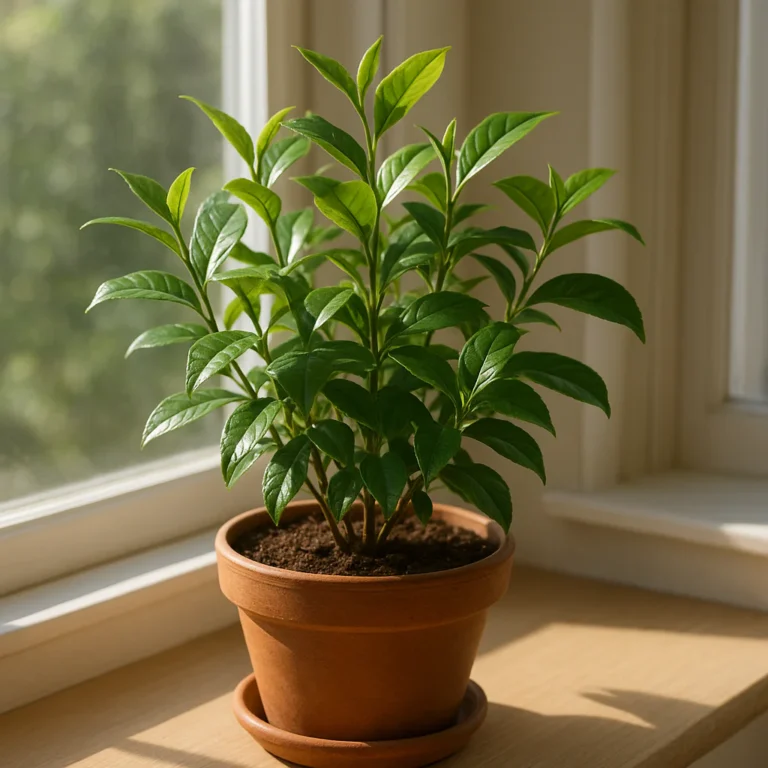
- Location: Choose a spot with bright, indirect light. Direct sun through a window can scorch leaves.
- Humidity Setup:
- Place a pebble tray with water under the pot (ensure the pot doesn’t sit in water).
- Use a small ultrasonic humidifier nearby.
Target: 60-75% RH.
- Airflow: Use a small oscillating fan on low setting to prevent mold.
- Temperature: Keep between 65-75°F (18-24°C).
- Monitoring: Use a digital hygrometer right next to the plant.
The “Terrarium” Method
For seedlings, a clear plastic dome or a grow tent works wonders.
- Pros: Maintains 90%+ humidity effortlessly.
- Cons: Requires daily venting to prevent mold.
Pro Tip: If you notice condensation on the inside of the dome, open it for 15 minutes a day to let fresh air in.
🌱 Our Tea Processing and Packing Clients Include:
At Growing Teas™, we don’t just grow; we help others process their harvest. Our expertise in humidity control has been instrumental for various clients in the tea industry.
- Small-Batch Artisan Producers: Helping them set up fermentation rooms with precise 95% RH control to produce high-quality black teas.
- Greenhouse Operators: Assisting in the design of humidity-controlled environments for year-round tea cultivation in non-traditional climates.
- Research Institutions: Collaborating on studies to determine the optimal VPD for different tea cultivars.
Note: While we work with many clients, we maintain strict confidentiality regarding their specific production volumes and proprietary blends. However, we can share that our humidity control solutions have consistently improved yield and quality across the board.
🍵 Other Food-Related Industries Where Humidity Control is Critical
The principles of humidity control in tea are not unique. Many other food industries rely on precise atmospheric conditions.
- Chocolate Conching: Similar to tea fermentation, chocolate requires specific humidity to develop flavor and prevent “bloom.”
- Chese Aging: Caves for aging cheese (like Roquefort) rely on high humidity (90%+) to prevent the rind from drying out.
- Cured Meats: Salami and prosciutto require controlled humidity to dry slowly without molding.
- Bakery Proofing: Yeast dough needs high humidity (80%+) to rise properly without forming a skin.
Insight: The technology used in tea processing (like Condair systems) is often adapted from these other industries, proving that humidity control is a universal food science principle.
✅ Benefits of Precise Humidity Management in Tea Production
Why go through all this trouble? The benefits are tangible and profitable.
- Higher Yields: Consistent humidity means consistent growth. No more “off” seasons.
- Superior Quality: Premium flavor profiles (umami, sweetness) are directly linked to optimal humidity.
- Reduced Waste: Preventing mold and leaf discoloration means more sellable product.
- Faster Processing: In fermentation, the right humidity speeds up the oxidation process, increasing factory throughput.
- Year-Round Production: With controlled environments, you can grow and process tea regardless of the external weather.
Quote from Industry: “If you can’t rely on the climate to provide the right conditions naturally, humidification from Condair is proven to provide a consistent and profitable production environment.”
🏆 Conclusion

So, are there specific humidity requirements for growing tea? Absolutely. The answer isn’t a simple “yes” or “no,” but a nuanced “it depends on the stage.”
- For the Living Plant: You need a minimum of 70% annual mean humidity, with 80-10% for seedlings and 60-75% for mature bushes.
- For the Processing: You need a staggering 95-98% RH to create that perfect black tea.
We started this article by asking if you could grow tea in a dry climate. The answer is yes, but it requires technology. We also asked if high humidity was always good. The answer is no, because without airflow, it leads to mold.
The secret to success lies in balance. It’s about understanding the VPD, monitoring the stomata, and respecting the enzymatic reactions that turn a leaf into a cup of tea. Whether you are a backyard gardener in Arizona or a factory owner in Sri Lanka, mastering humidity is the key to unlocking the full potential of Camellia sinensis.
Final Recommendation: If you are serious about growing tea, invest in a quality hygrometer and a reliable humidifier/dehumidifier system. Don’t guess; measure. And if you are processing black tea, never compromise on that 95% humidity target.
🔗 Recommended Links
Essential Tools & Equipment
- Digital Hygrometers: ThermoPro on Amazon | AcuRite on Walmart
- Ultrasonic Humidifiers: Levoit on Amazon | Honeywell on Walmart
- Dehumidifiers: Frigidaire on Amazon | hOmeLabs on Walmart
- Shade Cloth: Agfabric on Amazon | Farm Innovations on Etsy
- Misting Systems: Orbit on Amazon | Rain Bird Official
Books & Resources
- “The Tea Book” by Linda Gaylard: Amazon
- “Tea: History, Teroirs, Varieties” by Kevin Gascoyne: Amazon
- “The Story of Tea” by Mary Lou Heiss: Amazon
❓ FAQ

What is the ideal humidity level for growing black tea?
H3: What is the ideal humidity level for growing black tea?
For the growing phase (the bush itself), the ideal relative humidity is 70-85%. However, for the processing phase (fermentation) to create black tea, the humidity must be raised to 95-98%. This high humidity is critical for the enzymatic oxidation that gives black tea its color and flavor.
Read more about “🌱 Tea Plant Root Care & Management: 7 Secrets to Thriving Roots (2026)”
How does low humidity affect tea plant growth?
H3: How does low humidity affect tea plant growth?
Low humidity causes the plant to close its stomata to conserve water, which halts photosynthesis. This leads to stunted growth, tough and fibrous leaves, and a bitter flavor profile due to increased tannin production. In severe cases, it can cause leaf scorch and plant death.
Read more about “🌱 7 Steps to Clone Tea Plants: The Ultimate Guide (2026)”
Can tea plants survive in dry climates with high humidity control?
H3: Can tea plants survive in dry climates with high humidity control?
Yes. With the use of greenhouses, shade cloth, misting systems, and humidifiers, tea plants can thrive in arid climates. The key is to create a microclimate that mimics the humid conditions of traditional tea-growing regions.
What are the best methods to increase humidity for indoor tea plants?
H3: What are the best methods to increase humidity for indoor tea plants?
- Ultrasonic Humidifier: The most effective method for precise control.
- Peble Tray: Place the pot on a tray filled with water and pebbles (ensure the pot doesn’t touch the water).
- Grouping Plants: Grouping plants together creates a localized humid microclimate.
- Misting: Lightly misting the leaves (but be careful of mold).
- Terrarium/Grow Tent: Enclosing the plant in a transparent container to trap moisture.
Read more about “Tea’s Sweet Spot: Ideal Growing Temperatures! 🌿”
How do I know if my tea plant has too much humidity?
H4: How do I know if my tea plant has too much humidity?
Signs of excessive humidity include yellowing leaves, mold growth (white or gray fuzzy spots), root rot (smelly, mushy roots), and droping leaves despite wet soil. If you see these signs, increase airflow with a fan and reduce the humidifier output.
📚 Reference Links
- PLOS ONE Study: Comparison of machine learning and deep learning models for tea suitability
- Condair: Tea Production Humidity Control
- Condair Group: Humidification Solutions for Tea
- Growing Teas™ – Green Tea Cultivation: Green Tea Cultivation
- Growing Teas™ – Herbal Tea Planting: Herbal Tea Planting
- Growing Teas™ – Organic Farming Techniques: Organic Farming Techniques
- Growing Teas™ – Health Benefits of Tea: Health Benefits of Tea
- Growing Teas™ – DIY Tea Blending: DIY Tea Blending
- Growing Teas™ – Climate Conditions: What climate conditions are needed to grow tea successfully?