Support our educational content for free when you purchase through links on our site. Learn more
11 Common Tea Plant Diseases and Organic Fixes 🍃

The best answer to “What are the most common diseases that affect tea plants and how can I treat them organically?” is this: start with clean tools, healthy drainage, dry foliage, good airflow, and early diagnosis. Then match an approved organic treatment, such as a biological fungicide or carefully selected copper product, to the actual disease.
The most frequent problems include anthracnose, blister blight, brown and grey blight, powdery mildew, red rust, bacterial leaf spot, damping-off, root rot, Phytophthora, Pythium, wilt diseases, cankers, and viral disorders. They may sound like a villain lineup from Camellia Sinensis: The Moisture Strikes Back, but many outbreaks begin with something wonderfully ordinary: wet leaves, crowded branches, or soil that drains like a bathtub with a cork in it.
We learned this the hard way after a run of humid weather left a few tea plants with dark leaf spots. The first instinct was to spray. The better solution was to remove infected leaves, open the canopy, stop overhead watering, and fix the sogy root zone. New growth returned clean because the cause had been addressed, not merely decorated with another bottle.
Key Takeaways
- Inspect before treating. Brown leaves may indicate disease, pests, root damage, drought, frost, sun scorch, or fertilizer burn.
- Improve growing conditions first. Better drainage, morning watering, clean tools, plant spacing, and airflow prevent more disease than most sprays.
- Remove infected material promptly. Prune diseased leaves and stems during dry weather, then dispose of them away from the compost pile.
- Use organic treatments strategically. Bacillus subtilis, Trichoderma, potassium bicarbonate, sulfur, and labeled copper products each have specific uses and limitations.
- Do not expect sprays to cure dead tissue. Judge recovery by clean new growth, stronger shoots, and reduced spread.
- Treat root rot differently from leaf blight. Root disease requires drainage correction, root inspection, and sometimes removal of the plant.
- Avoid homemade vinegar, bleach, concentrated peroxide, and detergent sprays. They can scorch edible tea leaves and may lack reliable crop-specific directions.
- Quarantine new plants. Healthy nursery stock is one of the simplest ways to prevent viral, fungal, and bacterial diseases entering your tea garden.
- Seek a plant-disease diagnosis when symptoms spread quickly, roots collapse, several plants are affected, or a virus or vascular wilt is suspected.
Table of Contents
- ⚡ Quick Tips and Facts: Organic Tea Plant Disease Control
- The fastest ways to protect Camellia sinensis
- ✅ Organic treatments that help
- ❌ Common disease-control mistakes to avoid
- 🍃 Tea Plant Diseases: Background, Biology, and Growing Conditions
- How fungal, bacterial, and viral diseases spread
- Why humidity, poor drainage, and overcrowding matter
- The role of plant stress, soil health, and sanitation
- 🔍 How to Identify Disease Symptoms on Tea Plants
- Leaf spots, blights, lesions, and browning
- White coatings, fuzzy growth, and fungal spores
- Root rot, wilt, dieback, and weak growth
- Disease or pest damage? How to tell the difference
- Nutrient deficiencies that look like plant disease
- 1. Tea Anthracnose and Coletotrichum Leaf Blight
- Symptoms and causes of anthracnose
- Organic treatment and prevention
- 2. Blister Blight of Tea
- Recognizing blister blight symptoms
- Organic management for Exobasidium disease
- 3. Brown Blight and Grey Blight
- How brown and grey leaf blights develop
- Pruning, airflow, and organic disease control
- 4. Tea Red Rust and Algal Leaf Spot
- What red rust looks like on tea leaves
- Organic approaches to reduce algal leaf spot
- 5. Powdery Mildew on Tea Plants
- White powder symptoms and likely causes
- Using neem oil, sulfur, and bicarbonate treatments safely
- 6. Tea Root Rot and Phytophthora Disease
- Root rot symptoms, causes, and risk factors
- Improving drainage and treating infected roots organically
- 7. Pythium Root Rot and Damping-Off
- Damping-off in tea seedlings and cutings
- Organic nursery prevention and treatment
- 8. Fusarium Wilt and Vascular Diseases
- Symptoms of wilt, yellowing, and dieback
- What to do when infected plants cannot be cured
- 9. Tea Canker, Dieback, and Stem Diseases
- Identifying cankers and damaged branches
- Sanitary pruning and organic wound protection
- 10. Bacterial Leaf Spot and Bacterial Blight
- How bacterial diseases differ from fungal infections
- Copper-based organic controls and sanitation
- 11. Viral and Phytoplasma Disorders in Tea Plants
- Symptoms of mosaic, distortion, and unusual growth
- Managing diseases with no direct organic cure
- 🧪 Organic Tea Plant Disease Treatments That Actually Help
- Biological fungicides: Bacillus subtilis and Trichoderma
- Neem oil and horticultural oils
- Copper fungicides approved for organic gardening
- Sulfur, potassium bicarbonate, and baking soda sprays
- Compost, mulch, and soil amendments
- Why homemade milk, vinegar, and bleach sprays can backfire
- 📅 A Step-by-Step Organic Disease Management Plan
- Step 1: Isolate and inspect the tea plant
- Step 2: Remove infected leaves and branches
- Step 3: Correct watering, drainage, and humidity
- Step 4: Apply the right organic treatment
- Step 5: Monitor new growth and repeat responsibly
- ✂️ Pruning, Sanitation, and Crop Hygiene for Healthy Tea
- How to disinfect pruning tools
- Safe disposal of diseased plant material
- Spacing, airflow, and canopy management
- 💧 Watering, Soil, and Nutrition: Preventing Tea Plant Disease
- The best soil conditions for Camellia sinensis
- How often to water tea plants
- Fertilizing without causing weak, disease-prone growth
- Container-grown tea plants and drainage tips
- 🌿 Integrated Pest and Disease Management for Tea
- Controlling aphids, scale, mites, and other disease vectors
- Beneficial insects and biodiversity
- Choosing resistant tea cultivars and healthy nursery stock
- 🌱 Organic Tea Disease Prevention by Season
- Spring: protecting tender new shoots
- Summer: managing heat, rain, and humidity
- Autumn: reducing overwintering disease
- Winter: protecting roots and dormant plants
- 🩺 When to Seek Expert Help or a Plant Disease Diagnosis
- When home treatment is unlikely to work
- How to collect a useful plant sample
- Plant clinics, extension services, and laboratory testing
- 📈 What to Expect After Treating a Diseased Tea Plant
- How long organic treatments take to work
- Can damaged tea leaves recover?
- Signs the plant is recovering
- Signs the disease is spreading
- ⚠️ Tea Plant Disease Complications and Common Treatment Mistakes
- Overusing copper and sulfur products
- Spraying during heat, bright sun, or rain
- Treating symptoms while ignoring the cause
- When removing the whole plant is the healthiest choice
- ❓ FAQ: Organic Treatment for Common Tea Plant Diseases
- What is the most common disease affecting tea plants?
- Can I use neem oil on tea plants?
- Is baking soda safe for tea leaves?
- Can diseased tea leaves still be harvested and brewed?
- How do I treat black spots on tea plant leaves organically?
- Why are my tea plant leaves turning brown and falling off?
- How can I prevent root rot in a potted tea plant?
- Are organic fungicides safe for pollinators and soil life?
- Conclusion
- 🔗 Recommended Links
- 📚 Reference Links
Quick Tips and Facts: Organic Tea Plant Disease Control
First, identify the problem before reaching for a spray. A tea plant with brown leaves may have anthracnose, root stress, sun scorch, fertilizer burn, mites, or plain old sogy roots. Guessing can turn a small problem into a botanical soap opera. For a broader pest-and-disease overview, start with our guide to common pests and diseases that affect tea plants.
At Growing Teas™, we grow and advise on Camellia sinensis, the true tea plant used for green, black, olong, white, and pu-erh tea. Here are the actions we trust most:
- Inspect new growth weekly. Early spots are far easier to manage than a fully infected canopy.
- Keep leaves dry when watering. Use a soaker hose or water at the soil line; prolonged leaf wetness encourages many fungal and bacterial diseases. University of California Integrated Pest Management emphasizes moisture management as a core disease-prevention tool.
- Improve airflow. Prune crowded interior shoots and remove leaves touching the soil.
- Sanitize tools between plants. A disinfectant such as 70% isopropyl alcohol helps reduce accidental spread between cuts.
- Remove severely infected material. Seal diseased leaves and branches for disposal rather than adding them to a cool home compost pile.
- Fix drainage before applying fungicide. No copper spray can rescue roots sitting in stagnant water.
- Use only products labeled for tea, edible crops, or your specific disease. Organic does not mean risk-free.
- Treat preventively when appropriate. Biological products containing Bacillus subtilis or Trichoderma work best before disease becomes widespread.
- Avoid mystery kitchen concoctions on harvestable tea. Vinegar, concentrated peroxide, detergent, and strong baking-soda mixes can scorch leaves and leave residues.
The fastest ways to protect Camellia sinensis
| Action | Why it helps | Our recommendation |
|---|---|---|
| Check undersides of leaves | Spores, mites, and insects often hide there | Inspect once or twice weekly |
| Remove fallen leaves | Reduces pathogen reservoirs | Clear debris after wet weather |
| Thin dense growth | Improves light and ventilation | Prune lightly; avoid severe stress |
| Test soil moisture | Prevents chronic saturation | Water when the upper layer begins to dry |
| Quarantine new plants | Nursery diseases can arrive unnoticed | Isolate for 2–4 weeks |
| Photograph symptoms | Helps compare progression | Take close-ups and whole-plant photos |
| Confirm diagnosis | Different diseases need different responses | Contact a local extension service for uncertain cases |
✅ Best immediate move: isolate the plant, stop overhead watering, remove only clearly diseased tissue, and correct the growing conditions.
❌ Worst immediate move: spray five products at once and hope one of them is the botanical superhero.
✅ Organic treatments that help
Organic disease management works best as a system, not a single bottle. The strongest combination is:
- Sanitation
- Airflow
- Balanced nutrition
- Correct watering
- Biological prevention
- A labeled organic fungicide when necessary
Products such as Serenade Garden Disease Control, which uses Bacillus subtilis strain QST 713, and Bonide Copper Fungicide may have useful roles, but always check the current label for crop eligibility, application rates, harvest intervals, and disease targets. The USDA National Organic Program regulates organic production, while the product label determines legal use.
❌ Common disease-control mistakes to avoid
- Treating every brown spot as a fungus.
- Spraying neem oil as though it were a cure for root rot.
- Applying copper repeatedly without considering soil accumulation or leaf sensitivity.
- Pruning during wet weather and leaving fresh wounds exposed.
- Using a household dish detergent instead of a labeled horticultural soap.
- Composting heavily infected leaves in a small backyard pile.
- Harvesting diseased leaves for drinking.
- Applying sprays in full sun or extreme heat.
- Ignoring plant spacing and poor drainage.
- Assuming a product labeled “natural” is automatically organic-certified or safe for tea.
A useful lesson comes from the fruit-tree guidance summarized in the competing article by Melissa K. Norris: “The best fungicide and bacteriacide is air.” The wording is memorable, and the principle is sound. Airflow will not cure an established infection, but it can make the difference between a few manageable spots and a dripping, disease-friendly canopy.
Tea Plant Diseases: Background, Biology, and Growing Conditions

Tea plants belong to the genus Camellia, with Camellia sinensis and its varieties forming the foundation of cultivated tea. They prefer acidic, well-drained, moisture-retentive soil, filtered light or gentle morning sun, and steady moisture rather than repeated flooding and drought.
Our tea beds have taught us a humbling lesson: the plant often announces a problem long before it announces the diagnosis. A curled leaf may be reacting to roots, weather, insects, salt buildup, or a pathogen. That is why successful organic control begins with the plant’s environment.
How fungal, bacterial, and viral diseases spread
| Disease group | How it commonly spreads | Typical clues | Organic strategy |
|---|---|---|---|
| Fungal pathogens | Splashing rain, irrigation, wind, contaminated tools, infected debris | Circular spots, fuzzy growth, blights, cankers | Sanitation, airflow, biological fungicides, labeled copper or sulfur |
| Oomycetes such as Phytophthora | Saturated soil and moving water | Root decay, wilt, sudden collapse | Drainage, clean propagation media, resistant stock |
| Bacterial pathogens | Rain splash, wounds, tools, insects | Water-soaked lesions, angular spots, ooze | Sanitation, dry foliage, labeled copper where permitted |
| Viruses | Infected stock, grafting, sap-feding insects, tools | Mosaic, streaking, distortion, stunting | Remove infected plants and control vectors |
| Nematodes | Infested soil and planting material | Poor growth, root damage, uneven vigor | Clean stock, soil health, site management |
Many fungal spores need a film of water on a leaf to germinate. That does not mean every wet leaf becomes diseased; healthy plants and hostile conditions can interrupt the infection cycle. Still, repeated leaf wetness, dense shade, warm temperatures, and poor ventilation create a pathogen-friendly microclimate.
Why humidity, poor drainage, and overcrowding matter
Think of a crowded tea plant as a miniature rainforest with terrible housekeeping. Leaves remain wet longer, air movement drops, and fallen tissue decomposes slowly. This favors diseases such as:
- Anthracnose and leaf blights
- Blister blight
- Powdery mildew
- Bacterial leaf spot
- Root and collar rots
The Clemson Cooperative Extension and Cornell University Plant Disease Diagnostic Clinic both emphasize diagnosis and environmental correction rather than indiscriminate spraying.
For containers, use a pot with drainage holes and an acidic, airy medium. A tea plant should never sit in a saucer of water for days. If the pot smells sour, the roots may already be asking for an emergency meeting.
The role of plant stress, soil health, and sanitation
Healthy tea plants are not immune, but they generally tolerate minor damage better. Stress factors include:
- Drought followed by heavy irrigation
- Waterlogged roots
- Excessive nitrogen
- Root disturbance
- Salt buildup from fertilizer
- Frost injury
- Heat reflected from walls or paving
- Poor light
- Contaminated nursery tools or pots
Our Organic Farming Techniques resources cover soil-building and low-input growing practices. For nutrition specifically, see Fertilizers for Tea Plants.
A practical soil-health routine:
- Test soil pH and drainage.
- Add mature compost sparingly.
- Mulch with clean organic material, leaving space around the stem.
- Avoid fresh manure, which can burn roots and introduce pathogens.
- Feed modestly during active growth.
- Stop fertilizing stressed or badly diseased plants until the cause is understood.
How to Identify Disease Symptoms on Tea Plants
Diagnosis begins with patterns, not isolated marks. Ask:
- Are symptoms on old leaves, new leaves, roots, or stems?
- Are spots circular, angular, water-soaked, or surrounded by a yellow halo?
- Is the disease evenly distributed or appearing in patches?
- Is the soil wet?
- Are insects present?
- Did symptoms follow rain, frost, repoting, or fertilization?
Leaf spots, blights, lesions, and browning
| Symptom | Possible causes | What to check first |
|---|---|---|
| Small dark circular spots | Anthracnose, fungal leaf spot | Moisture, leaf wetness, nearby infected debris |
| Large irregular brown patches | Blight, scorch, frost, sun injury | Weather history and lesion edges |
| Angular lesions between veins | Bacterial or fungal leaf spot | Whether spots stop at veins |
| Browning from leaf margins | Drought, salt, wind, nutrient stress | Soil moisture and fertilizer history |
| Yellowing with green veins | Root stress or nutrient imbalance | Roots, pH, drainage |
| Rapid wilt | Root rot, vascular disease, severe heat | Root color, odor, stem tissue |
Fungal lesions may develop tiny black fruiting structures or gray spore masses. A hand lens is useful. The Royal Horticultural Society provides practical symptom-based plant-health guidance, although tea-specific diagnosis may require a specialist.
White coatings, fuzzy growth, and fungal spores
A white powdery film on the upper leaf surface suggests powdery mildew, but white residue can also be:
- Dried mineral deposits from hard water
- Spray residue
- Mealybugs or scale insects
- Natural leaf hairs
- Sap deposits from insects
Gently wipe a small area with a damp cotton swab. If the coating smears like powder and returns, fungal growth becomes more likely. If it is hard and crusty, inspect your water and spray history.
Root rot, wilt, dieback, and weak growth
Root disease often hides until the plant is already struggling. Signs include:
- Leaves droping despite wet soil
- Yellowing throughout the canopy
- Slow growth
- A sour or swampy odor
- Brown, black, or mushy roots
- Bark discoloration near the soil line
- Suden collapse after warm rain
Healthy tea roots should be firm and generally light-colored to tan, depending on age and growing medium. Do not diagnose solely by root color; texture and odor matter too.
Disease or pest damage? How to tell the difference
| Clue | More likely disease | More likely pest |
|---|---|---|
| Expanding spots after rain | ✅ | Sometimes |
| Fine webing | ❌ | ✅ Mites or spiders |
| Sticky honeydew | ❌ | ✅ Aphids, scale, whiteflies |
| Chewed margins or holes | ❌ | ✅ Caterpillars, beetles |
| Uniform mosaic pattern | ✅ Virus or nutrient issue | Possible vector |
| Silver streaks | Sometimes | ✅ Thrips |
| Cottony clusters | ❌ | ✅ Mealybugs |
| Suden root collapse | ✅ | Sometimes root-feding insects |
The first video featured in this article takes a similar practical approach, discussing mosaic virus, rust, verticillium wilt, powdery mildew, pruning, bottom watering, and homemade remedies. You can revisit that perspective at #featured-video. Its suggestions are useful as general garden observations, but we would not automatically transfer its vinegar, peroxide, or detergent recipes to harvestable tea without crop-specific testing and label guidance.
Nutrient deficiencies that look like plant disease
Nutrient problems usually affect the plant more uniformly than a contagious disease, although patterns overlap.
| Appearance | Possible nutrient issue | Useful next step |
|---|---|---|
| Older leaves uniformly pale | Nitrogen deficiency | Soil test; review feeding |
| Young leaves yellow with green veins | Iron availability or high pH | Test pH and drainage |
| Brown leaf tips | Salt stress, drought, root damage | Flush only if drainage is excellent |
| Purple or dull foliage | Phosphorus stress or cold | Check temperature and pH |
| Distorted new leaves | Boron, calcium, herbicide drift, pests | Inspect carefully before feeding |
Avoid “treating” a suspected deficiency with heavy fertilizer. A soil test is less exciting than a spray bottle, but it is usually cheaper than replacing a tea plant.
1. Tea Anthracnose and Coletotrichum Leaf Blight
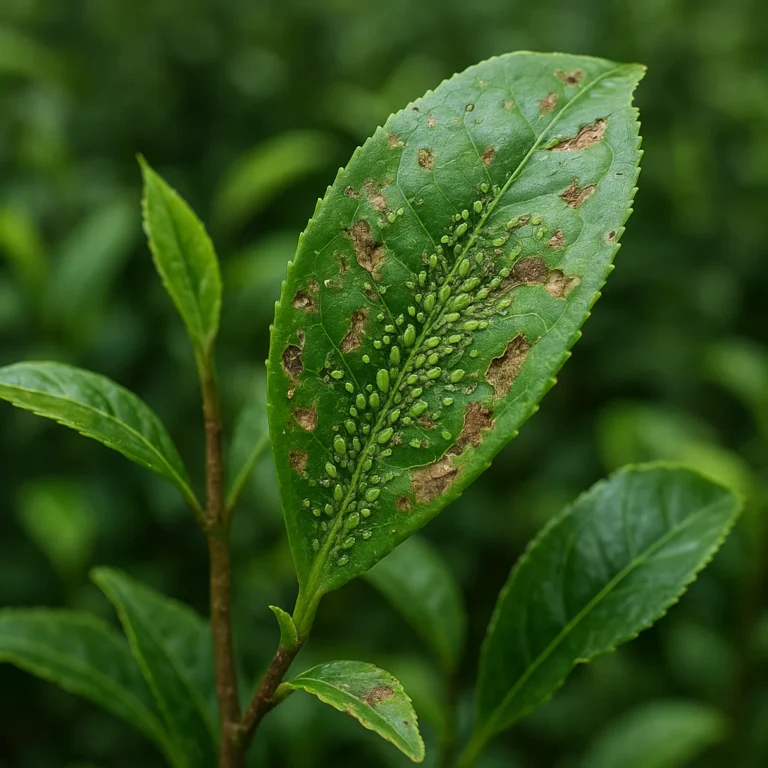
Anthracnose is among the most familiar fungal disease patterns on tea and related woody plants. Species of Coletotrichum can produce dark lesions, shoot dieback, and premature leaf drop, especially under warm, wet conditions.
Symptoms and causes of anthracnose
Look for:
- Brown, tan, or black lesions
- Circular or irregular spots
- Dark margins around dead tissue
- Tiny black fruiting bodies in older lesions
- Dieback on tender shoots
- Symptoms concentrated in wet, crowded areas
The disease can spread through rain splash, infected leaves, pruning tools, and nursery material. It may begin as a few spots, then accelerate when rainy weather repeatedly wets fresh growth.
Organic treatment and prevention
- Remove the worst leaves and shoots. Do not strip the entire plant unless infection is severe.
- Prune during dry weather.
- Disinfect tools between plants.
- Clear fallen leaves.
- Reduce overhead irrigation.
- Open the canopy modestly.
- Apply a labeled biological fungicide preventively or at the earliest stage.
- Use copper only if the product label permits application to tea or the relevant edible crop.
A product such as Monterey Complete Disease Control contains beneficial microbes and may be useful for certain listed diseases, but formulations and labels vary. Always read the current label rather than relying on a product’s marketing page.
Drawback: Biological products generally cannot reverse dead tissue. Their strength is reducing new infection and supporting a broader management program.
2. Blister Blight of Tea
Blister blight, caused by Exobasidium species, is a serious tea disease in humid tea-growing regions. It primarily affects tender leaves and shoots, which is especially frustrating when those are exactly the parts we hope to harvest.
Recognizing blister blight symptoms
Early signs may include:
- Pale, translucent spots
- Small circular lesions
- Blisters developing on the underside of leaves
- White fungal growth on mature blisters
- Distorted or prematurely shed young leaves
- Damage concentrated on soft new flush
Because symptoms can resemble other leaf spots, photographs and local diagnosis are valuable. The Food and Agriculture Organization of the United Nations offers broad plant-health resources, while regional tea research institutes often provide the most relevant disease alerts.
Organic management for Exobasidium disease
Blister blight is best managed through prevention:
- Keep nursery stock clean.
- Avoid dense, stagnant canopies.
- Remove severely infected leaves.
- Time pruning to promote rapid drying.
- Monitor new flush after prolonged wet weather.
- Use only a registered, crop-labeled biological or copper product where permitted.
- Coordinate treatment across nearby tea plants; isolated spraying may fail if surrounding plants remain heavily infected.
What we have seen: removing one blistered leaf can help, but removing one leaf while leaving a dripping, overcrowded canopy is like mopping the floor while the tap is still running.
3. Brown Blight and Grey Blight
Brown blight and grey blight describe leaf diseases that produce expanding necrotic lesions. Symptoms can overlap, and exact diagnosis may require microscopy or laboratory testing.
How brown and grey leaf blights develop
Common conditions include:
- Persistent humidity
- Rain splash
- Dense foliage
- Weak or shaded shoots
- Poor sanitation
- Repeated stress
Grey blight may develop pale or gray centers with darker borders. Brown blight may appear as brown patches that enlarge and merge. Do not depend on color alone; many diseases turn brown as tissue dies.
Pruning, airflow, and organic disease control
- Remove heavily affected leaves.
- Thin crossing branches.
- Keep mulch off the stem.
- Collect fallen leaves.
- Water early enough that foliage dries quickly.
- Avoid excessive nitrogen, which can create soft, crowded growth.
- Apply a labeled microbial fungicide before wet conditions if disease history is established.
Products such as Actinovate Garden Fungicide, containing Streptomyces lydicus, are marketed for biological disease management. Their effectiveness depends on correct timing, coverage, storage, and label directions. They are not replacements for drainage and sanitation.
4. Tea Red Rust and Algal Leaf Spot
Red rust is commonly associated with algae such as Cephaleuros species rather than a true rust fungus. It can affect tea and other plants in warm, humid climates.
What red rust looks like on tea leaves
Typical signs include:
- Orange, rust-colored, or reddish-brown fuzzy patches
- Raised circular growth
- Spots on leaves or young stems
- Gradual weakening of affected tissue
- Greater severity on stressed plants
The University of Florida IFAS Extension provides useful resources on algal diseases and environmental management.
Organic approaches to reduce algal leaf spot
- Improve sunlight and airflow.
- Reduce persistent leaf wetness.
- Prune nearby vegetation that traps humidity.
- Remove badly affected tissue.
- Improve overall plant vigor without overfertilizing.
- Use a labeled copper product only where permitted and necessary.
Caution: Copper is broad-spectrum. It may affect beneficial microorganisms and can accumulate in soil after repeated use. We prefer correcting the microclimate first, then using the least disruptive labeled treatment.
5. Powdery Mildew on Tea Plants
Powdery mildew is visually dramatic: one day the leaf looks normal, and the next it appears to have been dusted with flour by a mischievous pastry chef.
White powder symptoms and likely causes
Powdery mildew typically appears as:
- White powder on leaf surfaces
- Distorted young leaves
- Yellowing beneath infected patches
- Premature leaf drop
- Reduced shoot vigor
Unlike many leaf-spot fungi, powdery mildew does not always require free water on the leaf surface. It can thrive with high humidity and relatively dry leaf surfaces, especially where airflow is poor.
Using neem oil, sulfur, and bicarbonate treatments safely
- Neem oil: Better suited to certain insects and mites than as a dependable tea disease cure. If used, choose a clearly labeled horticultural product, avoid heat and bright sun, and protect pollinators.
- Sulfur: Can help with powdery mildew where labeled, but avoid applying during hot weather or near oil sprays. Follow the re-entry and harvest directions.
- Potassium bicarbonate: May suppress powdery mildew by changing leaf-surface conditions. Use a registered product when possible.
- Baking soda: Household sodium bicarbonate can raise salt injury risks and is less predictable than potassium bicarbonate.
The featured video suggests baking soda, milk, vinegar, and diluted hydrogen peroxide. Those recipes may produce anecdotal results in ornamental gardens, but we do not recommend applying improvised mixtures to leaves intended for tea without testing a small area and checking local food-crop regulations. The National Pesticide Information Center explains why “natural” pesticides still require careful handling.
6. Tea Root Rot and Phytophthora Disease
Root rot is one of the hardest tea-plant problems because the visible symptoms appear above ground while the real damage happens below the soil line.
Root rot symptoms, causes, and risk factors
Watch for:
- Persistent wilt in wet soil
- Yellowing leaves
- Sparse new growth
- Branch dieback
- Soft or dark roots
- Cracked bark near the crown
- Plant collapse after heavy rain
Phytophthora is an oomycete, often called a water mold. It behaves differently from many true fungi and thrives in saturated conditions. The USDA Animal and Plant Health Inspection Service provides plant-health and pathogen information, while local extension laboratories can help confirm diagnosis.
Improving drainage and treating infected roots organically
For container plants:
- Move the pot away from standing water.
- Remove the plant carefully.
- Inspect roots.
- Cut away mushy, foul-smelling tissue with sterilized pruners.
- Repot into a clean container and fresh, airy acidic medium.
- Water lightly until recovery begins.
- Avoid fertilizer during acute root stress.
For garden plants:
- Redirect runoff.
- Improve soil structure with suitable organic matter.
- Create raised planting areas where necessary.
- Avoid planting tea in compacted clay pockets.
- Remove plants that are extensively collapsed and dispose of them responsibly.
Biological products containing Trichoderma may help colonize roots and compete with pathogens, especially as a preventive measure. They will not resurrect dead roots. RootShield is one commercial example; verify crop registration and organic-use status in your region.
7. Pythium Root Rot and Damping-Off
Pythium is particularly troublesome in propagation trays and poorly drained nursery media.
Damping-off in tea seedlings and cutings
Symptoms include:
- Seeds failing to emerge
- Young stems collapsing at the soil line
- Water-soaked tissue
- Rapid death in clusters
- Sparse, weak roots
In our propagation area, the warning sign is often not a dramatic lesion but a tray that stays wet far too long. Tea cutings need moisture, yes, but not a miniature swamp.
Organic nursery prevention and treatment
- Use sterile or pasteurized propagation media.
- Clean trays and tools.
- Avoid overcrowding.
- Provide gentle airflow.
- Water from below when practical.
- Empty drainage trays.
- Remove collapsed seedlings immediately.
- Avoid reusing contaminated medium.
- Consider a labeled biological inoculant such as Trichoderma for prevention.
Do not “rescue” collapsed seedlings by adding more fertilizer. Young roots cannot use a buffet while they are drowning.
8. Fusarium Wilt and Vascular Diseases
Fusarium and other soilborne vascular pathogens can block water movement inside a plant. Symptoms may begin with one branch or one side of the canopy before spreading.
Symptoms of wilt, yellowing, and dieback
Look for:
- One-sided wilting
- Yellowing leaves
- Progressive branch dieback
- Brown discoloration inside cut stems
- Poor response to watering
- Stunting despite adequate moisture
The disease can resemble drought, root rot, or herbicide injury. A clean stem cut and laboratory diagnosis may be necessary.
What to do when infected plants cannot be cured
There is no reliable organic spray that reverses extensive vascular infection. Focus on containment:
- Remove severely affected plants.
- Do not move contaminated soil to another bed.
- Clean tools and footwear.
- Avoid planting susceptible species immediately in the same site.
- Improve drainage and organic matter.
- Use clean, disease-free nursery stock.
- Consider resistant or tolerant cultivars where available.
The first video recommends crop rotation for verticillium wilt. That is sensible for many annual crops, but tea is a long-lived perennial, so rotation is not always practical. In a small garden, site sanitation and clean replacement stock may matter more.
9. Tea Canker, Dieback, and Stem Diseases
Stem diseases often enter through pruning cuts, frost wounds, insect damage, or cracked bark.
Identifying cankers and damaged branches
Symptoms may include:
- Sunken dead areas on stems
- Cracked bark
- Oozing or discolored tissue
- Dieback beyond the lesion
- Blackened pruning wounds
- Wilting leaves one branch
A cankered branch may look healthy several inches below the visible lesion, so pruning must extend into clean tissue.
Sanitary pruning and organic wound protection
- Prune during dry weather.
- Cut below the canker into healthy wood.
- Sterilize tools between cuts.
- Remove prunings from the growing area.
- Keep cuts clean and moderate.
- Avoid unnecessary wound paints.
- Improve airflow after pruning.
Copper wound products are not a substitute for clean cuts and tool sanitation. In many cases, the best protection is simply avoiding wet-weather pruning and preventing repeated injury.
10. Bacterial Leaf Spot and Bacterial Blight
Bacterial diseases can spread rapidly through rain splash, contaminated tools, insects, and damaged tissue.
How bacterial diseases differ from fungal infections
Bacterial lesions may be:
- Water-soaked
- Angular and limited by leaf veins
- Surounded by yellow halos
- Associated with ooze under humid conditions
- More severe after storms or overhead irrigation
However, appearances overlap. A laboratory diagnosis is the safest route when a disease is spreading rapidly.
Copper-based organic controls and sanitation
Copper products may reduce new bacterial infections when applied preventively, but they rarely repair existing dead tissue. Use:
- Clean propagation stock
- Dry foliage
- Adequate spacing
- Sanitary pruning
- Removal of severely infected leaves
- A labeled copper product only when permitted
Do not mix copper with oils unless the label explicitly allows it. Avoid repeated applications that may injure tender tea leaves or accumulate in soil.
11. Viral and Phytoplasma Disorders in Tea Plants
Viruses and phytoplasmas are not treated like fungal leaf spots. They interfere with plant growth from inside the plant, often producing unusual color patterns and distortion.
Symptoms of mosaic, distortion, and unusual growth
Possible signs include:
- Mottled light and dark green patterns
- Yellow streaks
- Twisted leaves
- Abnormally narrow leaves
- Stunting
- Fasciated or witch’s-broom growth
- Poor flush development
The first video correctly highlights that mosaic viruses can spread through contact and aphids. We would add that the exact vector and host range depend on the virus.
Managing diseases with no direct organic cure
- Remove and dispose of confirmed infected plants.
- Control aphids, thrips, and other sap-feding vectors.
- Disinfect tools.
- Do not propagate from suspicious material.
- Buy plants from reputable nurseries.
- Avoid saving cutings from symptomatic plants.
A virus-infected tea plant may survive for years, but survival is not the same as recovery. If it becomes a source of infection for nearby plants, removal is often the kinder decision for the rest of the garden.
Organic Tea Plant Disease Treatments That Actually Help
Organic treatment is not a synonym for homemade. A certified or registered product has an ingredient list, directions, safety information, and legal use pattern. A kitchen recipe has none of those guarantees.
Biological fungicides: Bacillus subtilis and Trichoderma
Biological controls work through competition, colonization, antibiosis, or induced plant defenses. Examples include:
- Bacillus subtilis
- Bacillus amyloliquefaciens
- Trichoderma harzianum
- Streptomyces lydicus
They generally perform best:
- Before heavy infection
- On clean foliage or roots
- When stored correctly
- With thorough coverage
- As part of repeated prevention
✅ Lower residue concerns
✅ Often compatible with integrated pest management
❌ Usually slower than a harsh knockdown chemical
❌ Performance varies with temperature, storage, disease, and timing
Neem oil and horticultural oils
Neem oil is primarily useful against certain insect pests, eggs, and mites. It is not a universal cure for tea diseases. Cold-pressed neem products differ from clarified hydrophobic extracts, and formulations may include emulsifiers.
If using a labeled product:
- Test a small area first.
- Avoid hot weather.
- Do not spray drought-stressed plants.
- Spray when pollinators are inactive.
- Keep away from open flowers.
- Follow harvest intervals.
Bonide Neem Oil is a recognizable retail brand, but its label and permitted uses must be checked before applying to tea.
Copper fungicides approved for organic gardening
Copper hydroxide, copper soap, and fixed copper formulations may suppress fungal and bacterial disease. Copper is a protectant, not a magic eraser.
Benefits:
- Broad disease activity
- Useful in preventive programs
- Available in organic production systems when compliant with applicable standards
Drawbacks:
- Can burn tender foliage
- Can harm aquatic life
- Can accumulate in soil
- May affect beneficial microbes
- Requires careful timing and coverage
The Organic Materials Review Institute can help identify products reviewed for organic production, although local crop labeling remains decisive.
Sulfur, potassium bicarbonate, and baking soda sprays
| Product | Best-known use | Main risk |
|---|---|---|
| Sulfur | Powdery mildew and some mites | Phytotoxicity in heat; incompatibility with oils |
| Potassium bicarbonate | Powdery mildew suppression | Leaf injury if overaplied |
| Sodium bicarbonate | Homemade mildew suppression | Salt buildup and inconsistent performance |
| Horticultural soap | Soft-bodied insects | Leaf burn if concentrated |
| Hydrogen peroxide | Limited sanitation uses | Tissue damage and unreliable disease control |
We are cautious with homemade recipes because tea leaves are an edible crop. The featured video’s vinegar and peroxide suggestions may be appropriate for some non-food garden experiments, but their safety and efficacy are not established for every tea cultivar or harvest situation.
Compost, mulch, and soil amendments
Compost supports structure and microbial diversity, but it does not sterilize disease. Use:
- Mature, finished compost
- Clean leaf mold
- Acid-compatible organic amendments
- Pine bark or similar aerating material for containers
- Mulch that does not touch the stem
Avoid burying diseased leaves around tea plants. The fruit-tree article’s advice to remove infected debris is transferable and sensible.
Why homemade milk, vinegar, and bleach sprays can backfire
Milk sprays may suppress some powdery mildew under particular conditions, but they can smell, attract pests, or leave residue. Vinegar can burn foliage. Bleach can injure plants and damage soil life. Peroxide can oxidize organic tissue unpredictably.
Our rule: if the mixture is not labeled for edible crops, test it on a small non-harvested section and prefer a registered alternative.
A Step-by-Step Organic Disease Management Plan
Step 1: Isolate and inspect the tea plant
Move potted plants away from healthy tea if practical. For garden plants, create a working boundary and avoid brushing infected foliage against neighboring plants.
Record:
- Date symptoms appeared
- Recent weather
- Watering pattern
- Fertilizer applications
- New plants introduced
- Pest sightings
- Photos of leaves, stems, and roots
Step 2: Remove infected leaves and branches
Use clean, sharp tools. Remove tissue that is:
- Covered in expanding lesions
- Clearly dead
- Collapsed or mushy
- Heavily blistered
- Cankered
Do not remove every slightly yellow leaf. Tea plants need enough foliage to photosynthesize and recover.
Step 3: Correct watering, drainage, and humidity
- Water deeply but not constantly.
- Let excess water drain.
- Water early in the day.
- Keep foliage dry where possible.
- Improve spacing.
- Raise containers off wet ground.
- Use shade cloth rather than dense overhead vegetation if heat is excessive.
Step 4: Apply the right organic treatment
Choose based on diagnosis:
| Likely issue | First-line organic action |
|---|---|
| Leaf spot or blight | Sanitation, airflow, biological fungicide |
| Powdery mildew | Airflow, potassium bicarbonate or labeled sulfur |
| Root rot | Drainage correction, root pruning, clean medium |
| Bacterial leaf spot | Sanitation, dry foliage, labeled copper |
| Aphid-transmitted virus | Vector control and plant removal |
| Canker | Sanitary pruning and dry conditions |
Step 5: Monitor new growth and repeat responsibly
Inspect new leaves every few days after treatment. You are looking for:
- Fewer new lesions
- Clean emerging leaves
- Improved shoot firmness
- Reduced wilt
- No new stem dieback
Old damage will not turn green again. Judge success by new growth, not by expecting a scared leaf to become young and beautiful.
Pruning, Sanitation, and Crop Hygiene for Healthy Tea
How to disinfect pruning tools
Between plants, and between questionable cuts on the same plant:
- Remove sap and debris.
- Wipe or dip blades with 70% isopropyl alcohol.
- Allow the disinfectant to contact the blade.
- Let it dry before cutting.
- Keep a second pair of pruners available during major work.
Avoid relying on a quick wipe through a dirty rag. That is more ceremonial than sanitary.
Safe disposal of diseased plant material
- Seal infected material in a bag.
- Follow local green-waste rules.
- Do not burn unless legally permitted and safe.
- Do not place visibly diseased material in a small home compost pile.
- Clean tools, gloves, and footwear afterward.
Spacing, airflow, and canopy management
Tea enjoys a full canopy for harvest, but excessive density traps moisture. Prune to:
- Remove crossing branches
- Open the center modestly
- Improve air movement
- Remove dead wood
- Maintain a productive, balanced shape
The Melissa K. Norris article’s statement that “air” is the best fungicide and bactericide is not a product claim; it is a reminder that the canopy itself is part of disease management.
Watering, Soil, and Nutrition: Preventing Tea Plant Disease
The best soil conditions for Camellia sinensis
Tea generally prefers:
- Acidic soil
- Good drainage
- High organic matter
- Consistent moisture
- Adequate air space around roots
A soil test is especially useful when leaves yellow repeatedly. For broader growing guidance, visit our Green Tea Cultivation category.
How often to water tea plants
There is no universal calendar. Check:
- Soil moisture several inches below the surface
- Pot weight
- Leaf firmness
- Recent rainfall
- Temperature and wind
Water when the root zone begins to dry, then allow excess to drain. In hot containers, this may mean frequent watering; in cool wet soil, much less.
Fertilizing without causing weak, disease-prone growth
Excess nitrogen creates lush, soft growth that can be more attractive to pests and more vulnerable to disease. Use a tea-appropriate fertilizer modestly during active growth.
Consider:
- Soil testing
- Slow-release organic feed
- Compost in moderation
- Avoiding fertilizer on drought-stressed roots
- Pausing feed during dormancy or severe illness
See Fertilizers for Tea Plants for more guidance.
Container-grown tea plants and drainage tips
A healthy container setup includes:
- Drainage holes
- A breathable, acidic medium
- No standing water in the saucer
- A pot only moderately larger than the root ball
- Repoting when roots circle densely or drainage declines
Never use a decorative cachepot as a permanent water reservoir. Tea roots appreciate moisture; they do not appreciate aquatic living.
Integrated Pest and Disease Management for Tea
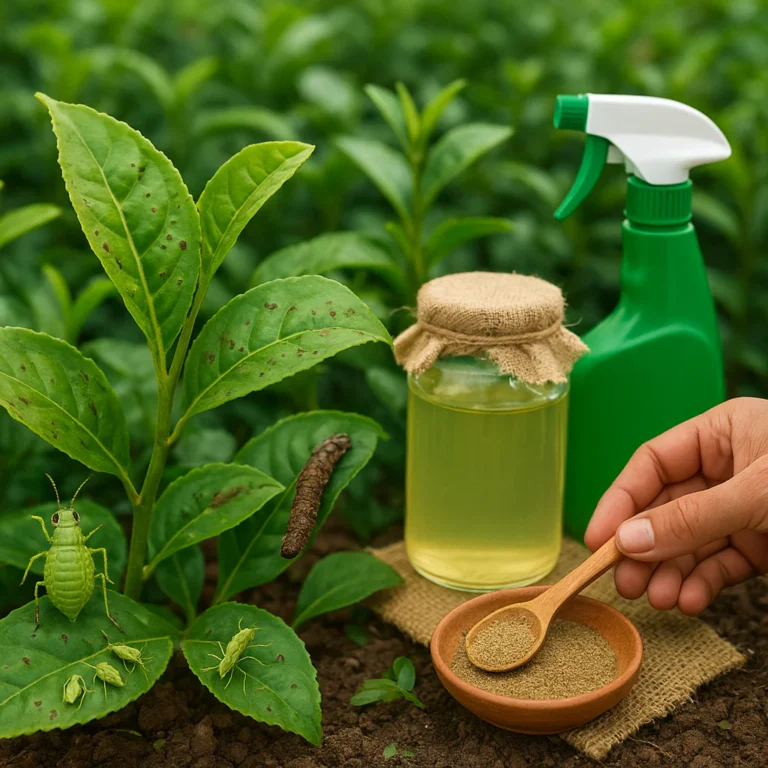
Controlling aphids, scale, mites, and other disease vectors
Pests can weaken tea and transmit pathogens. Inspect:
- Undersides of leaves
- Tender shoots
- Leaf axils
- Stems and branch junctions
Use a layered approach:
- Hand removal
- Water spray for sturdy plants
- Horticultural soap
- Beneficial insects
- Pruning of heavily infested tips
- Neem or other labeled products when appropriate
Beneficial insects and biodiversity
Lady beetles, lacewings, hoverflies, and parasitoid wasps can help suppress pests. Avoid broad spraying when beneficial insects are active.
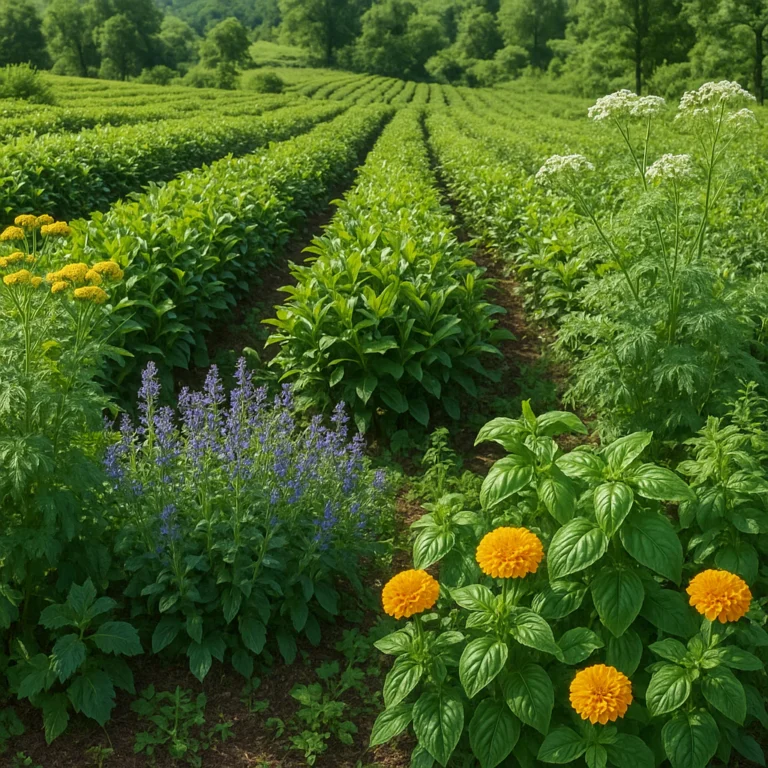
Plant diversity can provide habitat, but avoid crowding tea with vegetation that blocks airflow. Our Herbal Tea Planting resources discuss companion planting and garden design without turning the tea bed into an impenetrable jungle.
Choosing resistant tea cultivars and healthy nursery stock
When shopping:
- Inspect leaves and stems.
- Avoid plants with unexplained spots or wilt.
- Check roots if the nursery permits it.
- Ask about local disease problems.
- Select cultivars suited to your climate.
- Quarantine new plants.
Resistance is rarely absolute. A “resistant” cultivar may still become infected under severe pressure, but it can remain productive longer.
Organic Tea Disease Prevention by Season
Spring: protecting tender new shoots
- Inspect new flush frequently.
- Clean winter debris.
- Begin modest feeding only after active growth starts.
- Watch for aphids and blister-like lesions.
- Avoid wet-weather pruning.
Summer: managing heat, rain, and humidity
- Water deeply and consistently.
- Shade during extreme heat.
- Prune only when conditions allow wounds to dry.
- Monitor for powdery mildew, leaf spots, and mites.
- Avoid spraying oils during heatwaves.
Autumn: reducing overwintering disease
- Remove fallen diseased leaves.
- Reduce irrigation as growth slows, without allowing drought.
- Clean tools and containers.
- Review which areas stayed wet or crowded.
- Avoid stimulating soft late growth with excessive nitrogen.
Winter: protecting roots and dormant plants
- Improve drainage before winter rains.
- Protect containers from freeze-thaw damage.
- Do not keep dormant pots saturated.
- Delay major pruning until dry conditions and suitable growth timing.
- Inspect stored tools and propagation supplies.
When to Seek Expert Help or a Plant Disease Diagnosis
When home treatment is unlikely to work
Seek help when:
- The plant collapses quickly.
- Multiple plants show identical symptoms.
- Roots are rotting.
- A disease spreads despite sanitation.
- You suspect a virus or phytoplasma.
- The plant is valuable or part of a commercial planting.
- You plan to use a pesticide on harvestable leaves.
How to collect a useful plant sample
Provide:
- Fresh symptomatic leaves
- A section showing the boundary between healthy and diseased tissue
- Root samples if rot is suspected
- Photos of the entire plant
- Photos of the soil and growing environment
- A record of weather, watering, and treatments
Keep samples cool and deliver them promptly. Do not seal wet leaves in a warm plastic bag for days; that creates a tiny pathogen spa.
Plant clinics, extension services, and laboratory testing
Reliable starting points include:
- USDA National Institute of Food and Agriculture Extension
- State Cooperative Extension services
- Cornell Plant Disease Diagnostic Clinic
- University of California Integrated Pest Management
- Royal Horticultural Society plant problems
What to Expect After Treating a Diseased Tea Plant
How long organic treatments take to work
- Sanitation and drainage correction: immediate environmental benefit
- Biological fungicides: often require prevention and repeat applications
- Copper or sulfur protectants: help prevent new infections, not repair dead tissue
- Root recovery: several weeks to months
- Severe vascular disease: often no meaningful recovery
Can damaged tea leaves recover?
Dead brown tissue cannot become green again. A leaf may remain partly functional if only a small portion is affected, but the real test is the condition of new leaves.
Signs the plant is recovering
✅ New leaves emerge clean
✅ Wilt decreases
✅ Shots become firm
✅ No new cankers appear
✅ Soil drains normally
✅ Root odor disappears after repoting
Signs the disease is spreading
❌ Lesions appear on fresh leaves
❌ More branches wilt
❌ The crown becomes soft
❌ Roots continue to decay
❌ Symptoms move from one plant to neighboring plants
❌ New growth is distorted or severely stunted
Tea Plant Disease Complications and Common Treatment Mistakes
Overusing copper and sulfur products
Repeated protectant sprays can cause phytotoxicity, soil accumulation, and harm to non-target organisms. Rotate management methods and follow the label.
Spraying during heat, bright sun, or rain
Spray during calm, moderate conditions when the product label permits. Rain can wash off protectants; heat can increase leaf burn.
Treating symptoms while ignoring the cause
A fungicide cannot fix:
- Waterlogged roots
- Compacted soil
- Poor spacing
- Nutrient excess
- Repeated overhead irrigation
- Contaminated nursery stock
When removing the whole plant is the healthiest choice
Removal is reasonable when:
- Root rot is extensive.
- A viral disease is confirmed.
- The plant remains a major infection source.
- Recovery would require damaging neighboring plants.
- The replacement site can be cleaned and improved.
FAQ: Organic Treatment for Common Tea Plant Diseases

How can I prevent fungal diseases from spreading on tea plants organically?
Start with sanitation and airflow, then add a properly labeled biological or mineral protectant if disease pressure remains high.
A practical prevention routine
- Inspect plants weekly.
- Remove infected leaves early.
- Collect fallen debris.
- Water at the soil line.
- Thin crowded growth.
- Disinfect tools.
- Quarantine new plants.
- Apply Bacillus, Trichoderma, sulfur, or copper only when appropriate and permitted.
Prevention works because many pathogens need a combination of susceptible tissue, moisture, time, and inoculum. Remove one or two of those requirements and disease spread slows.
Read more about “Growing Tea in a Small Backyard: 8 Expert Secrets for Success 🌿 (2026)”
What natural treatments are effective for tea plant root rot?
The most effective “natural treatment” is drainage correction, not a spray.
For container tea plants
- Remove the plant.
- Cut off mushy roots.
- Repot in clean, airy acidic medium.
- Use a clean container.
- Water sparingly until new growth appears.
For garden tea plants
- Redirect water.
- Raise the planting area.
- Improve soil structure.
- Avoid compacted sites.
- Remove plants with severe crown collapse.
Biological products containing Trichoderma may support prevention, but they cannot restore dead roots. If the crown is soft and the plant is collapsing, replacement is usually more successful than repeated treatments.
Read more about “🐛 12 Tea Plant Pests & Diseases: The Ultimate 2026 Guide”
How can I identify and control tea leaf blight without chemical pesticides?
Identify likely blight by looking for expanding necrotic spots or patches, often after wet weather. Then:
- Photograph the symptoms.
- Remove heavily affected leaves.
- Improve airflow.
- Stop overhead irrigation.
- Clear fallen tissue.
- Use a labeled biological fungicide.
- Consider copper only if the product is legal and labeled for your crop.
“Without chemical pesticides” can mean using biological products, sanitation, and cultural controls. Technically, even many organic products contain chemicals; the meaningful distinction is choosing lower-risk, approved materials and using them responsibly.
What organic pest and disease prevention methods work best for homegrown tea plants?
The strongest program combines:
- Clean nursery stock
- Acidic, well-drained soil
- Balanced feeding
- Regular scouting
- Proper spacing
- Beneficial insects
- Clean tools
- Dry foliage
- Early removal of infected tissue
- Crop-labeled organic products when needed
No single method wins every season. In our gardens, good drainage plus early inspection consistently prevents more trouble than any dramatic rescue spray.
Can I use neem oil on tea plants?
You may be able to use neem oil for certain labeled insect pests, but neem oil is not a dependable cure for fungal, bacterial, or root diseases.
Use only a product whose label permits the intended crop and pest. Test first, avoid heat, protect pollinators, and observe all harvest restrictions.
Read more about “🐞 12 Ways to Stop Tea Garden Pests”
Are diseased tea leaves safe to harvest and brew?
We do not recommend harvesting visibly diseased, moldy, chemically treated, or badly damaged leaves for drinking. Disease organisms, residues, and quality concerns make the risk unnecessary. Harvest clean, healthy shoots only, and follow all product label intervals after any treatment.
Read more about “12 Expert Secrets to Growing Tea in a Greenhouse 🍃 (2026)”
Should I use vinegar or hydrogen peroxide on tea leaf diseases?
We generally advise against improvised vinegar or peroxide sprays on harvestable tea. They can injure foliage, alter leaf chemistry, and lack reliable tea-specific directions. Choose a labeled product or rely on sanitation and environmental correction.
How do I know whether brown tea leaves are diseased?
Check the pattern and progression. Disease is more likely when spots expand, develop defined margins, appear after wet weather, or spread between plants. Uniform browning from the tips or margins may indicate drought, salt, wind, frost, or root problems instead.
Reference Links
- USDA National Organic Program
- USDA National Institute of Food and Agriculture
- USDA APHIS Plant Health
- University of California Integrated Pest Management
- Cornell University Plant Disease Diagnostic Clinic
- Clemson Cooperative Extension
- Royal Horticultural Society: Plant Problems
- Food and Agriculture Organization: Plant Health
- National Pesticide Information Center
- OMRI: Organic Materials Review Institute
- Serenade Garden Disease Control
- Bonide Copper Fungicide
- Bonide Neem Oil
- Actinovate Garden Fungicide
- BioWorks RootShield
- About Botulism – CDC