Support our educational content for free when you purchase through links on our site. Learn more
🐛 How to Protect Tea Plants from Insects and Pests

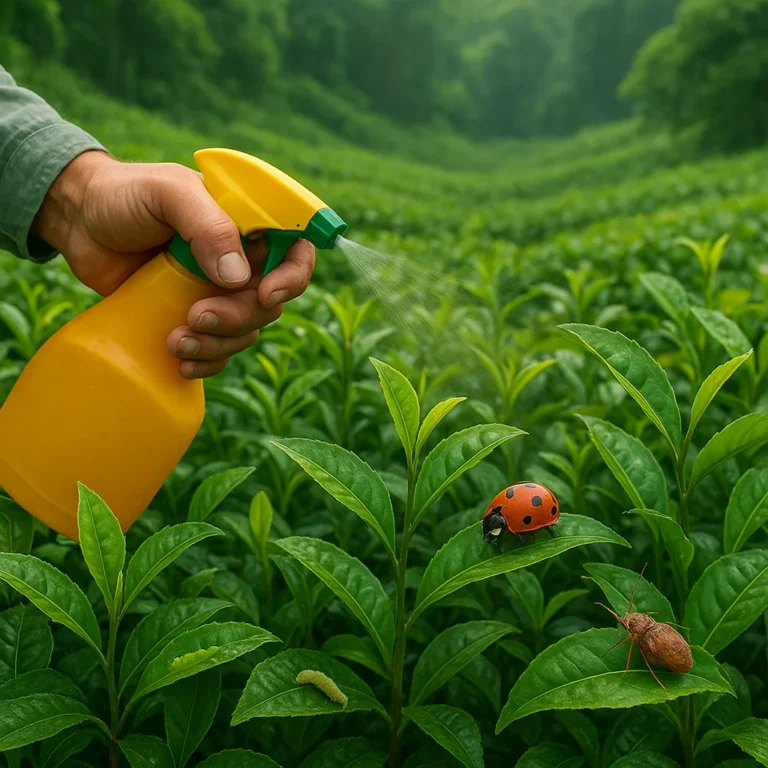
The best way to protect tea plants from insects and pests is to inspect them regularly, identify the culprit, and start with targeted, low-impact controls. Rinsing off aphids, hand-picking caterpillars, or isolating an infested pot can solve small problems without blanket-spraying leaves you may later brew into tea.
We’ve learned that pest damage often starts as a tiny clue: a sticky shoot, a pale-speckled leaf, or one neatly chewed edge. Check the undersides of leaves and the tender new growth first; that’s where many unwelcome guests prefer to hide. 🫖
A few insects don’t automatically mean trouble. The trick is noticing when their numbers or damage are growing—and acting before a minor nible becomes a full garden buffet.
Key Takeaways
- Inspect weekly during active growth, checking new shoots, leaf undersides, stems, and the soil surface.
- Identify the pest before treating. Aphids, spider mites, caterpillars, scale, and slugs need different responses.
- Start with targeted controls: hand-pick pests, prune badly affected growth, rinse exposed insects, and isolate infested plants.
- Use pesticides only when the label permits the intended use on tea. Follow all application and harvest instructions; “natural” or “organic” doesn’t automatically mean safe.
- Support healthy plants with suitable watering, spacing, airflow, and measured feeding. Avoid conditions that stress tea or make pests harder to spot.
Table of Contents
- ⚡️ Quick Tips and Facts
- 🌱 Tea Plant Pest Problems: What Growers Need to Know
- How tea plants grow and why pests target them
- How climate, season, and growing conditions affect infestations
- 🐛 Common Tea Plant Insects and Pests
- Tea mosquito bugs and other sap-sucking insects
- Aphids, scale insects, and mealybugs
- Spider mites and other mites
- Caterpillars, loopers, and leaf rollers
- Tea leaf miners and leaf-feding beetles
- Root-feding grubs, wevils, and nematodes
- Slugs, snails, and other occasional pests
- 🔎 How to Identify Pest Damage on Tea Leaves
- Symptoms that point to insects, mites, or root pests
- Pest damage versus tea plant diseases or environmental stress
- When to inspect leaves, shoots, stems, and roots
- 🛡️ Prevent Tea Plant Pests Before They Take Hold
- Choose healthy plants and pest-resistant tea varieties
- Set up spacing, airflow, and shade for healthy growth
- Water, prune, and feed tea plants without inviting pests
- Keep tools, pots, and growing areas clean
- 🧰 Natural and Organic Pest Control for Tea Plants
- Hand-picking, pruning, and washing pests away
- Beneficial insects and biological pest control
- Neem oil, insecticidal soap, and horticultural oils
- Bariers, traps, and other low-impact controls
- Home remedies to avoid on tea leaves
- 🧪 Safe Use of Pesticides on Tea Plants
- How to choose a product labeled for tea plants
- Protect pollinators, beneficial insects, and people
- Spray timing, coverage, and tea leaf harvest intervals
- 🌿 Integrated Pest Management for Tea Gardens
- A step-by-step pest monitoring routine
- Set action thresholds and track pest trends
- Combine prevention, biological controls, and targeted treatments
- 🪴 Protecting Tea Plants Indors, in Pots, and Outdoors
- Pest prevention for indoor tea plants
- Container tea plant pest control
- Tea garden and small-farm pest management
- Quarantine new plants and manage infestations
- 🗓️ Seasonal Tea Plant Pest Prevention Calendar
- ❌ Tea Plant Pest-Control Mistakes to Avoid
- ❓ Frequently Asked Questions About Tea Plant Pests
- What is eating holes in my tea plant leaves?
- Can I use neem oil on tea plants I plan to harvest?
- How do I get rid of spider mites on tea plants?
- Are tea plant pests harmful to people or brewed tea?
- Can tea plants recover from severe pest damage?
- Conclusion
- Recommended Links
- Reference Links
Table of Contents
- ⚡️ Quick Tips and Facts
- 🌱 Tea Plant Pest Problems: What Growers Need to Know
- How tea plants grow and why pests target them
- How climate, season, and growing conditions affect infestations
- 🐛 Common Tea Plant Insects and Pests
- Tea mosquito bugs and other sap-sucking insects
- Aphids, scale insects, and mealybugs
- Spider mites and other mites
- Caterpillars, loopers, and leaf rollers
- Tea leaf miners and leaf-feding beetles
- Root-feding grubs, wevils, and nematodes
- Slugs, snails, and other occasional pests
- 🔎 How to Identify Pest Damage on Tea Leaves
- Symptoms that point to insects, mites, or root pests
- Pest damage versus tea plant diseases or environmental stress
- When to inspect leaves, shoots, stems, and roots
- 🛡️ Prevent Tea Plant Pests Before They Take Hold
- Choose healthy plants and pest-resistant tea varieties
- Set up spacing, airflow, and shade for healthy growth
- Water, prune, and feed tea plants without inviting pests
- Keep tools, pots, and growing areas clean
- 🧰 Natural and Organic Pest Control for Tea Plants
- Hand-picking, pruning, and washing pests away
- Beneficial insects and biological pest control
- Neem oil, insecticidal soap, and horticultural oils
- Bariers, traps, and other low-impact controls
- Home remedies to avoid on tea leaves
- 🧪 Safe Use of Pesticides on Tea Plants
- How to choose a product labeled for tea plants
- Protect pollinators, beneficial insects, and people
- Spray timing, coverage, and tea leaf harvest intervals
- 🌿 Integrated Pest Management for Tea Gardens
- A step-by-step pest monitoring routine
- Set action thresholds and track pest trends
- Combine prevention, biological controls, and targeted treatments
- 🪴 Protecting Tea Plants Indors, in Pots, and Outdoors
- Pest prevention for indoor tea plants
- Container tea plant pest control
- Tea garden and small-farm pest management
- Quarantine new plants and manage infestations
- 🗓️ Seasonal Tea Plant Pest Prevention Calendar
- ❌ Tea Plant Pest-Control Mistakes to Avoid
- ❓ Frequently Asked Questions About Tea Plant Pests
- What is eating holes in my tea plant leaves?
- Can I use neem oil on tea plants I plan to harvest?
- How do I get rid of spider mites on tea plants?
- Are tea plant pests harmful to people or brewed tea?
- Can tea plants recover from severe pest damage?
- Conclusion
- Recommended Links
- Reference Links
⚡️ Quick Tips and Facts
For a species-by-species rundown, start with our guide to common pests and diseases that affect tea plants. Here’s our short version for protecting Camellia sinensis: inspect often, identify the pest before treating, and begin with the least disruptive effective method.
| What you notice | First move | Why it helps |
|---|---|---|
| Sticky leaves or black soty patches | Check stems and leaf undersides for aphids, scale, or mealybugs | Honeydew-producing pests can leave sticky residue that supports soty mold |
| Fine pale stipling and possible webing | Check for spider mites; rinse leaf undersides | Mites thrive in hot, dry conditions and are easy to miss early |
| Raged holes or chewed edges | Look for caterpillars, beetles, and fresh droppings | Chewers often hide on leaf undersides or among tender shoots |
| Distorted new growth | Inspect growing tips for sap-feders and check watering | Pests and environmental stress can look surprisingly similar |
| A new plant in the collection | Keep it separate and inspect it before placing it near established tea | Quarantine reduces the chance of bringing pests home |
Our quick rules:
- ✅ Inspect leaf tops and undersides, tender shoots, stems, and the soil surface at least weekly during active growth.
- ✅ Use a strong but gentle stream of water to dislodge many exposed aphids and mites. Avoid damaging tender shoots.
- ✅ Remove heavily infested leaves or branches with clean pruners, then dispose of them away from the tea garden.
- ✅ Try a treatment on a small area first, and follow the product label exactly.
- ❌ Don’t spray neem oil, soap, or other oils in strong sun, extreme heat, or on drought-stressed plants.
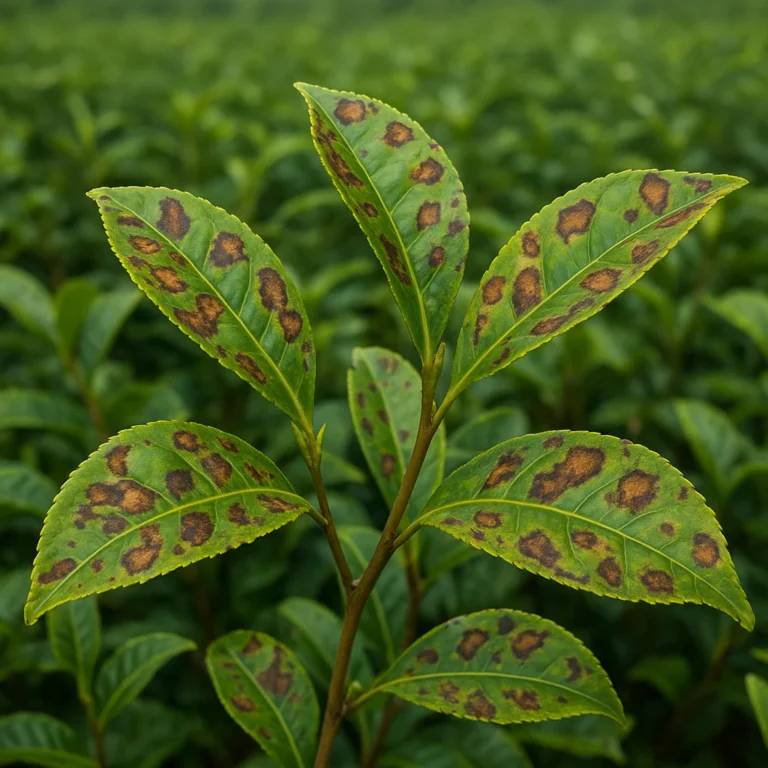
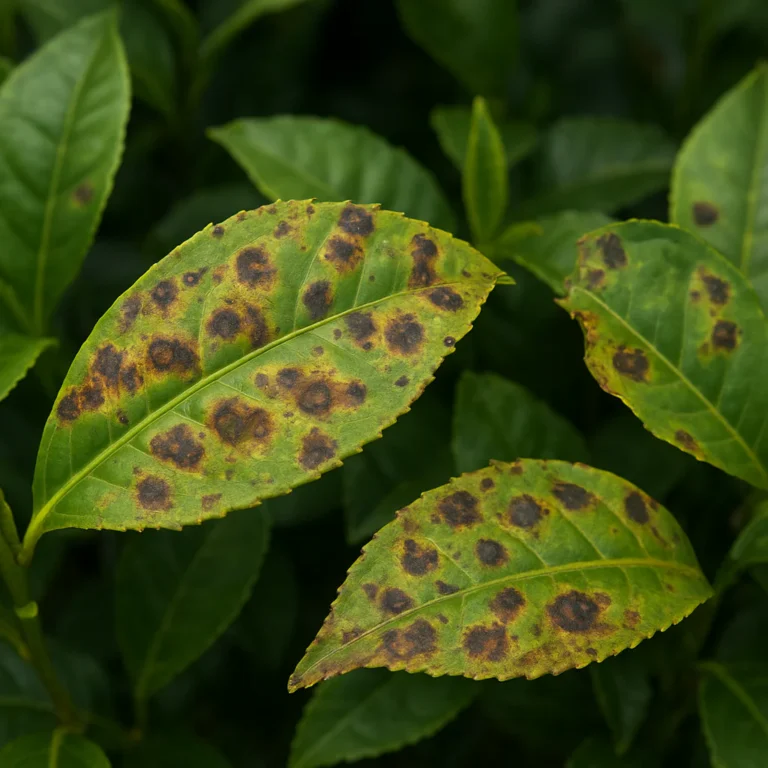
- ❌ Don’t assume every spot or curled leaf means insects. Disease, nutrient problems, and watering stress can mimic pest damage.
- ❌ Don’t use a pesticide on harvestable tea unless its label explicitly permits use on tea and gives appropriate harvest directions.
For a useful framework, the University of California Statewide IPM Program recommends identifying the pest and using integrated pest management (IPM), rather than reaching for a broad-spectrum spray at the first sign of trouble. We use the same principle in our tea gardens: the right treatment depends on who’s doing the chewing—or sucking.
🌱 Tea Plant Pest Problems: What Growers Need to Know
Tea plants can be surprisingly sturdy, but tender new growth is a tempting buffet for insects. A plant growing in a pot on a sunny patio also faces a different pest mix from a mature field planting. That’s why “spray everything” is not a plan; it’s a way to harm helpful insects while missing the actual culprit.
Tea’s defenses are more sophisticated than a prickly stem or bitter taste. A research review on tea-plant responses to insect attack describes how plants use jasmonic acid, salicylic acid, defensive compounds, and volatile signals in response to different pests. These mechanisms are fascinating—but they’re not a ready-made recipe for home use. The review itself notes that proposed strategies need more confirmation in whole-plant and field studies.
How tea plants grow and why pests target them
Tea is grown for its young leaves and shoots. Those fresh, nutrient-rich tips are also where many pests feed or lay eggs. Sap-feders such as leafhoppers pierce plant tissue; caterpillars and beetles chew it. A vigorous plant can replace some damaged foliage, but repeated attacks on new growth can slow establishment and reduce the leaves you’d otherwise pick.
In our experience, the most useful question isn’t “Is this insect bad?” It’s “Is it causing enough damage to justify action?” A few harmless visitors aren’t automatically an infestation. Look for increasing pest numbers, fresh damage, or a plant that’s losing vigor.
If you’re growing tea for harvest, our green tea cultivation resources cover the broader growing conditions that support healthy tea bushes. Strong growth won’t make a plant pest-proof, but it gives it a better chance to recover.
How climate, season, and growing conditions affect infestations
Pest activity depends on the insect, local climate, and the plant’s condition. Warm, dry weather often favors spider mites; dense, humid growth can make it harder to spot infestations and may favor plant diseases. Indoor heating, nearby houseplants, and crowded containers can create their own microclimate.
| Growing condition | What may become more noticeable | Helpful adjustment |
|---|---|---|
| Hot, dry spells | Spider mites and leaf stress | Check undersides regularly; keep watering consistent |
| Flush of tender spring growth | Aphids, leafhoppers, caterpillars | Inspect new shoots as they emerge |
| Dense, stagnant growth | Scale, mealybugs, hidden pests | Prune lightly for access and airflow |
| Recently moved indoors | Pests carried on leaves or pots | Quarantine and inspect before joining other plants |
| Excess nitrogen or heavy feeding | Soft, lush growth that may attract sap-feders | Follow measured feeding guidance; avoid overfertilizing |
Seasonal timing differs by region, so use local extension guidance and your own observations instead of treating by calendar alone.
🐛 Common Tea Plant Insects and Pests
Not every garden pest listed below will occur in every tea-growing region. Identify what’s actually present before choosing a control. A hand lens and a white sheet of paper are often more useful than a cupboard full of sprays.
Tea mosquito bugs and other sap-sucking insects
Tea mosquito bugs, leafhoppers, thrips, and whiteflies feed by piercing plant tissues and drawing out sap. Symptoms can include pale speckles, curled leaves, distorted shoots, or small damaged patches. Some tea-specific pests are more common in commercial tea regions, so local agricultural extension services can help confirm what you’re seeing.
Tea green leafhoppers are a particularly well-studied example: the tea defense review reports that Empoasca onukii feeds on tender shoots and may lay eggs in soft plant tissue. But the plant’s response varies with the pest; a treatment that works on chewing caterpillars may not address leafhoppers.
Aphids, scale insects, and mealybugs
Aphids often cluster on soft new growth. Mealybugs look cottony, while scale insects may resemble small bumps attached to leaves or stems. Some soft scales produce honeydew; armored scales generally do not. Honeydew can make foliage sticky and may encourage soty mold.
The University of Maryland Extension’s scale insect guide explains why scale can be tricky: adults are protected by a covering, while the mobile “crawler” stage is more exposed. For a visual overview of scale identification and management, see the featured video. Its practical advice—inspect carefully, isolate infested plants, and target crawlers—is useful, though product choices still need to match the label and your tea-harvest plans.
Spider mites and other mites
Spider mites are tiny arachnids, not insects. Look for fine pale stipling, bronzing, and sometimes delicate webing, especially beneath leaves. Tap a leaf over white paper; moving specks may be easier to spot against the white background.
Rinsing leaves can reduce exposed mites, but repeat inspection matters because eggs and hidden mites may remain. Avoid creating a cycle of drought stress followed by heavy watering: consistent care is better than emergency rescue.
Caterpillars, loopers, and leaf rollers
Chewed edges, holes, rolled leaves, and dark droppings can point to caterpillars. The tea review highlights geometrid caterpillars such as Ectropis grisescens and E. obliqua as examples of chewing pests studied in tea.
Hand-pick caterpillars when practical. If a labeled Bacillus thuringiensis (Bt) product is appropriate for your plant and pest, it can target feeding caterpillars—but it won’t control aphids, mites, or scale. Follow the product label, protect non-target butterfly larvae, and avoid treating plants without confirming the pest.
Tea leaf miners and leaf-feding beetles
Leaf miners create winding trails or blotches inside leaf tissue. Because larvae feed within the leaf, contact sprays may have little effect. Remove and dispose of heavily mined leaves where practical, and avoid indiscriminately removing healthy foliage.
Betles may leave holes, scalloped edges, or skeletonized patches. Inspect at dusk or early morning if damage appears overnight; many feeders hide during the day.
Root-feding grubs, wevils, and nematodes
Root pests can cause symptoms aboveground: poor growth, wilting despite moist soil, yellowing, or a plant that loosens unusually easily. If you suspect root damage, inspect a small portion of the root ball rather than repeatedly disturbing the plant.
Neem seed meal, beneficial microbes, and other soil amendments are sometimes discussed as ways to support soil health or manage certain pests. They are not universal cures. Match any amendment to the suspected pest, your growing system, and local advice. For broader soil-care ideas, see our fertilizer guidance for tea plants.
Slugs, snails, and other occasional pests
Slugs and snails leave irregular holes and sometimes silvery trails. Check under pots, mulch, and boards after dark or after watering. Hand removal, reducing hiding places, and physical barriers can be more targeted than spraying the whole plant.
🔎 How to Identify Pest Damage on Tea Leaves
Before reaching for a treatment, look for the pest, its eggs, feeding signs, or droppings. Damage is evidence, but it’s not a complete diagnosis.
Symptoms that point to insects, mites, or root pests
| Symptom | Likely suspects | Check next |
|---|---|---|
| Sticky residue, curled tips | Aphids, soft scale, mealybugs, whiteflies | New growth and nearby stems |
| Fine stipling, bronze cast, webing | Spider mites | Leaf undersides and white-paper tap test |
| Holes, raged margins, droppings | Caterpillars, beetles, slugs | Leaf undersides, rolled leaves, nighttime activity |
| Pale winding trails within leaves | Leaf miners | Hold leaf to the light; inspect for mines |
| Bumps attached to stems or leaves | Scale insects | Determine whether bumps are living scale or harmless plant features |
| Wilting, weak growth, damaged roots | Root-feding insects or nematodes; also water stress | Soil moisture and a careful root check |
Take a clear photo and note which leaves are affected. A simple record helps distinguish a one-off visitor from a growing population.
Pest damage versus tea plant diseases or environmental stress
Yellowing can result from pests, overwatering, drought, poor drainage, nutrient imbalance, or disease. A patchy pattern with visible insects suggests one story; uniform yellowing across a plant may point elsewhere.
Check the basics before treating:
- Is the soil waterlogged or bone-dry?
- Has the plant recently moved or experienced cold, heat, or strong sun?
- Are there visible insects, webing, honeydew, eggs, or fresh feeding marks?
- Are symptoms limited to new growth, old leaves, or the whole plant?
- Is a neighboring plant showing the same problem?
For nutrition and soil questions, use our tea-plant fertilizer resources rather than guessing with a concentrated feed. More fertilizer does not correct every yellow leaf—and can make soft new growth more attractive to some sap-feders.
When to inspect leaves, shoots, stems, and roots
Inspect at least weekly during active growth and more often when you’ve seen pests. Check:
- The newest leaves and buds, where aphids and leafhoppers may gather.
- Leaf undersides, where mites and eggs can hide.
- Branch junctions and stems, where scale may attach.
- Roled or folded leaves, where caterpillars may shelter.
- Soil surface and drainage holes, especially for container plants.
Early detection is a little like checking the kettle before the tea boils over: quick, unglamorous, and much easier than dealing with a mess later.
🛡️ Prevent Tea Plant Pests Before They Take Hold
Prevention doesn’t mean trying to create a sterile garden. A healthy tea planting can support beneficial insects while making infestations easier to spot and manage. Our organic farming techniques focus on that balance.
Choose healthy plants and pest-resistant tea varieties
Buy plants from a reputable nursery and inspect foliage, stems, and poting mix before bringing them home. Ask about the plant’s growing conditions and any recent pest treatments, especially if you intend to harvest the leaves.
Varietal resistance can differ, but don’t assume a variety is immune unless reliable local evidence supports that claim. A clean, vigorous plant is a stronger starting point than a promise of pest-proof tea.
Set up spacing, airflow, and shade for healthy growth
Give plants enough room for air movement and inspection. Tea generally appreciates suitable light and moisture for its climate and cultivar, but abrupt changes can stress it. Avoid packing pots tightly together; crowded foliage gives pests places to hide and makes treatment coverage harder.
For cultivation basics, explore Growing Teas’ green tea cultivation category. The details vary by climate, but sensible spacing and steady care help you catch trouble sooner.
Water, prune, and feed tea plants without inviting pests
Water according to the plant’s needs and container drainage. Don’t let a pot sit in standing water, and don’t rely on frequent overhead watering as a substitute for checking soil moisture. Prune dead or badly damaged growth with clean tools, while avoiding severe pruning that leaves a stressed tea bush trying to recover and defend itself at once.
Feed according to a suitable tea-plant plan; excess fertilizer can push soft growth. Find more background in our tea-plant fertilizer resources.
Keep tools, pots, and growing areas clean
Remove dead leaves and plant debris, clean pruners between plants when disease is a concern, and wash reused pots before planting. Cleanliness won’t eliminate every pest, but it reduces hiding places and helps prevent accidental spread.
🧰 Natural and Organic Pest Control for Tea Plants
“Natural” does not automatically mean harmless. Oils, soaps, and biological insecticides can still injure plants, beneficial insects, or aquatic life when misused. Start with the pest’s identity and choose the mildest method likely to work.
Hand-picking, pruning, and washing pests away
For a small infestation:
- Move the plant away from other tea plants if possible.
- Inspect leaf undersides, shoots, stems, and curled foliage.
- Pick off visible caterpillars or remove a few heavily infested leaves.
- Rinse exposed aphids or mites from the plant, protecting the soil from being flooded.
- Recheck every few days and repeat if needed.
For scale, gently remove accessible insects where this won’t damage the bark or leaves. The featured scale-insect video also emphasizes isolating affected plants and paying attention to crawler stages, which are easier to reach than protected adults.
Beneficial insects and biological pest control
Lady beetles, lacewings, predatory mites, and parasitoid wasps may help suppress particular pests. The key is to identify the pest and encourage locally appropriate beneficials, not to release insects blindly. Purchased beneficials can disperse quickly outdoors, and they may not establish in a small indoor collection.
The tea-plant research review describes how plant-emitted volatiles can sometimes attract natural enemies of herbivores. That’s promising science, not a recommendation to spray experimental chemical signals at home. Habitat diversity, avoiding unnecessary broad-spectrum pesticides, and leaving some flowering plants can support beneficial insects. Learn more about ecological approaches in our organic farming techniques.
Neem oil, insecticidal soap, and horticultural oils
These products can help against certain exposed, soft-bodied pests when the label permits use on tea and the pest is listed. Many work primarily through direct contact, so coverage matters—especially beneath leaves. They often have limited effect on insects protected under scale coverings or caterpillars that aren’t contacted.
- Neem oil: Use only a product whose label allows the intended crop and use. Neem formulations vary; don’t copy a recipe from a different crop.
- Insecticidal soap: Usually needs direct contact and can injure sensitive foliage. Test a small area first.
- Horticultural oil: Can smother susceptible stages but may damage plants in heat or when used incorrectly. Follow label limits.
The National Pesticide Information Center’s neem fact sheet explains that neem products vary in composition and use. A cannabis-growing article offers one grower’s neem recipe, but its advice is crop-specific and shouldn’t be transferred directly to harvestable tea. Tea leaves are a food crop; the product label—not a borrowed recipe—sets the safe use.
Product examples to check against the label
- Safer Brand Insect Killing Soap: Amazon search | Safer Brand official site
- Bonide All Seasons Horticultural & Dormant Spray Oil: Amazon search | Bonide official site
- Garden Safe Neem Oil Extract: Amazon search | Garden Safe official site
Before using any of these on tea, check the current label for the crop, target pest, application directions, protective equipment, and harvest restrictions. A product being sold for gardens—or described as organic—does not mean it is approved for every edible plant.
Bariers, traps, and other low-impact controls
Sticky cards can help monitor flying pests indoors or in a greenhouse, but they’re not a complete control program and may catch beneficial insects. Use them as monitoring tools, placed where they won’t snag pollinators or interfere with plant care.
For slugs, reduce damp hiding spots and use barriers suited to the site. For flying pests on young plants, physical covers may help if they allow adequate airflow and don’t trap excessive heat. Remove covers for pollination if relevant and inspect under them regularly.
Home remedies to avoid on tea leaves
Avoid improvising with dish detergent, strong alcohol solutions, vinegar, concentrated essential oils, or mixed “kitchen sink” sprays. Household products aren’t formulated or tested for plant safety; some can burn foliage or leave residues.
The Oregon State University Extension discussion of homemade pesticides cautions that homemade pesticide mixtures may be ineffective or cause plant injury. If you wouldn’t want an unknown residue on a leaf you plan to steep, don’t experiment on your tea plant.
🧪 Safe Use of Pesticides on Tea Plants
Tea is harvested for consumption, so pesticide selection deserves extra care. A product’s “organic” or “natural” label does not override its legal directions or harvest interval.
How to choose a product labeled for tea plants
Read the entire current label. Confirm:
- The product is permitted for the plant or crop and location.
- The pest you identified appears on the label.
- The application site and method match your use.
- Any protective equipment, re-entry interval, and preharvest interval are clear.
- The product is compatible with the plant’s growth stage and local rules.
If tea is not listed, don’t assume a product for ornamentals or another edible crop can be used on tea. Contact your local extension service or pesticide regulator for guidance.
Protect pollinators, beneficial insects, and people
Avoid spraying open blooms or active pollinators. Keep treatments away from children, pets, waterways, and food-preparation areas as directed on the label. Use targeted treatment rather than blanket application, and avoid broad-spectrum insecticides when a physical or biological option can solve the problem.
The U.S. Environmental Protection Agency’s pesticide-label guidance underscores a point worth repeating: the label is the law and the primary safety instruction.
Spray timing, coverage, and tea leaf harvest intervals
Treat only when conditions and label directions allow. Avoid strong sun, high heat, wind, or rain unless the label provides specific guidance. For contact products, coat the target pest, including leaf undersides, without overapplying or creating runoff.
Keep a written record of the product, date, treated plants, and harvest restrictions. If the label gives a preharvest interval, wait the full interval. If no safe use on tea is clearly stated, do not harvest treated leaves for drinking.
🌿 Integrated Pest Management for Tea Gardens
IPM combines observation, prevention, and targeted treatment. It is not “never use a pesticide”; it means using controls thoughtfully and only when they’re likely to help. The USDA National Institute of Food and Agriculture describes IPM as a coordinated approach that uses multiple methods to manage pests while limiting risks.
A step-by-step pest monitoring routine
- Inspect on a regular schedule. Look closely at tender shoots, leaf undersides, stems, and soil.
- Identify the suspect. Use a hand lens, photos, or local extension support.
- Record the evidence. Note pest counts, fresh damage, weather, and plant growth.
- Try low-risk controls first. Hand-pick, prune, rinse, isolate, or adjust care as appropriate.
- Recheck results. Don’t assume a treatment worked because the plant looks better the next morning.
- Escalate only if needed. If damage continues and the pest is confirmed, choose a labeled, targeted option.
Set action thresholds and track pest trends
A single aphid does not necessarily warrant treatment. On a small, heavily infested container plant, a modest population may matter more than the same number on a mature outdoor bush. Track whether pest numbers and damage are increasing, and consider the plant’s age, health, and intended harvest.
There isn’t one universal threshold for every tea plant and pest. Local crop guidance is more useful than a number borrowed from another region or crop.
Combine prevention, biological controls, and targeted treatments
Think in layers: quarantine incoming plants, maintain steady growing conditions, support beneficial organisms, and use physical removal or a suitable targeted product when monitoring shows it’s needed. This layered approach is more dependable than repeating the same spray regardless of what’s on the plant.
Tea’s own defenses also vary by pest. The research review notes that chewing insects and sap-feders can trigger different plant signaling responses; that helps explain why one control rarely fits every infestation. Research on elicitors such as methyl jasmonate or tea volatiles is interesting, but it should not be confused with a proven home-garden treatment.
🪴 Protecting Tea Plants Indors, in Pots, and Outdoors
Pest prevention for indoor tea plants
Indoor plants have fewer natural predators and often sit close together, so inspect them before pests spread. Check nearby houseplants too; spider mites and mealybugs don’t care that one pot is “the tea.”
- Isolate any plant with visible pests.
- Avoid placing tea directly beside a warm, dry vent.
- Use sticky cards only as monitoring aids.
- Rinse or wipe foliage when appropriate, then let it dry with good airflow.
- Check newly purchased plants before bringing them into the room.
For tea-growing basics and plant care, see our green tea cultivation guide category.
Container tea plant pest control
Containers make inspection and isolation easier, but pots can dry quickly or hold excess water depending on the mix and drainage. Check the root zone and drainage holes, keep saucers from staying waterlogged, and clean debris from the surface.
If you treat a potted tea plant, shield nearby plants and avoid letting runoff reach drains, ponds, or waterways. Follow the label for the application site and disposal directions.
Tea garden and small-farm pest management
For multiple bushes, record where pests appear and whether they spread. A simple map can reveal patterns tied to shade, irrigation, plant age, or edges of the planting. Rotate inspection areas so you don’t repeatedly overlook the same dense section.
A small farm may benefit from local extension identification and crop-specific guidance before using any pesticide. Tea-production recommendations from one country may not be registered or suitable in another.
Quarantine new plants and manage infestations
Keep new plants separate long enough to inspect repeated growth and leaf undersides. If pests appear:
- Move the plant away from the collection.
- Identify the pest before treatment.
- Remove heavily affected material if appropriate.
- Treat only with a suitable, labeled method.
- Clean nearby surfaces and tools.
- Reinspect the original plant and its neighbors over the following weeks.
Scale and mealybugs can hide in stem joints, so one quick glance is not a proper quarantine inspection.
🗓️ Seasonal Tea Plant Pest Prevention Calendar
Use this as a flexible checklist, not a rigid spraying schedule. Local weather and pest life cycles vary.
| Season or condition | What to watch for | Useful action |
|---|---|---|
| New spring growth | Aphids, leafhoppers, caterpillars | Inspect tender shoots twice weekly if pests are active |
| Warm, dry weather | Spider mites | Check undersides and keep moisture consistent |
| Rainy or humid periods | Hidden pests and plant disease symptoms | Improve airflow and inspect dense foliage |
| Moving plants indoors | Scale, mealybugs, mites | Inspect and quarantine before moving |
| After pruning or treatment | New growth and surviving pests | Recheck before deciding whether another treatment is needed |
| Before harvest | Any pesticide residue or restrictions | Verify label directions and harvest interval |
❌ Tea Plant Pest-Control Mistakes to Avoid
- ❌ Treating without identifying the pest. Oils may affect exposed mites or aphids but won’t solve every chewing or root pest.
- ❌ Spraying on a schedule “just in case.” Unecessary treatments can harm beneficial insects and stress foliage.
- ❌ Assuming homemade means safe. Concentrated soaps, oils, and essential oils can burn leaves.
- ❌ Ignoring the underside of leaves. That’s where many small pests and eggs are hiding.
- ❌ Overfertilizing a struggling plant. Extra nutrients won’t cure a pest infestation and may push tender growth.
- ❌ Using a product not labeled for tea. Edible-crop use and harvest instructions matter.
- ❌ Stopping after one treatment. Eggs, protected adults, or pests missed during application may remain; reinspection tells you whether the approach worked.
- ❌ Confusing research with a garden-ready control. Studies of tea defense hormones and volatile compounds provide valuable insight, but experimental findings are not automatically safe or practical treatments for home growers.
❓ Frequently Asked Questions About Tea Plant Pests
What is eating holes in my tea plant leaves?
Holes and raged edges commonly point to caterpillars, beetles, or slugs, but check for the pest itself, droppings, rolled leaves, and nighttime activity before choosing a control. Remove visible pests by hand where practical. If caterpillars are confirmed, a labeled Bt product may be an option, but it will not control mites, aphids, or scale.
Can I use neem oil on tea plants I plan to harvest?
Only use a neem product if its current label explicitly allows the intended use on tea or the relevant edible crop and provides directions you can follow. Neem formulations differ, and advice written for cannabis, ornamentals, or another crop does not establish safe use on tea. Observe all harvest intervals and precautions. If the label does not clearly allow the use, don’t spray leaves intended for brewing.
How do I get rid of spider mites on tea plants?
Confirm mites first by checking leaf undersides or tapping foliage over white paper. Rinse exposed mites from leaves, isolate affected container plants, and reduce conditions that stress the tea plant, such as inconsistent watering. Reinspect because eggs and hidden mites may survive. If you need a product, select one labeled for the plant and pest, and test a small area according to label directions.
Are tea plant pests harmful to people or brewed tea?
Most garden pests are primarily a risk to plant health, but contaminated leaves may be unpleasant or unsuitable to harvest. More importantly, pesticide residues can pose a food-safety concern if a product is used incorrectly or contrary to its label. Don’t brew leaves with visible infestation or from plants treated in a way that violates harvest instructions. When in doubt, discard affected leaves and follow the product label or local food-safety advice.
Can tea plants recover from severe pest damage?
Many tea plants can recover if the infestation is controlled and the roots and main stems remain healthy. Isolate the plant if needed, remove dead or heavily damaged growth, correct watering or light stress, and avoid a sudden heavy feed. Watch for fresh healthy shoots over the following weeks. If the roots are badly damaged or the plant continues to decline, ask a local horticultural extension service to help distinguish pests from disease or environmental stress.
How do you keep insects from damaging tea plants naturally?
Start with prevention: buy healthy plants, quarantine new arrivals, provide suitable growing conditions, and inspect foliage regularly. Hand-pick caterpillars, rinse exposed aphids or mites, remove a few badly infested leaves, and encourage beneficial insects by avoiding unnecessary broad-spectrum sprays. These methods reduce pest pressure without pretending a garden can—or should—be completely insect-free.
What is the best organic pesticide for tea plants?
There is no single best product for every tea pest. Insecticidal soap or horticultural oil may help with certain exposed soft-bodied pests; Bt can target susceptible caterpillars. The best choice is a product labeled for the tea plant and confirmed pest, used exactly as directed. Organic status alone does not guarantee safety for tea leaves, people, or beneficial insects.
How often should you inspect tea plants for pests?
Inspect at least weekly during active growth and more often when you’ve found pests, brought home a new plant, or experienced hot, dry conditions that favor mites. Check new shoots, leaf undersides, stems, and curled leaves. Frequent quick checks are more useful than waiting until damage is obvious.
Which companion plants help protect tea plants from insects?
No companion plant reliably repels every tea pest. A diverse planting with locally appropriate flowers can provide food or habitat for beneficial insects, but avoid placing aggressive or diseased plants where they compete with tea or obstruct airflow. Choose companions based on your climate, water needs, and the beneficial insects you want to support. Treat companion planting as habitat support, not a substitute for inspection and pest identification.