Support our educational content for free when you purchase through links on our site. Learn more
Can IPM Protect Tea Plants? 10 Smart Tactics 🌱


Yes, you can use integrated pest management (IPM) to protect tea plants—and it’s usually smarter to start with prevention and careful inspection than to reach for a spray. IPM combines plant care, accurate pest identification, monitoring, and targeted controls to manage damage while limiting harm to beneficial insects and the wider garden.
We’ve learned that a curled leaf is more of a clue than a diagnosis. Aphids, mites, disease, and growing stress can leave different problems looking surprisingly similar, so a close check of the leaf’s underside can save you from treating the wrong thing.
The practical approach is simple: know what’s causing the damage, decide whether it needs action, choose a suitable response, then check the result. Here are 10 IPM tactics to help your tea plants grow with fewer pest surprises.
Key Takeaways
- Yes—IPM can protect tea plants by combining prevention, monitoring, correct identification, and targeted control.
- Inspect plants regularly, especially tender shoots and leaf undersides, and record whether damage is spreading.
- Don’t treat every insect sighting. A few pests on a healthy plant may call for monitoring, not immediate spraying.
- Start with proportionate methods: improve growing conditions, hand-remove small infestations, or prune affected growth when appropriate.
- Use pesticides only when justified and only if the product label and local regulations permit use on tea or the relevant edible crop.
- Recheck after taking action. If damage continues, reconsider the pest identification and your management plan.
Table of Contents
- ⚡️ Quick Tips and Facts
- 🌱 Tea Plant Pest Management: Why an Integrated Approach Works
- 🔎 What Integrated Pest Management Means for Tea Plants
- The IPM principles behind healthier tea gardens
- How an IPM program protects plants and beneficial insects
- 🪴 Start with Prevention: Build a Resilient Tea-Growing Environment
- Choose healthy plants and suitable growing conditions
- Water, soil, pruning, and sanitation practices
- 🕵️ Monitor Tea Plants and Identify Pests Correctly
- A practical inspection routine for tea leaves and stems
- Common tea plant pests and the damage they cause
- Distinguishing pest damage from disease or growing stress
- When pest numbers justify taking action
- 🛠️ 10 Integrated Pest Management Techniques for Tea Plants
- 1. Handpick pests and remove infested plant parts
- 2. Use barriers, traps, and physical controls
- 3. Support ladybugs, lacewings, and other beneficial insects
- 4. Manage weeds and alternate host plants
- 5. Improve airflow and avoid overcrowding
- 6. Apply horticultural oils or insecticidal soap carefully
- 7. Consider biological controls for persistent pests
- 8. Use pesticides only as a targeted last resort
- 9. Rotate control methods to reduce resistance
- 10. Record results and adjust your IPM plan
- 🐛 Managing Specific Tea Plant Pests
- Aphids, scale insects, and mealybugs
- Spider mites and other mites
- Caterpillars, loopers, and leaf-feding insects
- Tea mosquito bugs and other regional pests
- Ants, slugs, and snails
- 🌧️ Seasonal IPM: Adjusting Tea Plant Care Through the Year
- 🫖 Protecting Tea Quality, Harvests, and Pollinators
- ⚠️ Common IPM Mistakes to Avoid
- 🧭 A Simple IPM Plan for Homegrown Tea
- 📚 Recommended Links
- ❓ FAQ
- Can I use integrated pest management on potted tea plants?
- Are neem oil and insecticidal soap safe for tea plants?
- How often should I inspect my tea plants for pests?
- Can beneficial insects control tea plant pests?
- Should I remove damaged tea leaves?
- When should I contact a local extension service?
- ✅ Conclusion
- 🔗 Reference Links
⚡️ Quick Tips and Facts
Yes. Integrated pest management (IPM) can help protect tea plants by combining prevention, regular monitoring, accurate pest identification, and carefully chosen controls. It’s a decision-making approach, not a particular spray or “natural” product.
For tea-specific symptoms and likely culprits, start with our guide to common pests and diseases that affect tea plants.
| IPM principle | What to do in a tea garden | Why it helps |
|---|---|---|
| Prevent | Grow tea in suitable conditions; avoid overcrowding; clean tools and pots | Healthy plants and tidy growing spaces are less inviting to some pests and diseases |
| Monitor | Inspect leaf tops and undersides, shoots, stems, and nearby soil regularly | Early detection makes low-impact control more practical |
| Identify | Confirm the pest or disease before treating | Similar symptoms can come from insects, disease, watering problems, or nutrient stress |
| Set a threshold | Decide whether damage is increasing or threatening new growth before intervening | A lone insect doesn’t automatically call for treatment |
| Control selectively | Start with hand removal, pruning, barriers, or biological controls where suitable | These approaches can reduce harm to beneficial organisms |
| Follow up | Recheck plants and record what changed | You’ll know whether the action worked, or whether the diagnosis needs a rethink |
The U.S. Environmental Protection Agency describes IPM as a combination of practical methods intended to manage pests with the least possible hazard to people, property, and the environment (EPA: IPM principles). The University of California’s IPM program likewise emphasizes long-term prevention and combining management tools rather than relying one tactic (UC IPM: What is IPM?).
Quick grower takeaways:
- ✅ Inspect plants at least weekly during active growth, and more often when you’ve spotted a problem.
- ✅ Look closely at young shoots and leaf undersides; pests often hide where a quick glance misses them.
- ✅ Encourage plant health with suitable light, watering, drainage, and spacing. Our green tea cultivation and fertilizers for tea plants guides cover these growing basics.
- ❌ Don’t spray just because leaves look unhappy. First check for pests, disease signs, and growing stress.
- ❌ Don’t assume a “natural” treatment is automatically harmless to tea, pollinators, or other beneficial insects.
- ✅ If you grow tea for drinking, use only products whose labels and local regulations allow that crop and use. Follow the label exactly.
One useful question to keep in mind as we go: if you find a few aphids on a tea shoot, is that an emergency—or a chance to let the garden’s natural controls do their job? The answer depends on what else you observe.
🌱 Tea Plant Pest Management: Why an Integrated Approach Works
Tea plants, usually Camellia sinensis, can attract sap-feding insects, mites, caterpillars, and other organisms. They can also develop leaf damage from diseases or environmental stress. A curled leaf, for example, might be a pest clue—or a sign that watering, drainage, or temperature needs attention.
That’s why we recommend diagnose first, intervene second. IPM gives you a practical way to protect tea plants without turning every insect sighting into a spray event. It combines plant care, observation, physical measures, biological controls, and—only when justified—carefully selected pesticides.
The EPA’s IPM principles apply to gardens as well as farms. UC IPM describes the approach as ecosystem-based and centered on long-term prevention (UC IPM). Neither source is a tea-specific treatment guide, so we use them for the decision-making framework, then tailor our choices to the tea plant, the pest, and the growing situation.
The IPM principles behind healthier tea gardens
A tea garden is a small ecosystem. It includes the tea plant, soil organisms, insects, weather, weeds, and the people tending it. The more we understand those relationships, the less likely we are to disrupt helpful organisms while trying to solve one problem.
We think of IPM as six linked steps:
- Identify the problem. Look for the organism or growing condition behind the symptoms.
- Monitor and assess. Note how many plants are affected, how severe the damage is, and whether it is spreading.
- Set an action guideline. Decide what level of damage warrants a response for your plant and goals.
- Prevent recurrence. Adjust care, spacing, sanitation, or other conditions that may invite trouble.
- Choose suitable controls. Combine cultural, physical, biological, and, if necessary, chemical methods.
- Check the outcome. Reinspect plants and change the plan if the problem persists.
The exact action threshold for a homegrown tea plant varies with its age, health, location, and intended use. A few insects on a vigorous established shrub may be tolerable; a rapidly spreading infestation on a small container plant may deserve quicker attention. There is no universal “one bug means spray” rule.
How an IPM program protects plants and beneficial insects
Pesticides can affect more than the target pest, especially if the product is broad-spectrum or applied when beneficial insects are active. IPM helps narrow the response: identify the pest, decide whether treatment is warranted, then choose a suitable method and target it carefully.
The EPA recommends using prevention and monitoring, then controlling pests when needed with attention to risk (EPA: IPM principles). That does not mean every nonchemical method is effective for every pest, or that every pesticide is unsuitable. It means the method should fit the problem.
| Approach | Potential benefit | Limitation to keep in mind |
|---|---|---|
| Cultural care | Supports plant vigor and may make conditions less favorable for pests | Won’t necessarily remove an established infestation |
| Hand removal and pruning | Precise and low-tech; useful on small plants | Time-consuming and limited when pests are numerous or hidden |
| Beneficial organisms | Can contribute to natural pest control | Their presence and effectiveness depend on local conditions |
| Bariers and traps | Can prevent access or help monitor some pests | Not suitable for every pest or garden layout |
| Pesticides | May be appropriate when other measures fail and a product is labeled for the use | Can affect non-target organisms; incorrect use can be ineffective or risky |
A video summary included in the article presents IPM as a move away from chemical reliance and toward prevention, avoidance, monitoring, and suppression. It highlights the role of healthy soil and explains that cleaning equipment can reduce the movement of weeds and other unwanted material between growing areas. You can see that perspective at the featured video. Its farm-scale examples are useful context, but they should not be treated as tea-specific product instructions.
🪴 Start with Prevention: Build a Resilient Tea-Growing Environment
Prevention is usually less work than chasing an outbreak across every leaf. For tea, that begins with matching care to the plant’s conditions: a suitable location, good drainage, sensible watering, and enough room for air to move through the canopy.
Healthy growing conditions are not a magic shield. Pests can still arrive. But stressed plants may have a harder time recovering from damage, while crowded or persistently wet conditions can complicate pest and disease management. UC IPM notes that cultural practices can help prevent pests and that excessive irrigation can contribute to root diseases and weeds (UC IPM: What is IPM?).
Choose healthy plants and suitable growing conditions
When choosing a tea plant, inspect the whole plant—not just the newest leaves. Look for vigorous growth, firm stems, and no obvious clusters of insects, webing, sticky residue, or spreading spots. A healthy-looking plant can still carry pests, so quarantine a new arrival away from established plants while you inspect it.
Tea-growing conditions vary by cultivar and climate. Our green tea cultivation resources can help you think through site and care choices, while the herbal tea planting section covers broader planting practices for edible and useful plants.
| Prevention choice | What to check | Grower’s note |
|---|---|---|
| Plant health | Leaves, stems, and undersides for pests or unusual damage | Inspect new plants before placing them near your tea |
| Growing site | Light, exposure, and local climate suitability | Match conditions to the plant rather than forcing it into a poor spot |
| Container drainage | Clear drainage holes and suitable poting conditions | Standing water is not a substitute for consistent moisture |
| Plant spacing | Room for growth and inspection | If you can’t see into the canopy, pests can be easy to miss |
| Nearby plants | Signs of infestation or disease | A garden-wide inspection can reveal where a problem began |
Water, soil, pruning, and sanitation practices
Good cultural care supports the plant and makes problems easier to spot. It doesn’t mean feeding tea plants heavily or pruning aggressively. Instead, use a steady routine: check soil moisture, avoid prolonged waterlogging, keep tools clean, and remove plant material when there’s a clear reason to do so.
A practical prevention routine:
- Check moisture before watering. Feel the growing medium and consider the weather, pot size, and drainage.
- Water appropriately for your setup. Avoid keeping roots waterlogged; adjust frequency to actual conditions rather than a rigid calendar.
- Inspect while pruning or harvesting. Look at both leaf surfaces and the newest growth.
- Clean tools between plants when a disease or pest is suspected. This reduces the chance of carrying plant material or contaminants from one plant to another.
- Remove clearly infested debris. Dispose of it appropriately; don’t leave heavily infested cutings beside the tea plant.
- Feed thoughtfully. Follow suitable guidance rather than using extra fertilizer to “cure” unexplained damage. See our fertilizers for tea plants guide.
In the featured video’s farm-scale discussion, growers emphasize that prevention can include cleaning equipment and reducing pathways for pests and weeds to spread. The scale differs from a home tea garden, but the principle translates neatly: don’t carry a problem from one plant or pot to the next.
🕵️ Monitor Tea Plants and Identify Pests Correctly
Monitoring is not a quick glance from across the patio. It means checking plants consistently, noting what you find, and looking for a pattern. We’ve seen growers spend time treating “pest damage” only to discover that the real culprit was a care issue. A small notebook can save both plants and patience.
A practical inspection routine for tea leaves and stems
Pick a regular day for a close check. In active growing periods, a weekly inspection is a useful starting habit; inspect more frequently if you notice fresh damage or have recently introduced a new plant. The right interval depends on local conditions and pest pressure—there’s no official tea-garden schedule that fits every climate.
Step-by-step inspection:
- Start with the whole plant. Look for droping, uneven growth, discoloration, or leaves that are suddenly curling.
- Check new shoots. Tender growth is easy to inspect and may show clusters of sap-feding pests.
- Turn over several leaves. Check the undersides for insects, eggs, cast skins, mites, webing, or stipling.
- Examine stems and leaf joints. Some pests cluster along stems or hide where leaves attach.
- Look for residue. Sticky deposits, soty-looking growth, or shed skins can be clues that deserve closer inspection.
- Check nearby plants and pot surfaces. Pests and weeds aren’t always confined to the tea plant itself.
- Record what you see. Note the date, plant, affected area, approximate extent, and any action taken.
- Recheck after a change. A treatment is not “successful” just because it was applied. Look for fresh damage and living pests afterward.
| Observation | Possible clue | Next move |
|---|---|---|
| Small clusters on tender stems or leaf undersides | Sap-feding insects, possibly aphids | Inspect nearby growth and identify before choosing a control |
| Fine speckling or bronzing | Possible mite feeding or other leaf stress | Check undersides closely and review moisture and temperature conditions |
| Holes or missing leaf edges | Chewing insects or other garden visitors | Inspect at different times; look for caterpillars, slugs, or fresh droppings |
| Sticky leaves | Possible honeydew-producing insects | Look above and below the sticky area for the source |
| Spots or patches without visible pests | Disease or environmental stress may be involved | Compare affected and unaffected leaves; seek local diagnostic help if spreading |
| Wilting or yellowing across the plant | Watering, roots, nutrition, disease, or pests | Review growing conditions before assuming an insect is responsible |
Common tea plant pests and the damage they cause
The pests affecting tea vary by region, climate, and whether plants are growing outdoors or under protection. The names below are general groups to investigate, not a diagnosis. Local extension services and plant-health resources are useful for confirming what occurs in your area.
| Pest group | Possible signs | Why identification matters |
|---|---|---|
| Aphids | Clusters on soft growth; curled leaves or sticky residue may occur | A small population may be tolerated; a growing colony on vulnerable shoots may need attention |
| Scale insects | Fixed-looking bumps on stems or leaves | They can be mistaken for plant features or disease symptoms |
| Mealybugs | White, cottony-looking clusters | Inspect leaf joints, stems, and sheltered spots |
| Spider mites and other mites | Fine stipling, bronzing, or webing in some cases | Mites are tiny; damage alone is not enough to confirm them |
| Caterpillars and other chewers | Holes, raged edges, or missing leaf tissue | Some chewing damage may be cosmetic; repeated injury to new growth matters more |
| Slugs and snails | Iregular chewing, often noticed after damp or dark periods | Look for the animal itself and nearby traces rather than treating by guesswork |
For a broader discussion of tea-plant pests and diseases, read our tea plant pest and disease guide. For crop-specific identification, ask a local Extension Service; the EPA also recommends contacting local extension resources for garden-specific guidance (EPA: IPM principles).
Distinguishing pest damage from disease or growing stress
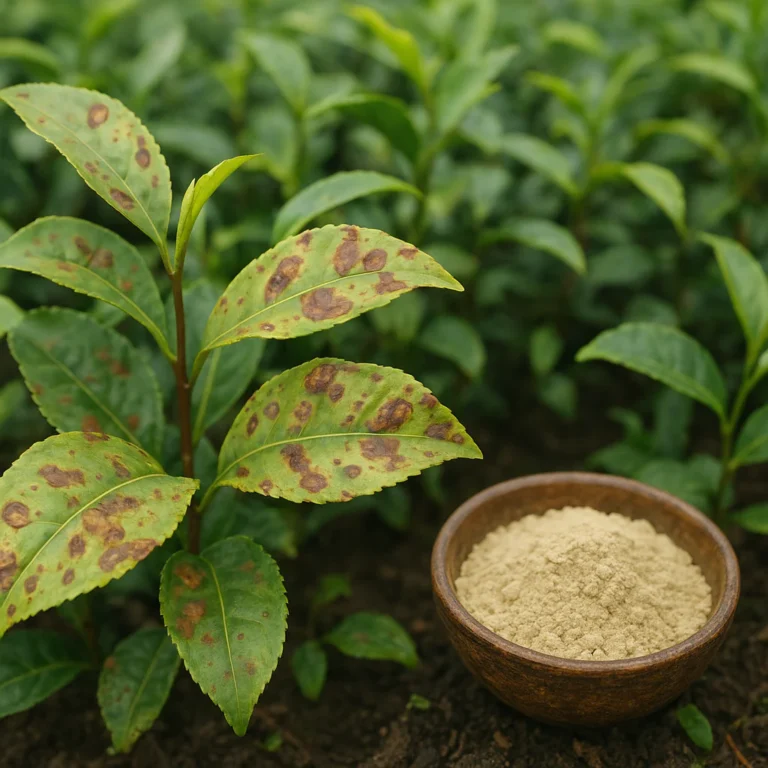
The visible symptom is a starting clue, not proof. Yellowing can have several causes. Leaf spots might be associated with disease, chemical injury, or other conditions. Wilting may reflect root trouble or water stress rather than a pest.
Try this basic comparison:
- Can you see an insect, mite, egg, web, or feeding pattern? If not, don’t assume a pest is responsible.
- Is the damage isolated or widespread? A single damaged leaf and a rapidly worsening canopy call for different responses.
- Is new growth affected? Ongoing damage to emerging shoots deserves closer attention than old, stable marks.
- Have care conditions changed? Review recent shifts in watering, temperature, light, repoting, or feeding.
- Are nearby plants affected too? Shared symptoms may point to a shared growing condition—or a spreading problem.
If the plant is deteriorating quickly, the damage is spreading, or you’re unsure what you’re seeing, take clear photos and seek a diagnosis from a local plant clinic, university Extension Service, or qualified horticultural professional. Correct diagnosis comes before treatment choice.
When pest numbers justify taking action
There isn’t one universal threshold for all tea plants. The EPA says to set action thresholds and monitor before deciding whether control is needed; one pest sighting does not automatically mean treatment is warranted (EPA: IPM principles).
We suggest weighing four things:
| Question | If the answer is “yes” |
|---|---|
| Is the pest correctly identified? | Choose a control that addresses that pest, not a symptom that only looks similar |
| Is the population increasing? | Shorten the monitoring interval and consider a proportionate response |
| Is fresh damage affecting shoots or multiple leaves? | A targeted control may be more useful than waiting |
| Is the plant young, weak, or already stressed? | It may need closer attention than a vigorous established plant |
Tolerating a small number of pests can be a sensible decision when the plant is growing well and the damage is limited. The goal isn’t a garden with zero insects. It’s a healthy tea plant and acceptable damage, with intervention when evidence supports it.
🛠️ 10 Integrated Pest Management Techniques for Tea Plants
IPM works best as a toolkit. Use methods suited to the pest and situation, starting with prevention and monitoring. If you use a product, verify that its label permits the intended use on tea plants and follow local rules. A product marketed as organic or natural still requires careful, label-directed use.
The EPA recommends controlling pests when needed and considering lower-risk approaches before broader pesticide use (EPA: IPM principles). UC IPM similarly outlines a combination of biological, cultural, physical, and chemical methods (UC IPM: What is IPM?).
| Technique | Best suited to | Main drawback |
|---|---|---|
| Hand removal | Small, visible infestations | Labor-intensive; pests may be hidden |
| Pruning | Localized damage or clusters on removable growth | Excessive pruning can stress the plant |
| Bariers and traps | Preventing access or monitoring selected pests | Pest-specific; placement matters |
| Beneficial insects | Supporting natural control where appropriate | Not a guaranteed quick fix |
| Cultural changes | Recurring problems linked to growing conditions | Results may take time |
| Targeted pesticide use | Confirmed problems not controlled by lower-impact measures | Must be label-compliant and used with non-target risks in mind |
1. Handpick pests and remove infested plant parts
For a small tea plant or a few visible pests, hand removal can be the simplest first response. Inspect carefully, remove the pests or affected material, and dispose of it away from the plant.
How to do it:
- Identify the pest as accurately as possible.
- Check surrounding leaves and nearby plants for more individuals.
- Remove pests by hand or prune only the affected portion if the plant can tolerate it.
- Clean tools if disease or an unfamiliar infestation is suspected.
- Reinspect the plant soon afterward.
Avoid stripping healthy foliage in a panic. Tea plants need their leaves, and unnecessary pruning can add stress without solving the underlying problem.
2. Use barriers, traps, and physical controls
Physical measures can stop some pests from reaching plants or help you monitor activity. A barrier or trap is not a universal solution: choose it for a pest whose behavior and access route make the method relevant.
Before buying or installing anything, ask:
- What pest am I targeting?
- Where does it enter or move?
- Could the barrier obstruct airflow, water, pollinators, or normal plant care?
- Will the trap tell me whether pest numbers are changing, or will it only catch a few individuals?
UC IPM includes mechanical and physical tools such as barriers and traps among potential management options (UC IPM: What is IPM?). For home tea growing, a careful visual inspection is often the more important “trap”: it tells you what is happening on the plant itself.
3. Support ladybugs, lacewings, and other beneficial insects
Ladybugs, lacewings, and other natural enemies can help suppress some garden pests. Which beneficial organisms are present—and what they eat—depends on the local ecosystem. Don’t release a beneficial insect without checking that it is appropriate for your location and target pest.
To support helpful insects:
- Avoid unnecessary broad-spectrum pesticide use.
- Maintain a diverse garden where suitable for your space and climate.
- Identify insects before removing them; some may be predators or pollinators rather than pests.
- Keep expectations realistic: beneficial insects may reduce pest pressure, but they do not guarantee a pest-free plant.
UC IPM includes biological control—using natural enemies among other strategies—as part of an integrated approach (UC IPM). A beneficial insect is a partner, not a tiny hired exterminator on a deadline.
4. Manage weeds and alternate host plants
Some weeds or nearby plants may shelter pests, but removing every non-tea plant can also remove habitat for beneficial organisms. Inspect the area first and manage plants based on what you observe.
The featured video discusses cover crops and crop rotation in field systems as ways to influence weeds, soil, and pest cycles. Those examples don’t translate directly to every tea garden, especially a container setup, but the broader lesson is useful: surounding vegetation and soil management can affect pest pressure. See the featured video for that farm-scale perspective.
5. Improve airflow and avoid overcrowding
Crowded foliage can make inspection difficult and limit airflow through the canopy. Give plants room to grow, and prune only when needed to remove damaged growth or improve access and care. Don’t thin the plant simply because you suspect “more air” will cure an unidentified problem.
Good spacing helps you:
- See leaf undersides and inner stems.
- Spot a new infestation before it spreads.
- Water and prune with less accidental damage.
- Keep plants from rubbing together or trapping debris.
If symptoms persist despite better access and care, reassess the diagnosis rather than repeatedly pruning.
6. Apply horticultural oils or insecticidal soap carefully
Horticultural oils and insecticidal soaps can be useful in some situations, but we cannot recommend a specific product for tea without confirming its label allows that crop and use. Formulations and legal labeling vary, and tea leaves intended for consumption add a food-crop consideration.
Before use:
- Confirm the pest and check whether the product label names tea or the applicable crop category.
- Read all directions, restrictions, protective precautions, and harvest intervals on the label.
- Test a small area if the label permits, and observe the plant for injury.
- Avoid improvising concentrations or mixing products.
- Apply only as directed, considering heat, sunlight, beneficial insects, and other label cautions.
- Keep people, pets, and non-target organisms away as the label instructs.
- Recheck the plant to see whether the treatment worked.
Do not assume neem oil is automatically approved or safe for edible tea leaves. Label directions and local regulations determine whether a particular product can be used, and on what crop.
7. Consider biological controls for persistent pests
Biological control may involve natural predators, parasites, or pathogens, but the right option depends on the pest and location. Before introducing organisms, check local regulations and seek guidance from a reputable Extension Service or biological-control supplier.
We recommend biological controls only when you can answer:
- What pest is present?
- Is the proposed beneficial organism effective against that pest?
- Is it suitable and permitted where you live?
- Can your growing environment support it?
- What will you monitor to assess results?
A named organism is not automatically the right organism. Biological controls are most useful when matched to confirmed pest identification and a realistic monitoring plan.
8. Use pesticides only as a targeted last resort
Sometimes a confirmed pest problem may continue despite prevention and lower-impact measures. In that case, a pesticide may be appropriate only if the product is labeled for the crop and use, and local law permits it.
Prioritize:
- A product that targets the identified pest.
- A legal, label-compliant use on tea or the relevant crop category.
- The smallest appropriate treatment area.
- Protection of pollinators and other non-target organisms, as the label directs.
- Advice from local Extension or regulatory authorities when crop status is unclear.
The EPA’s framework puts monitoring and prevention before control, and advises using lower-risk measures where appropriate (EPA: IPM principles). Never use a pesticide on tea simply because it works on roses, vegetables, or another shrub.
9. Rotate control methods to reduce resistance
Repeating the same chemical approach can encourage resistance in some pest populations. Rotation should follow expert guidance and product labels; it does not mean randomly switching products or combining them.
A Penn State Extension article discusses resistance management as a general IPM principle in its account of Varoa mite control in honey-be colonies (Penn State Extension: Varoa IPM). That article is about honey bees, not tea plants. Its bee treatments, products, and thresholds must not be transferred to tea. The relevant takeaway by analogy is simply to monitor outcomes and avoid relying blindly one control method.
10. Record results and adjust your IPM plan
A short record makes your next decision smarter. You don’t need fancy software—a calendar or garden notebook works.
| Date | Plant or pot | What you observed | Action taken | Follow-up |
|---|---|---|---|---|
| Day of inspection | Identify the plant | Pest, symptom, and affected area | Note pruning, physical control, or product used | Set a recheck date |
| Follow-up | Same plant | Fresh damage? Pest numbers changed? | Continue, stop, or revise | Record the outcome |
If the same problem returns, review the whole chain: Was the pest identified correctly? Did the treatment reach it? Is a nearby plant a source? Is the growing environment encouraging recurrence? The record turns “I think this worked” into evidence you can use.
🐛 Managing Specific Tea Plant Pests
The following sections offer a starting point for common garden pest groups. They are not a substitute for local diagnosis: tea pests vary by region, and similar symptoms can have different causes. Our tea pests and diseases guide is a useful companion.
Aphids, scale insects, and mealybugs
These sap-feding insects can appear on stems, leaf joints, or soft new growth. Signs may include clustered insects, distorted growth, sticky residue, or unusual bumps. Confirm the pest before deciding whether to intervene.
IPM response:
- Inspect new shoots and leaf undersides.
- Check whether only a small area is affected or the infestation is spreading.
- Remove a small, localized cluster by hand or prune a badly affected tip if appropriate.
- Recheck the plant and nearby plants.
- If a product seems necessary, verify tea-crop approval and label directions before use.
Don’t treat “sticky leaves” as a diagnosis. The sticky material is a clue; finding its source is the next step.
Spider mites and other mites
Mites are small enough to escape a casual look. Possible signs include fine stipling, a bronze cast, or webing in some cases, but these symptoms can also have other causes. Check the leaf undersides and look for active mites before choosing a control.
Grower’s checklist:
- Use good light and inspect several leaves.
- Compare damaged leaves with healthy ones.
- Check whether the symptoms are worsening.
- Review the plant’s growing conditions, particularly if the damage is widespread.
- Ask a local Extension Service for identification if you’re uncertain.
Avoid reaching for a spray based only on speckled leaves. The right treatment depends on confirming the organism and checking whether the product is suitable for tea.
Caterpillars, loopers, and leaf-feding insects
Chewing pests may leave holes, raged margins, or missing sections of leaf. Look for the insect itself, eggs, fresh feeding, or other signs nearby. Some damage may be cosmetic, but repeated injury to growing shoots can matter more, especially on a young plant.
On a small plant, hand removal may be practical. If you need another control, first identify the caterpillar or other feeder and consult local crop guidance. Avoid harming beneficial insects or non-target species through an unverified treatment.
Tea mosquito bugs and other regional pests
Some pests are important in tea-growing regions but uncommon or absent elsewhere. A pest name that appears in a commercial tea-growing guide may not apply to your home garden. Climate, plant location, and local pest populations all matter.
If you suspect a regionally significant pest:
- Photograph the damage and the insect, if visible.
- Note where and when the symptoms appeared.
- Contact a local agricultural department, university Extension Service, or plant diagnostic clinic.
- Follow local recommendations and confirm that any treatment is labeled for tea.
Regional identification is especially valuable when damage is sudden or spreading. It helps avoid using the wrong control on the wrong pest.
Ants, slugs, and snails
Ants can be present for several reasons, so their presence alone does not prove the tea plant has an insect infestation. Inspect for the actual source of any sticky residue or plant damage. Slugs and snails may leave irregular chewing damage; check the plant and surrounding area when conditions make them active.
Use a targeted response:
- Confirm what is causing the damage.
- Reduce hiding places near the plant if appropriate.
- Hand-remove visible slugs or snails when practical.
- Use barriers or traps only when suitable for the pest and safe for the garden.
- Avoid broad treatments that affect organisms you weren’t targeting.
🌧️ Seasonal IPM: Adjusting Tea Plant Care Through the Year
Pest pressure changes with weather, plant growth, and local insect activity. Your monitoring should change too. There’s no single season calendar that applies across every tea-growing region, so use local growing patterns rather than a generic month-by-month prescription.
| Growing period | IPM focus |
|---|---|
| New growth | Inspect tender shoots and check new plants before adding them to the garden |
| Warm or dry spells | Look closely for escalating leaf damage; review moisture and plant stress |
| Wet or humid periods | Check for spreading leaf symptoms and avoid unnecessary prolonged wetness |
| After pruning or repoting | Watch for stress and inspect new growth as the plant settles |
| Before harvest | Reconfirm any product label, restrictions, and harvest intervals before treatment |
| Dormant or slower growth | Remove debris where appropriate and plan prevention for the next growth period |
A seasonal routine that travels well:
- At the start of an active growth period, inspect each plant and note its baseline condition.
- Increase checks when you see new damage or when local pest reports indicate elevated risk.
- Review watering and drainage after changes in weather.
- Clean tools and containers when moving between plants.
- Before harvesting, review whether any recent treatment was permitted and whether the label’s harvest instructions have been followed.
For broader planting and soil-care ideas, explore our organic farming techniques and green tea cultivation categories.
🫖 Protecting Tea Quality, Harvests, and Pollinators
Tea leaves may be harvested for a drink, which makes product choice and timing especially important. Never apply a pesticide unless the label permits its use on tea or the relevant edible crop category, and follow all label restrictions, including harvest intervals. If that approval is unclear, don’t guess; ask your local Extension Service or pesticide regulator.
To reduce unnecessary risk:
- Prefer prevention and monitoring over calendar-based spraying.
- Identify the pest before choosing a treatment.
- Avoid treating blooms or active pollinators unless the label specifically permits the use and provides precautions.
- Don’t use a product intended for ornamental plants on harvestable tea unless its label authorizes that crop and use.
- Keep records of any treatment and harvest-related instructions.
- Rinse harvested leaves appropriately for your preparation, but don’t rely on washing to make an off-label pesticide use safe.
The EPA’s IPM framework calls for selecting controls with care for people and the environment (EPA: IPM principles). That’s a general framework, not a substitute for the pesticide label or local food-crop regulations. For tea-growing fundamentals and the eventual cup in your mug, see our health benefits of tea resources.
⚠️ Common IPM Mistakes to Avoid
IPM is straightforward in principle, but easy to short-circuit when a leaf suddenly looks alarming. Here are the mistakes we most often encourage growers to avoid:
- ❌ Spraying before identifying the problem. A treatment aimed at the wrong culprit wastes effort and can affect helpful organisms.
- ❌ Treating every insect as a pest. Some garden insects are beneficial or harmless.
- ❌ Assuming natural means safe. A product’s label still governs its legal and safe use.
- ❌ Using a product on tea without label approval. Tea intended for harvest requires special care.
- ❌ Applying the same treatment repeatedly without checking results. Reassess the diagnosis and management plan.
- ❌ Removing too much foliage. Heavy pruning may add stress and reduce the plant’s ability to recover.
- ❌ Ignoring growing conditions. Water, drainage, crowding, and plant stress may contribute to the problem.
- ❌ Transferring recommendations between unrelated systems. A treatment for Varoa mites in honey-be colonies is not a tea-plant treatment.
The Penn State Extension Varoa article is useful as an example of monitoring and combining control approaches in bekeping, but its mite-specific treatment instructions apply to honey bees, not tea plants (Penn State Extension). For tea, use tea-specific and locally relevant guidance.
🧭 A Simple IPM Plan for Homegrown Tea
Want a routine that fits one notepad? Here’s our practical version.
Set up your plan
- Choose a baseline. Photograph the plant when it is healthy so you can compare later.
- Inspect on a schedule. Start with a weekly check during active growth; inspect more often if symptoms appear.
- Record symptoms. Note the plant, affected leaves, visible organisms, and whether damage is spreading.
- Confirm the problem. Use a local Extension Service or plant clinic if you can’t identify it.
- Set a response threshold. Decide what matters for this plant: increasing numbers, repeated injury, or damage to new growth.
- Start with prevention or physical controls. Improve care where needed; remove a small, confirmed infestation by hand when practical.
- Use products only when justified. Confirm the label allows tea and follow every direction.
- Recheck and revise. If the problem continues, reassess the pest identification and the method.
| Scenario | A reasonable next step |
|---|---|
| One or two insects, no fresh damage | Record and monitor rather than automatically spraying |
| Small, visible cluster on a shoot | Confirm identification; consider hand removal or selective pruning |
| Damage spreading across several plants | Inspect the garden, confirm the culprit, and seek local advice |
| Symptoms without visible pests | Review care conditions and consider disease diagnosis |
| Persistent confirmed pest problem | Ask Extension about tea-appropriate options and verify all product labels |
This is the heart of IPM: observe, decide, act proportionately, and check your results. The question we opened with—a few aphids, emergency or not?—now has a more useful answer: count the evidence, watch the trend, and respond when the plant’s condition warrants it.