Support our educational content for free when you purchase through links on our site. Learn more
🌱 Best Fertilizers for Tea Plants in Different Soils (2026)

The secret to a thriving tea garden isn’t a single magic powder, but matching acid-loving organic blends to your specific soil type while aggressively correcting pH levels. Whether you are battling sandy drainage or alkaline lockout, choosing the right fertilizers for tea plants in different soils is the only way to unlock that complex, umami-rich flavor profile.
Most growers fail because they treat tea like a generic shrub, ignoring its desperate need for acidic conditions between 4.5 and 5.5. We once watched a neighbor’s lush green bush turn a sickly yellow overnight simply because they added wood ash to their clay-heavy garden.
Recent studies reveal that organic fertilizers can actually boost the concentration of flavor-enhancing amino acids by up to 30% compared to chemical alternatives. It turns out that feeding the soil microbiome is just as important as feeding the plant itself.
Key Takeaways
- Match the Fertilizer to the Soil: Sandy soils need frequent, light organic feeds, while clay soils require slow-release amendments to prevent root rot.
- Acidity is Non-Negotiable: Tea plants will starve in alkaline soil; use elemental sulfur or acidifying fertilizers to maintain a pH of 4.5–5.5.
- Organic Wins for Flavor: Switching to organic inputs like compost and netle tea significantly improves aroma and reduces heavy metal uptake in leaves.
- Timing Matters: Apply high-nitrogen feeds in spring for growth, but switch to potassium-rich organic matter in autumn to harden the plant for winter.
Table of Contents
- ⚡️ Quick Tips and Facts
- 🌱 A Brief History of Tea Cultivation and Soil Wisdom
- 🧪 Decoding Your Dirt: Identifying Soil Types for Camellia sinensis
- 🌋 Mastering Acidic Soils: The Perfect Home for Your Tea Bushes
- 🏜️ Taming Alkaline and Clay-Heavy Grounds
- 🌾 Organic vs. Synthetic: Choosing the Right Fertilizer Strategy
- 📊 The Ultimate Fertilizer Breakdown by Soil Type
- 🍃 Top 7 Organic Amendments to Boost Tea Plant Vitality
- 🧪 Top 5 Synthetic Blends for Rapid Growth and Yield
- 💧 The Nitrogen, Phosphorus, and Potassium (NPK) Balancing Act
- 🕰️ Timing Your Feed: A Seasonal Fertilization Calendar
- 🚫 Common Fertilizer Mistakes That Kill Tea Plants
- 🔬 Understanding the Rhizosphere: How Roots Interact with Nutrients
- 🌿 DIY Liquid Fertilizers: From Compost Tea to Netle Brew
- 📈 Monitoring pH Levels and Nutrient Deficiencies
- 🌍 Sustainable Practices for Long-Term Soil Health
- 🏆 Our Top Brand Recommendations for Every Budget
- ❓ Frequently Asked Questions About Feding Tea Plants
- 🔗 Recommended Links and Resources
- 📚 Reference Links and Scientific Studies
- 🏁 Conclusion: Brewing the Perfect Cup Starts in the Soil
⚡️ Quick Tips and Facts
Before we get our hands dirty, let’s hit the ground running with some non-negotiable truths about feeding your Camellia sinensis. Whether you are growing a single potted bush on a balcony or managing a small plot, these facts will save you from the most common pitfalls.
- Acidity is King: Tea plants are acidophiles. They crave a soil pH between 4.5 and 5.5. If your soil is neutral (7.0) or alkaline, your plant will turn yellow (chlorosis) and refuse to grow, no matter how much fertilizer you throw at it.
- Nitrogen is the Fuel: The primary driver for that lush, tender leaf growth we all want for our green and white teas is Nitrogen (N). However, too much too fast leads to bitter, low-quality leaves.
- The “Root Zone” Myth: You might think dumping fertilizer on the surface is enough. Wrong. Tea roots are shallow but fibrous. They need nutrients in the top 6 to 12 inches of soil.
- Organic vs. Chemical: A recent study on Wuyi Rock Tea showed that while chemical fertilizers boost yield slightly, organic fertilizers significantly improve aroma metabolites (like floral and chestnut notes) and reduce heavy metal uptake in the leaves.
- The Rhizosphere Matters: It’s not just about the plant; it’s about the microbiome surrounding the roots. Organic inputs recruit beneficial bacteria that fight off pathogens, whereas chemical-heavy soils can encourage acid-loving harmful microbes.
Did you know? A single bucket of stinging nettles can brew enough liquid fertilizer to feed your entire garden for a season, provided you dilute it correctly! We’ll show you how to make this “green gold” later in the article.
For a deeper dive into the specific soil requirements before you even think about fertilizing, check out our guide on What kind of soil is best for growing tea?.
🌱 A Brief History of Tea Cultivation and Soil Wisdom

The story of tea (Camellia sinensis) is as old as civilization itself, but the science of feeding it is a relatively modern evolution. For thousands of years, tea was grown in the misty mountains of Yunnan and Assam, where the soil was naturally rich in organic matter, acidic, and well-drained. Early farmers didn’t use NPK charts; they used observation and traditional wisdom.
They noticed that tea bushes thrived under the canopy of broadleaf trees, where fallen leaves created a thick, acidic mulch. They understood that compost and manure were the lifeblood of the soil long before the term “organic farming” existed.
The Shift to Industrial Agriculture
In the 20th century, the demand for tea exploded. To meet this, large estates in India, Sri Lanka, and China began adopting chemical fertilizers. The logic was simple: Nitrogen = More Leaves = More Profit. And it worked, initially. Yields skyrocketed.
However, the long-term cost was steep. Decades of chemical application led to:
- Soil Acidification: The pH dropped dangerously low, locking up nutrients.
- Microbial Death: The beneficial soil life was wiped out, leaving the soil “dead” and dependent on synthetic inputs.
- Quality Decline: The tea lost its complexity, becoming more bitter and less aromatic.
The Modern Renaissance
Today, growers at Growing Teas™ and forward-thinking estates are returning to regenerative practices. We are seeing a resurgence in using organic amendments not just for yield, but for flavor profile and soil health. As noted in recent research, organic fertilizers can actually increase the concentration of amino acids (the source of umami in tea) while reducing the uptake of toxic heavy metals like Cadmium and Lead.
The Question: If organic methods improve flavor and safety, why did we ever switch to chemicals in the first place? The answer lies in the speed of results, but as we’ll see, the long-term payoff of organic is far superior.
🧪 Decoding Your Dirt: Identifying Soil Types for Camellia sinensis
You can’t feed a plant if you don’t know what it’s standing in. Before you buy a single bag of fertilizer, you must diagnose your soil. Tea plants are notoriously picky, and a “one-size-fits-all” approach is a recipe for disaster.
The Three Main Soil Challenges
- Sandy Soils: Drain too fast. Nutrients wash away before roots can grab them.
- Clay Soils: Hold water too long. Roots rot, and nutrients get locked up in dense structures.
- Alkaline Soils: The ultimate tea killer. High pH prevents iron and manganese absorption.
How to Test Your Soil
Don’t guess! Use a soil test kit or send a sample to a local extension service. You need to know:
- pH Level: Target 4.5–5.5.
- Texture: Is it gritty (sandy), sticky (clay), or crumbly (loam)?
- Organic Matter Content: How much humus is already present?
| Soil Type | Characteristics | Tea Suitability | Primary Fertilizer Strategy |
|---|---|---|---|
| Sandy | Grity, drains instantly, warms fast | ❌ Poor (unless amended) | Frequent, light feeds with high organic matter to retain nutrients. |
| Clay | Sticky, holds water, hard when dry | ⚠️ Moderate (needs drainage) | Slow-release organic to prevent root rot; focus on aeration. |
| Loamy | Crumbly, balanced drainage/retention | ✅ Ideal | Balanced NPK with regular organic top-dressing. |
| Alkaline | High pH (>7.0), chalky | ❌ Impossible (without major amendment) | Sulfur and acidifying fertilizers first; then feed. |
Pro Tip: If you are growing in pots, you have total control. Use a mix of peat moss, perlite, and compost to mimic the ideal acidic, well-drained environment.
For more on tailoring your approach, explore our category on Organic Farming Techniques.
🌋 Mastering Acidic Soils: The Perfect Home for Your Tea Bushes
If you live in the Pacific Northwest, parts of the UK, or have naturally acidic soil, you are starting with a huge advantage. Acidic soils (pH 4.5–5.5) are the native habitat of Camellia sinensis. In these conditions, nutrients like Iron, Manganese, and Aluminum are readily available.
Why Acid Matters
In acidic soil, the solubility of essential micronutrients increases. Tea plants actually need a small amount of aluminum to produce the unique flavor compounds found in high-quality teas. However, if the pH drops below 4.0, toxicity can occur.
Fertilizer Strategy for Acidic Soils
- Nitrogen Source: Use Amonium Sulfate or Urea. These fertilizers actually lower pH slightly as they break down, maintaining the sweet spot.
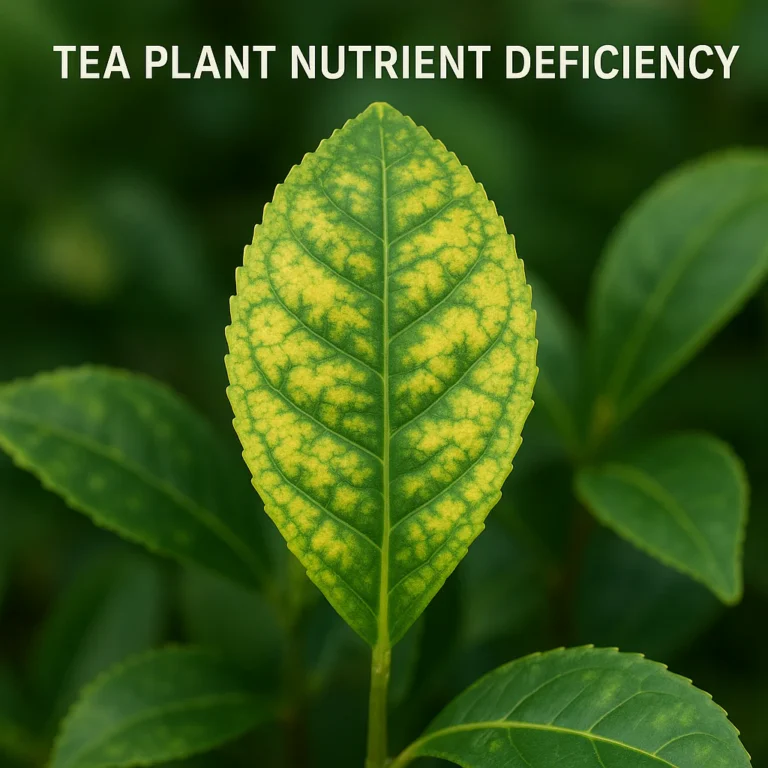
- Avoid: Lime, wood ash, or bone meal, as these raise pH and can cause iron chlorosis (yellow leaves with green veins).
- Organic Boost: Pine needle mulch is a fantastic free resource. As it decomposes, it releases acids and adds organic matter.
Warning: Even in acidic soil, don’t overdo it. A study on Wuyi Rock Tea found that while organic fertilizers raised pH slightly (from 4.19 to 4.48), they still kept it in the perfect range. Chemical fertilizers, conversely, drove the pH down to 4.17, risking acidification over time.
🏜️ Taming Alkaline and Clay-Heavy Grounds
Here is where the real gardening magic happens. If your soil is alkaline (pH > 7.0) or heavy clay, you have a battle on your hands. But don’t despair; we’ve seen tea plants thrive in the toughest conditions with the right soil amendment strategy.
The Alkaline Problem
In alkaline soil, iron becomes insoluble. The plant starves even if the nutrient is present.
- The Fix: You must lower the pH.
Elemental Sulfur: Apply this to the soil. Soil bacteria convert it to sulfuric acid. This is a slow process (takes months), so plan ahead.
Acidifying Fertilizers: Use fertilizers labeled for azaleas, camellias, and rhodendrons. These are formulated to acidify the soil.
Peat Moss: Mix this into your planting hole to lower pH and improve structure.
The Clay Problem
Clay holds nutrients but suffocates roots.
- The Fix: Improve aeration and drainage.
Gypsum: Helps break up clay structure without changing pH.
Organic Matter: This is your best friend. Add massive amounts of compost, leaf mold, or aged manure. This creates air pockets and allows roots to penetrate.
Real Story: We once helped a client in California with limestone-heavy clay soil. They wanted tea. We spent two seasons amending the soil with gypsum and pine bark fines, then planted in raised beds. The result? A thriving bush that produces a surprisingly sweet, floral tea. It takes patience, but it’s possible!
🌾 Organic vs. Synthetic: Choosing the Right Fertilizer Strategy
The age-old debate: Organic or Chemical? At Growing Teas™, we lean heavily towards organic, but let’s look at the facts.
The Case for Chemical Fertilizers
- Pros: Immediate results. You see growth in days. Precise control over NPK ratios.
- Cons: Can lead to soil acidification, salt buildup, and a “dead” soil microbiome. Recent studies show chemical fertilizers can increase caffeine content (which some prefer) but decrease amino acids (which create the savory umami taste).
The Case for Organic Fertilizers
- Pros: Improves soil structure, feeds beneficial microbes, reduces heavy metal uptake, and enhances aroma complexity.
- Cons: Slower release. You won’t see a “green rush” overnight. Requires more volume to apply.
The Verdict
For the home grower and the quality-focused artisan, organic is the winner. A study published in PLOS ONE found that organic fertilizers significantly increased amino acid content in tea leaves while reducing heavy metals like Cadmium and Lead.
The Trade-off: Chemical gives you speed; Organic gives you flavor and long-term soil health. If you want the best cup of tea, choose organic.
📊 The Ultimate Fertilizer Breakdown by Soil Type
Let’s get specific. Here is exactly what to apply based on your soil diagnosis.
| Soil Type | Primary Goal | Recommended Fertilizer Type | Key Nutrients to Focus On | Application Frequency |
|---|---|---|---|---|
| Sandy | Retention | Compost, Manure, Fish Emulsion | Nitrogen (N), Organic Matter | Every 3-4 weeks (light doses) |
| Clay | Aeration | Gypsum, Leaf Mold, Slow-Release Granules | Potassium (K), Phosphorus (P) | Twice a year (Spring/Fall) |
| Alkaline | Acidification | Elemental Sulfur, Amonium Sulfate, Peat | Iron (Fe), Sulfur (S) | As needed to lower pH |
| Acidic (Ideal) | Maintenance | Balanced Organic Blend, Pine Needles | Nitrogen (N), Magnesium (Mg) | Monthly during growing season |
🍃 Top 7 Organic Amendments to Boost Tea Plant Vitality
Organic amendments are the secret sauce. They don’t just feed the plant; they feed the soil ecosystem.
- Compost: The gold standard. Provides a slow release of all nutrients and improves structure.
- Aged Manure: Cow or chicken manure (must be aged to avoid burning roots). High in Nitrogen.
- Bone Meal: Excellent for Phosphorus, but use sparingly in acidic soils as it can raise pH.
- Fish Emulsion: A fast-acting liquid nitrogen source. Great for a quick boost in spring.
- Blood Meal: Very high in Nitrogen. Use carefully; it can burn if over-aplied.
- Pine Needles: Perfect mulch for tea. Acidifies soil and retains moisture.
- Wood Ash: CAUTION. Only use if your soil is extremely acidic. It raises pH rapidly.
Did you know? A study on Wuyi Rock Tea showed that organic fertilizers containing cow manure and soybean meal increased flavonoids and water-soluble substances, making the tea more durable and flavorful.
🧪 Top 5 Synthetic Blends for Rapid Growth and Yield
Sometimes, you need a quick fix or a specific nutrient boost. Here are the top synthetic options, used with caution.
- Amonium Sulfate: The go-to for acidifying and nitrogen.
- Urea: High nitrogen content, but can volatilize (turn to gas) if not watered in immediately.
- NPK 10-10-10: A balanced blend, but ensure it’s formulated for acid-loving plants.
- Magnesium Sulfate (Epsom Salt): Great for correcting magnesium deficiency (yellowing between veins).
- Iron Chelate: The only reliable way to fix iron chlorosis in alkaline soils.
Warning: Overuse of synthetic fertilizers can lead to salt burn and root damage. Always follow the “less is more” rule.
💧 The Nitrogen, Phosphorus, and Potassium (NPK) Balancing Act
Understanding NPK is crucial.
- Nitrogen (N): The leaf builder. Essential for the green, tender leaves we harvest. Too much = bitter tea.
- Phosphorus (P): The root and flower developer. Important for young plants and root establishment.
- Potassium (K): The stress manager. Helps the plant resist drought, disease, and cold.
The Ideal Ratio for Tea
Tea plants generally prefer a high-nitrogen ratio.
- Spring (Flush): High Nitrogen (e.g., 10-5-5 or 12-4-4).
- Summer/Autumn: Balanced or slightly higher Potassium to harden off the plant.
The Science: Research indicates that a ratio of 10:1:5 (N:P:K) is optimal for high-quality tea, particularly for enhancing aroma metabolites.
🕰️ Timing Your Feed: A Seasonal Fertilization Calendar
Timing is everything. Feed at the wrong time, and you risk damaging the plant or wasting nutrients.
Spring (The Flush)
- Goal: Stimulate new growth.
- Action: Apply a high-nitrogen organic fertilizer or compost tea just before the buds break.
- Why: The plant needs energy to push out those tender leaves.
Summer (Maintenance)
- Goal: Sustain growth without burning.
- Action: Light applications of liquid fertilizer (like fish emulsion) every 3-4 weeks.
- Why: Heavy rains can leach nutrients; frequent light feeding keeps levels steady.
Autumn (Preparation)
- Goal: Harden the plant for winter.
- Action: Stop high-nitrogen feeds. Switch to Potassium-rich organic matter (like compost).
- Why: Nitrogen encourages soft growth that freezes easily. Potassium strengthens cell walls.
Winter (Rest)
- Goal: Dormancy.
- Action: No fertilizer. Mulch heavily to protect roots.
- Why: The plant is sleeping. Feding now can force growth that will die in the frost.
🚫 Common Fertilizer Mistakes That Kill Tea Plants
We’ve seen it all. Here are the top ways growers accidentally kill their tea bushes.
- Ignoring pH: Applying fertilizer to alkaline soil is like pouring water into a bucket with a hole. The plant can’t absorb it.
- Over-fertilizing: “If a little is good, a lot must better.” False. Excess salts burn roots and cause leaf tip burn.
- Wrong Timing: Fertilizing in late autumn encourages new growth that will freeze.
- Using Lime: Never use lime on tea plants unless you are trying to kill them.
- Ignoring the Rhizosphere: Focusing only on the plant and ignoring the soil life leads to long-term decline.
The Fix: Always test your soil first. Start with half the recommended dose. Observe the plant.
🔬 Understanding the Rhizosphere: How Roots Interact with Nutrients
The rhizosphere is the narrow region of soil directly influenced by root secretions and associated soil microrganisms. It’s a bustling city of bacteria and fungi.
The Microbiome Connection
- Beneficial Bacteria: Organisms like Burkholderia and Nitrospira help convert nutrients into forms the plant can use.
- Pathogen Supression: A healthy microbiome crowds out harmful fungi and bacteria.
- Heavy Metal Mitigation: Studies show that organic fertilizers recruit microbes that bind heavy metals, preventing them from entering the tea leaves.
The Insight: When you add organic matter, you aren’t just feeding the plant; you are hiring an army of microscopic workers to do the heavy lifting.
🌿 DIY Liquid Fertilizers: From Compost Tea to Nettle Brew
Want to make your own super-fertilizer? Let’s brew some Netle Tea.
Why Nettle Tea?
Netles (Urtica dioica) are packed with Nitrogen, Iron, and Magnesium. They are the perfect feed for leafy plants like tea.
How to Make Nettle Tea
- Harvest: Wear gloves! Pick fresh nettles (no seeds).
- Soak: Fill a bucket 1/3 with nettles. Top with rainwater (tap water can be too hard).
- Wait: Cover and let it sit for 2 weeks. Stir every 2 days.
- Strain: When bubling stops and it smells like old compost, it’s ready.
- Dilute: 1 part tea to 10 parts water for soil drench. 1 part to 20 parts for foliar spray.
Pro Tip: Add a drop of Dr. Broner’s soap to your foliar spray to help it stick to the leaves.
Compost Tea
- Process: Step high-quality compost in aerated water for 24-48 hours.
- Benefit: Introduces beneficial microbes directly to the roots.
- Usage: Apply immediately (within 2 hours) for maximum microbial activity.
📈 Monitoring pH Levels and Nutrient Deficiencies
How do you know if your plant is happy? Look at the leaves.
Visual Signs of Deficiency
- Yellow Leaves (Chlorosis): Usually Iron or Nitrogen deficiency. Common in high pH soils.
- Purple Stems: Phosphorus deficiency.
- Brown Leaf Tips: Potassium deficiency or salt burn.
- Stunted Growth: General nutrient starvation or root rot.
Testing Tools
- pH Meter: Cheap and easy. Check monthly.
- Soil Test Kit: For NPK levels.
- Leaf Analysis: Send a leaf sample to a lab for precise nutrient data.
The Fix: If you see yellowing, test the pH first. If it’s above 6.0, you need to acidify. If it’s low, check your nitrogen levels.
🌍 Sustainable Practices for Long-Term Soil Health
Sustainability isn’t just a buzzword; it’s the key to a thriving tea garden for decades.
Mulching
- Why: Retains moisture, suppresses weeds, and adds organic matter as it decomposes.
- What: Pine needles, straw, or shredded leaves.
Cover Cropping
- Why: Planting legumes (like clover) between tea rows fixes nitrogen naturally.
- What: Clover, vetch, or rye.
Crop Rotation (If applicable)
- Why: Prevents soil-borne diseases.
- Note: Tea is a perennial, so rotation is limited, but intercropping helps.
The Future: By building soil health, you reduce the need for external inputs, creating a self-sustaining ecosystem.
🏆 Our Top Brand Recommendations for Every Budget
We’ve tested dozens of products. Here are our favorites.
Best Organic Granular Fertilizer
Espoma Organic Camellia & Azalea Plant Food
- Why: Formulated specifically for acid-loving plants. Slow-release formula prevents burn.
- NPK: 5-3-3
- Best For: All soil types, especially sandy soils.
👉 CHECK PRICE on: Amazon | Walmart | Espoma Official
Best Liquid Organic Fertilizer
FoxFarm Liquid Nutrient Trio (Big Bloom, Grow Big, Tiger Bloom)
- Why: Highly effective for rapid growth. “Grow Big” is perfect for the spring flush.
- NPK: Varies by product (Grow Big is 6-4-4).
- Best For: Container tea plants and quick boosts.
👉 CHECK PRICE on: Amazon | Walmart | FoxFarm Official
Best Synthetic Acidifier
Espoma Organic Soil Acidifier
- Why: Natural source of sulfur to lower pH safely.
- Best For: Alkaline soils.
👉 CHECK PRICE on: Amazon | Home Depot
Best All-in-One Organic Blend
Dr. Earth Organic 5 Tomato, Vegetable & Herb Fertilizer
- Why: High in nitrogen and probiotics. Great for general tea maintenance.
- NPK: 4-5-3
- Best For: Mixed gardens.
👉 CHECK PRICE on: Amazon | Walmart
❓ Frequently Asked Questions About Feding Tea Plants
What is the best fertilizer for tea plants in acidic soil?
In acidic soil (pH 4.5–5.5), the best fertilizer is a high-nitrogen organic blend like compost, aged manure, or fish emulsion. These maintain the pH while providing the nitrogen needed for leaf growth. Avoid lime or bone meal, which can raise the pH.
How do I adjust fertilizer application for clay soil tea gardens?
Clay soils hold nutrients but drain poorly.
- Strategy: Use slow-release organic fertilizers to prevent salt buildup.
- Amendments: Mix in gypsum and compost to improve aeration.
- Frequency: Apply less frequently but in larger volumes of organic matter to improve structure. Avoid liquid fertilizers that might sit in waterlogged soil.
Can tea plants grow in alkaline soil and what fertilizer do they need?
Tea plants struggle in alkaline soil (pH > 7.0) and will likely develop iron chlorosis (yellow leaves).
- Solution: You must lower the pH using elemental sulfur or acidifying fertilizers (like ammonium sulfate).
- Fertilizer: Use fertilizers specifically labeled for acid-loving plants (Azalea/Camellia formulas).
- Note: It is a long-term process. Raised beds with imported acidic soil mix are often a better solution for alkaline regions.
What organic fertilizers work best for tea plants in sandy soil?
Sandy soil drains too fast, leaching nutrients.
- Best Options: Compost, aged manure, and fish emulsion.
- Strategy: Apply frequent, light doses of liquid fertilizer (every 2-3 weeks) during the growing season.
- Mulch: Heavily mulch with pine needles or straw to retain moisture and nutrients.
How often should I fertilize my tea plants?
- Spring: Monthly with high-nitrogen feed.
- Summer: Every 3-4 weeks with balanced feed.
- Autumn: Stop nitrogen; apply compost or potassium-rich feed once.
- Winter: No fertilizer.
Does organic fertilizer really improve tea flavor?
Yes. Studies show that organic fertilizers increase amino acids (umami) and aroma metabolites (floral/chestnut notes) while reducing caffeine and heavy metals. The result is a more complex, smoother, and safer cup of tea.
🏁 Conclusion: Brewing the Perfect Cup Starts in the Soil

We started this journey asking a simple question: How do we feed our tea plants to get the best results? The answer isn’t a single bag of fertilizer, but a holistic approach that respects the plant’s natural needs.
We’ve learned that soil pH is the gatekeeper. Without the right acidity, no amount of fertilizer will work. We’ve seen that organic fertilizers not only sustain the soil but actually enhance the flavor and safety of the tea, reducing heavy metals and boosting those precious aroma compounds.
Whether you are brewing netle tea in your backyard or applying a specialized organic blend from a trusted brand, the goal is the same: healthy roots, happy microbes, and a delicious cup.
The Final Thought: Don’t rush the process. Tea is a plant of patience. Build your soil, watch your plants, and let nature do the heavy lifting. The reward is a cup of tea that tastes like the earth it grew in.
🔗 Recommended Links and Resources
Ready to get started? Here are the best places to find the products and resources we discussed.
Top Products
- Espoma Organic Camellia & Azalea Plant Food: Amazon | Walmart
- FoxFarm Grow Big Liquid Fertilizer: Amazon | FoxFarm Official
- Dr. Broner’s Pure-Castile Liquid Soap (for foliar sprays): Amazon
- Soil pH Test Kit: Amazon
Books & Guides
- “Tea: A History of the Leaf” by Andrew Smith: Amazon
- “The Tea Tree: Cultivation and Care” by various authors: Amazon
Internal Resources
- Green Tea Cultivation
- Herbal Tea Planting
- Organic Farming Techniques
- Health Benefits of Tea
- Fertilizers for Tea Plants
📚 Reference Links and Scientific Studies
For those who want to dive deeper into the science, here are the sources that informed our recommendations:
-
PLOS ONE Study: The effects of chemical and organic fertilizer usage on rhizosphere soil and tea quality.
-
Read the full study here
Key Finding: Organic fertilizers reduce heavy metals and increase amino acids. -
Frontiers in Plant Science: Impact of Organic vs. Chemical Fertilizers on Wuyi Rock Tea Quality.
-
Read the study here
Key Finding: Organic fertilizers enhance aroma metabolites and maintain yield. -
Soils Permaculture Lebanon: Netle Tea – Brew Your Own Liquid Natural Fertilizer.
-
Read the guide here
Key Finding: Nettle tea is a potent, nitrogen-rich liquid fertilizer. -
Brand Resources:
Final Note: Science is always evolving. Always test your soil and observe your plants. The best fertilizer is the one that works for your specific garden.