Support our educational content for free when you purchase through links on our site. Learn more
12 Organic Pest Control Methods for Tea Plants 🌿

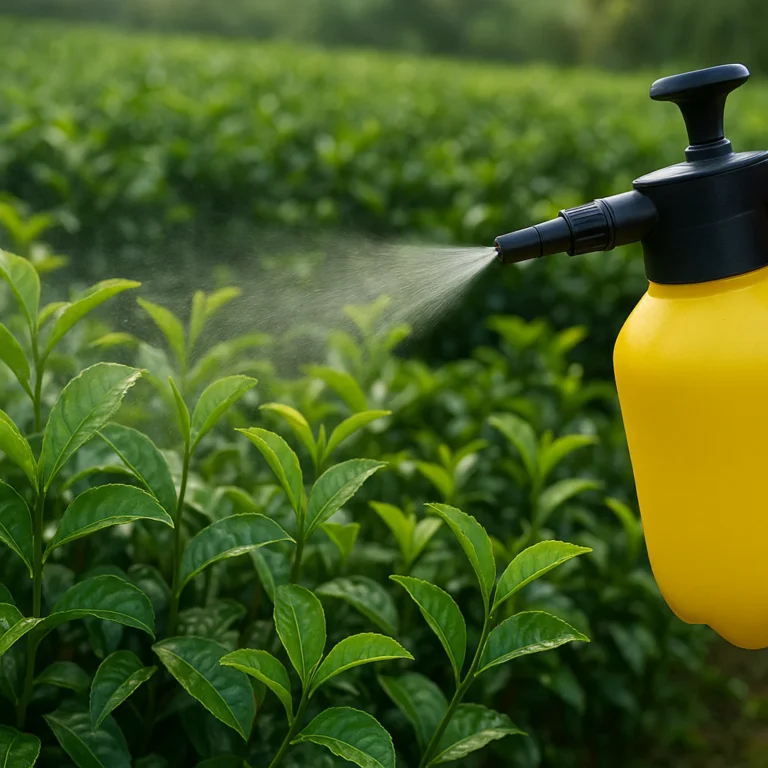
Organic pest control methods for tea plants work best when you identify the pest first, then start with prevention and targeted, low-impact controls. Hand-picking, pruning, rinsing foliage, and supporting beneficial insects are often better first moves than reaching for a spray.
We’ve seen a few aphids turn a tender tea shoot into a crinkled mess—and then spotted ladybug larvae already on patrol nearby. That’s why we recommend inspecting before treating: the right response might be a rinse, a snip, or simply giving nature another day to work.
Key Takeaways
- Identify the pest before choosing a control. Aphids, mites, scale, and caterpillars need different approaches.
- Start with low-impact methods: hand-pick pests, prune infested growth, rinse leaves, and remove hiding places.
- Prevent problems with healthy plant care. Suitable watering, good drainage, and easy-to-inspect spacing help tea plants cope with pest pressure.
- “Organic” doesn’t automatically mean harmless. Sprays and homemade remedies can harm tea foliage, beneficial insects, or pollinators.
- Protect your harvest. Use only products labeled for the intended plant and follow all application and preharvest directions.
Table of Contents
- ⚡️ Quick Tips and Facts
- 🌱 Understanding Organic Pest Control for Tea Plants
- What “Organic” Means in the Tea Garden
- Why Tea Pests Need a Thoughtful Approach
- 🔎 Identify Tea Plant Pests Before You Treat
- Common Tea Pests and the Damage They Cause
- How to Inspect Tea Leaves, Buds, and Stems
- Pest Damage or Tea Plant Disease?
- 🧭 Build an Organic Integrated Pest Management Plan
- Monitor Pest Pressure and Set Action Thresholds
- Protect Pollinators, Beneficial Insects, and Tea Quality
- 🛡️ 12 Organic Pest Control Methods for Tea Plants
- 1. Prune Infested Growth and Improve Airflow
- 2. Hand-Pick Caterpillars, Beetles, and Egg Masses
- 3. Use a Strong Water Spray for Aphids and Mites
- 4. Remove Weds and Garden Debris That Shelter Pests
- 5. Encourage Ladybugs, Lacewings, and Other Beneficial Insects
- 6. Atract Birds and Other Natural Pest Predators
- 7. Apply Insecticidal Soap Carefully
- 8. Use Horticultural Oils for Scale and Soft-Bodied Insects
- 9. Consider Neem Products With Care
- 10. Use Bacillus thuringiensis for Susceptible Caterpillars
- 11. Protect Young Plants With Row Covers and Bariers
- 12. Choose Resistant Plants and Healthy Planting Stock
- 🍃 Organic Pest Prevention Through Tea Plant Care
- Soil, Mulch, Watering, and Drainage
- Pruning, Plant Spacing, and Harvest Hygiene
- Container-Grown Tea Plant Pest Prevention
- 🧴 Organic Sprays for Tea Plants: Safe Use and Timing
- How to Test a Spray Before Treating the Whole Plant
- When to Spray and When to Avoid Treatment
- Why Homemade Remedies Can Harm Tea Plants
- 🚫 Organic Pest Control Mistakes to Avoid
- 🗓️ Seasonal Tea Plant Pest Prevention Calendar
- 🧩 Troubleshooting Persistent Pest Problems
- What to Do When Pests Return
- When to Seek Local Extension or Expert Advice
- 🌿 Organic Pest Control and Harvested Tea Safety
- ✅ Conclusion
- 🔗 Recommended Links
- ❓ FAQ
- What is the safest organic pesticide for tea plants?
- Can I use neem oil on tea plants?
- How do I get rid of aphids on tea plants naturally?
- How can I control spider mites on tea plants organically?
- Are homemade soap sprays safe for tea leaves?
- Can organic pest control harm bees or other beneficial insects?
- How often should I inspect tea plants for pests?
- Can I harvest tea leaves after using an organic spray?
- 📚 Reference Links
⚡️ Quick Tips and Facts
Tea plants (Camellia sinensis) are evergreen shrubs grown for young leaves and buds, so pest control needs to protect both plant health and the harvest you may drink. Start by identifying the pest, then use the least disruptive effective method. Our first stop for pest and disease identification is this guide to common pests and diseases that affect tea plants.
| Quick fact | What we recommend |
|---|---|
| Best first move | Inspect both sides of leaves and tender shoots; confirm the pest before treating. |
| Best overall strategy | Use integrated pest management (IPM): prevent, monitor, intervene selectively, and check results. |
| Low-impact first steps | Hand-remove pests, prune badly infested growth, rinse foliage, and improve plant care. |
| Sprays need caution | “Organic” does not mean harmless. Soap, oils, and botanical products can injure foliage or affect beneficial insects. |
| Harvest safety | Follow the exact product label, including crop eligibility, application directions, and any preharvest interval. |
| Tea tonic reality check | Brewed tea is not a proven substitute for pest control, fertilizer, or properly managed soil. |
| Our rule of thumb | Treat the pest you have, not the pest you fear. |
The University of California’s IPM program emphasizes correct identification and monitoring before control measures; the same logic saves tea growers from spraying every leaf because one aphid had the nerve to show up. UC Statewide IPM Program
🌱 Understanding Organic Pest Control for Tea Plants
Organic pest management is not a single spray recipe. It is a layered approach that helps tea plants withstand pest pressure while limiting unnecessary harm to people, pollinators, and other beneficial organisms.
At Growing Teas™, we treat a healthy tea shrub like a well-run teahouse: good conditions discourage trouble, regular checks catch it early, and a targeted response is better than spraying the entire neighborhood.
What “Organic” Means in the Tea Garden
“Organic” can refer to a production standard, a product’s ingredients, or simply a gardening approach. Those meanings are not interchangeable. In the United States, certified organic production is governed by USDA rules; a product marketed as natural organic is not automatically approved for every crop or use. Check the label and, where relevant, the USDA National Organic Program.
| Term | What it may mean | What it does not guarantee |
|---|---|---|
| Organic gardening method | Uses practices such as sanitation, habitat management, and selected inputs | That every material is harmless or effective |
| Organic pesticide | A pest-control product that may qualify under a particular standard | That it is legal or labeled for tea plants |
| Natural remedy | A homemade or naturally derived mixture | Reliable results, safe residues, or plant compatibility |
| Certified organic crop | Production follows applicable organic standards and certification rules | That pests are absent or no pest-control materials were used |
For home growers, the safest practical rule is straightforward: use nonchemical measures first, and use a pesticide only if its label permits the intended crop and use. The U.S. Environmental Protection Agency explains that pesticide labels are legally enforceable directions, not optional suggestions. EPA: Pesticide Labels
Why Tea Pests Need a Thoughtful Approach
Tea’s harvest is the tender growth at the tips, exactly where some sap-feding insects and mites like to feed. A treatment that leaves residue on harvestable leaves, scorches new shoots, or wipes out predators can create a fresh problem while trying to solve the first one.
There’s also a difference between visible pest presence and meaningful damage. A few aphids may be food for lady beetles; a spreading colony deforming new growth is a different story. We look at trend, plant vigor, and the amount of damage before choosing a response.
For related growing advice, see our guides to green tea cultivation and organic farming techniques.
🔎 Identify Tea Plant Pests Before You Treat
A treatment can only be effective if it matches the culprit. Aphids, mites, scale insects, caterpillars, and leaf-chewing beetles don’t respond to the same control methods. Before reaching for a spray bottle, take a close look—ideally with a hand lens and a little patience.
Common Tea Pests and the Damage They Cause
The pests below are common on ornamental and edible shrubs, though species and pressure vary by region. Local university extension services can help confirm an identification.
| Pest group | Typical clues | First response |
|---|---|---|
| Aphids | Clusters on tender shoots; curled or distorted leaves; sticky honeydew | Rinse colonies off, prune heavily affected tips, encourage predators |
| Spider mites | Fine stipling, bronzing, sometimes delicate webing; often worse in hot, dry conditions | Check leaf undersides; rinse foliage; reduce plant stress |
| Scale insects | Small immobile bumps on stems or leaves; yellowing or weakened growth | Confirm live scale; prune or use a labeled treatment suited to the plant |
| Caterpillars | Chewed edges, holes, frass (droppings), or rolled leaves | Hand-pick; identify caterpillar before considering Bacillus thuringiensis |
| Thrips | Silvery or scared patches; tiny, narrow insects; distorted young growth | Remove severely damaged growth; monitor with appropriate traps |
| Leaf-chewing beetles | Iregular holes and visible adults or larvae | Hand-pick, protect young plants, clear hiding places |
| Slugs and snails | Raged holes, slime trails, nighttime feeding | Hand-pick at dusk; reduce damp hiding spots; protect vulnerable growth |
The University of Minnesota Extension describes spider-mite stipling and webing, while UC IPM’s aphid guide explains why natural enemies and monitoring matter.
How to Inspect Tea Leaves, Buds, and Stems
Use this quick inspection routine once a week during active growth, and more often if you spot damage:
- Check the newest shoots. Aphids and other sap feeders often gather on tender growth.
- Turn over several leaves. Mites, eggs, and immature insects can be easier to find underneath.
- Look along stems and leaf joints. Scale insects and egg masses may blend into the plant.
- Scan for indirect clues. Honeydew, ants, frass, webing, stipling, and leaf distortion all tell a story.
- Compare damaged and healthy growth. Photograph a leaf or mark a shoot to see whether damage is spreading.
- Identify before acting. A hand lens and a local extension office can be more useful than a mystery spray.
Keep a simple note of the date, pest, affected plant parts, and response. That humble notebook can reveal whether the problem is seasonal, recurring, or improving.
Pest Damage or Tea Plant Disease?
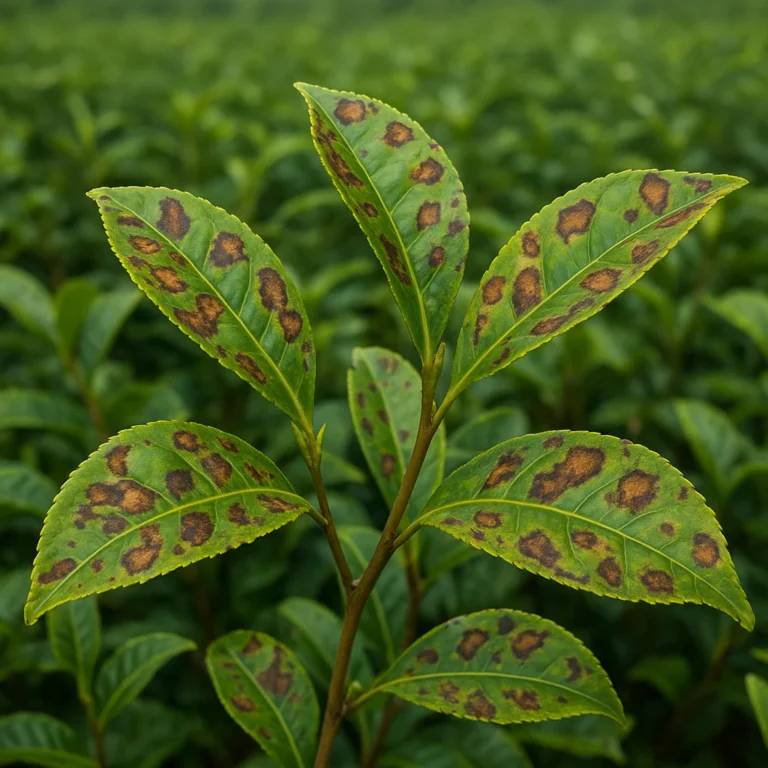
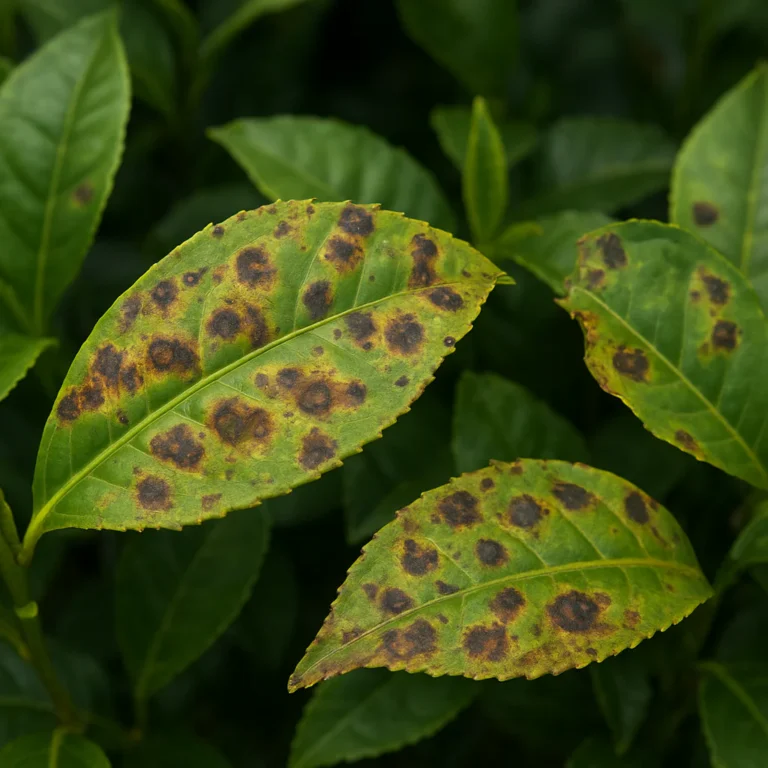
Not every spot or curled leaf means insects. Nutrient issues, drought, waterlogged roots, cold injury, and fungal or bacterial diseases can cause similar symptoms. The Royal Horticultural Society’s plant-health advice recommends careful diagnosis because the wrong treatment may fail to help and can complicate the problem.
| Symptom | Possible pest clue | Other possible causes |
|---|---|---|
| Curled new leaves | Aphids or other sap feeders | Herbicide drift, heat, water stress |
| Speckled or bronzed leaves | Mites or thrips | Sun scorch, nutrient stress |
| Round or irregular leaf spots | Sometimes feeding injury | Leaf-spot diseases, physical damage |
| Yellowing leaves | Scale or sap-feding pests | Poor drainage, nutrient imbalance, aging foliage |
| Chewed margins | Caterpillars, beetles, slugs | Mechanical damage |
If a problem spreads despite sensible care—or you cannot identify it—ask a local extension specialist. For broader tea-plant diagnosis, start with our guide to common tea plant pests and diseases.
🧭 Build an Organic Integrated Pest Management Plan
Integrated pest management, or IPM, is the backbone of reliable organic pest control. The SDSU Extension describes a practical sequence: identify the problem, understand the pest’s life cycle, monitor it, choose controls, and evaluate results. We agree. A spray without follow-up is a bit like putting a teapot on the stove and wandering off.
Monitor Pest Pressure and Set Action Thresholds
You don’t need a laboratory or a clipboard worthy of a spy thriller. You do need to distinguish ocasional visitors from a population that is damaging new growth.
A simple home-grower threshold is a decision aid, not a universal scientific number:
- Low pressure: a few insects, little or no new damage, predators present. Monitor and avoid treatment.
- Moderate pressure: pests are increasing or several shoots show fresh damage. Prune, rinse, hand-pick, and review plant stress.
- High pressure: widespread active feeding, repeated damage to new growth, or declining plant vigor. Identify the pest and consider a targeted, label-approved control.
The threshold will vary with plant age, climate, and your tolerance for cosmetic damage. Young shrubs may need more protection than mature, vigorous plants.
Protect Pollinators, Beneficial Insects, and Tea Quality
Lady beetles, lacewings, hoverfly larvae, predatory mites, and parasitic wasps can help suppress pests. Broad, repeated spraying can harm these allies, even when a product is plant-derived. The Xerces Society offers guidance on reducing pesticide risks to pollinators and other beneficial insects.
To make your garden more welcoming to natural enemies:
- Grow a diversity of flowering plants nearby, choosing species suited to your climate.
- Avoid spraying flowers and avoid treatment when pollinators are actively foraging.
- Use a localized treatment rather than coating the whole shrub.
- Read labels for warnings about bees, aquatic life, and beneficial insects.
- Allow a small, manageable pest population to remain when it is not harming the plant.
We’ve seen growers reach for a spray at the first sign of aphids, only to discover lady beetle larvae already working the colony. Give nature a short head start—then reassess.
🛡️ 12 Organic Pest Control Methods for Tea Plants
Use these approaches in order of disruption where practical. The first six rely mainly on prevention or physical control; sprays and biological products require more care. No method is guaranteed, and none should override a product label or local guidance.
1. Prune Infested Growth and Improve Airflow
For a localized infestation, clean pruning shears and remove the affected tips or leaves. This can quickly reduce aphid colonies, egg masses, or badly damaged tissue.
- Bag or dispose of infested material; don’t leave it beside the plant.
- Avoid removing more healthy foliage than necessary.
- Clean tools after working on an infested plant.
- Prune when the plant is not heat- or drought-stressed.
Pruning is especially useful when pests are concentrated on a few shoots. It is less practical when the entire shrub is affected.
2. Hand-Pick Caterpillars, Beetles, and Egg Masses
Hand-picking is wonderfully unglamorous and surprisingly effective for small tea gardens. Inspect in the morning or around dusk, when some pests are easier to spot. Drop insects into soapy water or remove them from the growing area.
Wear gloves if you cannot identify the insect, and avoid handling hairy or irritating caterpillars. If caterpillars are widespread, identify the species before choosing a biological control.
3. Use a Strong Water Spray for Aphids and Mites
A firm stream of clean water can dislodge aphids and reduce mite numbers. Aim at leaf undersides and tender shoots, taking care not to break young stems or saturate soil already wet from rain.
- Repeat as needed while monitoring the plant.
- Spray early enough for foliage to dry.
- Avoid blasting flowers or beneficial insects.
- Don’t treat drought-stressed plants with a harsh jet.
This simple approach has a major advantage: no pesticide residue. Its drawback is that it may need repeating, and it won’t solve every established infestation.
4. Remove Weds and Garden Debris That Shelter Pests
Weds and dense debris can shelter pests and make inspection harder. Clear dead leaves and trim vegetation that presses against the shrub, but don’t strip the garden bare. The goal is a tidy, inspectable tea plant—not a sterile landscape.
Mulch can conserve moisture and support soil health, but keep it from piling against stems. For soil-building practices and plant nutrition, see our fertilizers for tea plants resources.
5. Encourage Ladybugs, Lacewings, and Other Beneficial Insects
Plant flowering herbs and nectar sources nearby, and limit broad-spectrum pesticide use. Yarrow and other small-flowered plants can provide resources for beneficial insects; select varieties suitable for your growing zone and keep aggressive spreaders in check.
A caution: introducing bought beneficial insects does not guarantee they will stay or establish. Habitat and food sources are often the more durable investment. The University of California IPM guide to natural enemies explains the role of biological control organisms.
6. Atract Birds and Other Natural Pest Predators
Birds can eat caterpillars and beetles, though they may also nible fruit or disturb mulch. Provide shelter and water where appropriate, and avoid pesticides that could expose wildlife to poisoned prey.
This is a supporting tactic, not a precision control. A birdbath won’t file a report on which caterpillar it ate—but a diverse garden can help keep pest populations in check.
7. Apply Insecticidal Soap Carefully
Commercial insecticidal soaps can control certain soft-bodied insects when the spray directly contacts them. They are not the same as laundry detergent or every household dish soap. The National Pesticide Information Center and product labels are useful starting points for understanding pesticide safety; always follow the specific label for the product you buy.
Use only a product labeled for the intended plant and pest. Test a small area first, avoid hot or drought-stressed conditions, and protect beneficial insects by treating only affected foliage. Soap sprays generally have limited residual activity, so repeat applications—if the label allows—may be necessary.
8. Use Horticultural Oils for Scale and Soft-Bodied Insects
Horticultural oils can smother certain insects and mites when correctly applied. They can also injure plants under unsuitable conditions, especially in heat or when a plant is stressed. Follow the label for temperature, timing, dilution, and compatibility with other treatments.
| Potential benefit | Key drawback |
|---|---|
| Can target some scale insects, mites, and soft-bodied pests | Coverage must be thorough |
| Often useful when applied to the correct life stage | Heat, drought stress, or poor timing can cause foliage injury |
| Targeted applications can limit exposure | Oil may harm beneficial insects it directly contacts |
Do not improvise a concentration from a general internet recipe. Tea-specific safety depends on the labeled product and its permitted use.
9. Consider Neem Products With Care
Neem-derived products are not all identical. Formulations and active ingredients vary, and “nem oil” may be used loosely to describe products with different directions. Some can affect pests through contact or other mechanisms, but broad-spectrum activity also means non-target organisms may be exposed.
The Salt Lake City sustainability guide lists neem among alternative pesticides, but its recommendations are general garden advice rather than tea-specific testing. SLC: Alternative Pesticides Treat it as one perspective, not proof that any neem mixture is safe on harvested tea leaves.
Before use:
- Confirm the product is labeled for the plant, pest, and intended use.
- Check pollinator, temperature, and harvest restrictions.
- Test a small area and watch for leaf injury.
- Keep spray off flowers and avoid unnecessary whole-plant application.
- Follow all rentry and preharvest instructions.
10. Use Bacillus thuringiensis for Susceptible Caterpillars
Certain Bacillus thuringiensis (Bt) products target specific feeding larvae, but the strain and target pest matter. Bt is not a general insecticide for aphids, mites, or scale insects. The National Pesticide Information Center’s Bt fact sheet explains that different Bt subspecies affect different groups of insects.
The label is essential: some products are intended for particular crops or pests, and some Bt types can affect non-target caterpillars. Avoid spraying flowering plants or areas where susceptible butterfly larvae are feeding.
11. Protect Young Plants With Row Covers and Bariers
A light insect-exclusion fabric can protect young shrubs from some flying pests. Secure edges carefully and check underneath regularly so you don’t trap pests inside.
Bariers are most helpful when:
- Plants are small enough to cover without crushing shoots.
- The target pest arrives from outside the covered area.
- The fabric allows suitable light and airflow.
- Pollination is not required for the protected crop during the covering period.
Tea is typically grown for foliage rather than fruit, so pollination is less central than it is for many vegetable crops. Even so, heat buildup and moisture retention under covers deserve attention.
12. Choose Resistant Plants and Healthy Planting Stock
Start with vigorous, disease-free plants from a reputable nursery. Inspect new plants before placing them near established tea shrubs, and quarantine them briefly if you can. Choose Camellia sinensis varieties suited to your climate and growing conditions.
Healthy planting stock doesn’t make a plant pest-proof, but it avoids importing a problem—and gives your shrub a stronger start. Our green tea cultivation category covers the growing conditions that help tea plants thrive.
🍃 Organic Pest Prevention Through Tea Plant Care
Prevention is less dramatic than a spray bottle, but it is usually more dependable. A tea plant that is well suited to its site, properly watered, and easy to inspect is less likely to suffer avoidable stress.
Soil, Mulch, Watering, and Drainage
Tea plants prefer conditions appropriate to their variety and local climate. Poor drainage, repeated drought, or unsuitable soil can weaken growth and make pest damage harder tolerate. The University of Florida IFAS guidance on tea offers regional cultivation information; local conditions may differ, so use it alongside advice for your area.
- Water deeply when needed rather than keeping roots constantly sogy.
- Use mulch to moderate soil moisture, leaving space around stems.
- Check drainage, especially for container plants.
- Avoid excessive fertilizer: a flush of soft growth can attract sap-feding pests.
- Get a soil test before making major pH or nutrient adjustments.
For more on plant nutrition, visit our fertilizers for tea plants category.
Pruning, Plant Spacing, and Harvest Hygiene
Good spacing makes it easier to inspect leaves and improves airflow through the shrub. Remove dead or damaged growth with clean tools, and avoid leaving harvested shoots on the ground.
SDSU Extension’s “start clean, keep it clean, finish clean” approach is useful here: remove debris, clean tools after removing soil and plant material, and avoid carrying pests from one plant to another. SDSU Extension: Organic Pest Control Methods
For household-scale sanitation:
- Brush soil and plant debris from tools first.
- Use a suitable disinfectant according to its label.
- Keep tools clean and dry after use.
- Avoid applying disinfectants to plant tissue or soil unless specifically directed.
Container-Grown Tea Plant Pest Prevention
Containers make inspection and isolation easier, but they can also dry out quickly or become waterlogged. Check the pot’s drainage holes, inspect leaf undersides, and keep new plants separate while you look for pests.
If one container becomes infested:
- Move it away from healthy tea plants.
- Identify the pest and remove heavily affected leaves.
- Rinse the plant if appropriate.
- Clean the pot’s exterior and the area where it stood.
- Recheck every few days before returning it to the group.
🧴 Organic Sprays for Tea Plants: Safe Use and Timing
Sprays can be useful, but only after identification and only when the product is appropriate. General recipes from garden blogs are not evidence that a mixture is safe on tea leaves intended for harvest.
How to Test a Spray Before Treating the Whole Plant
Before using any new spray:
- Read the full label. Confirm the plant, pest, application method, protective equipment, and harvest directions.
- Test one small section. Treat a few leaves or a small branch.
- Wait and inspect. Look for spotting, browning, curling, or leaf drop over the period recommended by the manufacturer.
- Check weather and plant condition. Avoid unsuitable heat, bright sun, wind, or drought stress.
- Treat only what needs treatment. Direct application can reduce exposure to beneficial insects.
- Record what happened. Note the product, date, weather, and result.
When to Spray and When to Avoid Treatment
Labels determine timing. Some general garden sources suggest cooler parts of the day to reduce leaf injury, but the correct timing depends on the product, plant, pest, and weather. Do not assume “evening” is always safe: pollinators, temperature, humidity, and the label still matter.
Avoid spraying:
- During extreme heat or when the tea plant is drought-stressed.
- In strong wind or before rain if the label warns against it.
- On flowers or when pollinators are active, unless the label explicitly allows the use.
- Close to harvest unless label directions permit it.
- With a homemade mixture that has not been tested on tea.
Why Homemade Remedies Can Harm Tea Plants
Online recipes often combine soap, oils, garlic, peppers, or essential oils. They may deter pests in some situations, but concentration and plant safety are uncertain. Household dish detergents vary ingredients, while concentrated essential oils can injure leaves. Some mixtures may also affect taste or leave unwanted residues.
The Prairie Homestead’s garlic, onion, mint, cayenne, and soap spray is offered as a general garden recipe, not a tea-tested treatment; its author emphasizes consistent use. The Prairie Homestead: Organic Garden Pest Control Spray For tea, we recommend starting with physical controls and choosing only labeled products when treatment is warranted.
A related video perspective suggests brewing and diluting organic tea as a plant tonic, claiming it may support growth or deter aphids and mites. That is a personal gardening suggestion, not established tea-pest-control evidence. We would not rely on brewed tea as a pesticide or substitute for fertilizer, and we’d test any foliar application cautiously. See the featured video for that perspective.
🚫 Organic Pest Control Mistakes to Avoid
- Spraying before identifying the pest. A remedy aimed at aphids won’t fix mites or disease.
- Assuming “organic” means safe. Natural products can still injure plants and non-target organisms.
- Using household soap without checking ingredients. Dish detergent is not automatically equivalent to labeled insecticidal soap.
- Applying oils in unsuitable conditions. Heat, stress, and poor timing can cause leaf damage.
- Treating the entire garden for a small infestation. Targeted control usually reduces collateral effects.
- Using diatomaceous earth carelessly. Dust can irritate eyes and lungs; avoid creating airborne clouds and follow product directions. The National Pesticide Information Center discusses diatomaceous earth and exposure considerations.
- Spraying flowers or beneficial insects. Even low-residual products may harm organisms directly contacted.
- Ignoring harvest directions. Follow the label’s preharvest interval and any restrictions for edible crops.
- Overfertilizing to “help” a stressed plant. Extra nutrients do not correct poor drainage, pest misidentification, or root problems.
🗓️ Seasonal Tea Plant Pest Prevention Calendar
Timing depends on your climate, but this flexible calendar helps establish a routine.
| Season or growth phase | What to check | Useful actions |
|---|---|---|
| Late winter / before active growth | Stems, old leaves, overwintering scale or eggs | Remove dead material; clean tools; plan inspections |
| Spring flush | Tender shoots, aphids, caterpillars, emerging mites | Inspect weekly; rinse or prune localized infestations |
| Summer | Mites, heat stress, drought, leaf damage | Check leaf undersides; maintain suitable watering; avoid stress |
| Late summer / autumn | Persistent colonies, scale, accumulated debris | Remove infested material; review which controls worked |
| After bringing plants indoors | Hidden pests on leaves and stems | Isolate and inspect new or moved containers |
Use local pest alerts from your university extension service; pest cycles vary significantly by region.
🧩 Troubleshooting Persistent Pest Problems
When pests keep returning, repeating the same treatment may not be the answer. Check whether you identified the pest correctly, missed eggs or sheltered colonies, or unintentionally removed beneficial predators.
What to Do When Pests Return
Try this sequence:
- Reconfirm the identification. Take clear close-up photos and compare them with extension resources.
- Check the full plant. Look under leaves, along stems, and at neighboring plants.
- Review the growing conditions. Heat, drought, poor drainage, and excess fertilizer can complicate recovery.
- Inspect for reinfestation sources. Nearby weeds, debris, or infested new plants may be contributing.
- Change tactics thoughtfully. Combine pruning, rinsing, exclusion, and habitat support rather than escalating automatically to a stronger spray.
- Evaluate after treatment. Record whether fresh damage has slowed—not just whether you still see an occasional insect.
Repeated applications may be necessary for some products, but the label—not guesswork—sets the interval and maximum use.
When to Seek Local Extension or Expert Advice
Ask a local extension office or qualified plant-health professional when:
- The pest is unidentified or may be regulated.
- Damage is spreading quickly across several plants.
- A treatment has caused leaf injury.
- The plant is declining despite removing pests.
- You plan to harvest leaves after any pesticide application.
Regional expertise matters: a pest common in one tea-growing climate may be rare—or absent—in another.
🌿 Organic Pest Control and Harvested Tea Safety
If you harvest tea leaves, treat the plant as a food crop. A product’s organic status does not replace directions for edible crops, harvest timing, protective equipment, or rentry. The EPA explains that the label provides legally required use directions and precautions. EPA: Pesticide Labels
Before harvesting:
- Confirm the product is labeled for the crop and intended use.
- Follow any preharvest interval exactly.
- Wash harvested leaves appropriately for your intended processing, while recognizing that washing does not make an off-label use acceptable.
- Keep records of treatments and harvest dates.
- If the label does not clearly permit the use, do not apply it to leaves you plan to drink.
For tea-growing and processing context, explore our green tea cultivation resources and related tea health information.