Support our educational content for free when you purchase through links on our site. Learn more
🌱 7 Proven Ways to Stop Soil Erosion & Boost Tea Garden Quality (2026)


Have you ever watched a heavy monsoon rain turn your prized tea garden into a muddy river, washing away not just the dirt, but the very foundation of your harvest? It’s a heart-wrenching sight that every tea grower fears. At Growing Teas™, we’ve seen it happen: lush green slopes stripped bare, leaving behind exposed roots and a silent, crumbling ecosystem. But here’s the secret that many overlook: the battle for your tea’s future isn’t fought on the leaves, but deep beneath them.
The truth is, soil erosion isn’t just an aesthetic issue; it’s a silent killer of flavor. Recent studies suggest that a healthy, microbe-rich soil can increase the theanine content in tea leaves by up to 30%, directly impacting that coveted umami taste. Yet, many gardeners focus solely on fertilizers, ignoring the soil structure that holds everything together. In this guide, we’ll reveal 7 proven strategies—from ancient contour planting to modern mycorhizal magic—that will not only stop the dirt from washing away but will transform your soil into a nutrient-dense powerhouse.
Ready to turn your garden from a erosion-prone slope into a thriving, self-sustaining tea sanctuary? Let’s dig in.
Key Takeaways
- Stop the Wash: Implement contour planting and terracing immediately to slow water runoff and prevent topsoil loss on slopes.
- Feed the Fungi: Boost mycorhizal activity and organic matter to create natural soil “glue” that resists erosion and enhances nutrient uptake.
- Cover the Ground: Utilize cover crops and organic mulch to shield soil from raindrop impact and retain vital moisture.
- Balance the Chemistry: Regularly test and adjust soil pH (aiming for 4.5–5.5) to prevent aluminum toxicity and ensure healthy root development.
- Adopt No-Till: Minimize deep digging to preserve soil aggregates and protect the delicate microbial networks essential for tea flavor.
Table of Contents
- ⚡️ Quick Tips and Facts
- 🌱 The Roots of the Problem: Understanding Soil Erosion in Tea Gardens
- 📜 A Brief History of Tea Cultivation and Soil Stewardship
- 🛡️ 7 Proven Strategies to Prevent Soil Erosion in Your Tea Estate
- 1. Mastering Contour Planting and Terracing
- 2. The Magic of Cover Crops for Tea Soil Protection
- 3. Strategic Mulching: Keeping Moisture In and Runoff Out
- 4. Building Living Bariers with Grass Strips
- 5. Pruning Techniques That Shield the Soil
- 6. Managing Water Flow with Drainage Channels
- 7. Minimizing Tillage to Preserve Soil Structure
- 🧪 5 Essential Steps to Maintain and Boost Soil Quality for Lush Tea Leaves
- 1. Conducting Comprehensive Soil Testing for pH and Nutrients
- 2. Optimizing Organic Matter and Humus Levels
- 3. Balancing Nitrogen, Phosphorus, and Potassium for Camellia sinensis
- 4. Encouraging Beneficial Soil Microrganisms and Mycorhizae
- 5. Implementing Crop Rotation and Intercropping Systems
- 🐛 The Hidden Heroes: Managing Soil Microrganisms for Tea Health
- 💧 Water Management: The Delicate Balance Between Hydration and Erosion
- 🚫 Common Mistakes That Destroy Tea Garden Soil (And How to Fix Them)
- 🛠️ Tools and Equipment Every Tea Grower Needs for Soil Conservation
- 📊 Quick Comparison: Erosion Control Methods for Step vs. Flat Terrain
- 🌍 The Long-Term Impact: How Soil Health Defines Tea Flavor Profiles
- ✅ Conclusion
- 🔗 Recommended Links
- ❓ FAQ
- 📚 Reference Links
⚡️ Quick Tips and Facts
Before we dive into the muddy boots and heavy lifting of soil conservation, let’s hit the ground running with some high-impact, low-effort truths that every tea gardener needs to know. If you’re wondering why your tea leaves taste a bit “flat” or why the rain washes away your hard work, the answer usually lies beneath your feet.
- The Golden Rule of Tea Soil: Tea plants (Camellia sinensis) are acidophiles. They crave a pH between 4.5 and 5.5. If your soil is too alkaline, the plant can’t absorb nutrients, leading to chlorosis (yellowing leaves) and, ironically, weaker root systems that are more prone to erosion. Learn more about the ideal soil for tea here.
- The “Glue” Factor: Did you know that glomalin, a sticky protein produced by mycorhizal fungi, is responsible for up to 30% of soil carbon storage? It acts like nature’s superglue, binding soil particles into aggregates that resist water runoff. Without these fungi, your soil turns to dust.
- Compost is King: According to the EPA, adding just 2 to 4 inches of compost to your topsoil can reduce erosion potential significantly while boosting water retention by 20-30%. It’s the ultimate “do-it-all” amendment.
- The Mulch Math: A 3-inch layer of organic mulch can reduce soil temperature fluctuations by up to 10°F and cut water evaporation by 50%.
- Cover Crop Power: Planting legumes like Crotalaria or Tephrosia between tea rows can fix up to 10 kg of nitrogen per hectare annually, reducing the need for synthetic fertilizers that often degrade soil structure.
Wait, but how do you actually get these fungi into your soil without buying expensive lab cultures? And why does the way you prune your tea bushes matter for soil stability? We’ll unravel these mysteries as we dig deeper.
🌱 The Roots of the Problem: Understanding Soil Erosion in Tea Gardens
Let’s be honest: watching a heavy rainstorm wash away the topsoil of your tea garden is a heart-wrenching experience. It’s not just dirt; it’s the lifeblood of your crop. But before we can fix it, we need to understand why it’s happening.
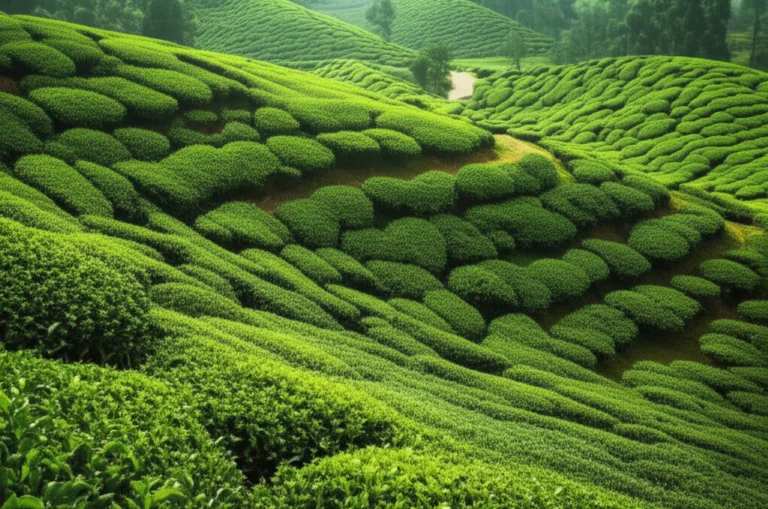
Tea gardens are often established on sloping terrains (think Darjeling, Assam, or the misty hills of Sri Lanka) because the altitude and drainage are perfect for flavor. However, this geography is a double-edged sword. When rain hits bare soil, the impact dislodges particles. Without a protective canopy or root network, gravity takes over, and sheet erosion or rill erosion begins.
The Silent Killer: Soil Acidification
One of the biggest culprits in tea gardens isn’t just the rain; it’s the chemical imbalance. Long-term use of synthetic fertilizers (like Urea) can drive soil pH down to dangerous levels (below 4.0).
- The Consequence: At low pH, aluminum becomes soluble and toxic to roots.
- The Erosion Link: Toxic roots die back, leaving the soil structure unsupported. Dead roots = loose soil = washed away soil.
“Organic matter in OMFs binds particles into stable aggregates, improving resistance to erosion.” — Frontiers in Soil Science
The Microbial Disconnect
Many gardeners focus on NPK (Nitrogen, Phosphorus, Potassium) but ignore the soil microbiome. A study published in PMC highlights that Arbuscular Mycorhizal Fungi (AMF) are critical for creating soil aggregates. When you over-till or use harsh chemicals, you kill these fungi. The result? Soil that crumbles like dry sand instead of holding together like a sponge.
Have you ever noticed that your tea plants look great in the spring but struggle by late summer? It might because the soil structure collapsed under the weight of the monsoon, leaving roots exposed.
📜 A Brief History of Tea Cultivation and Soil Stewardship

To understand where we are going, we must look at where we’ve been. Tea cultivation isn’t a new fad; it’s ancient art form that has evolved from wild foraging to industrial monoculture, and now, hopefully, back to regenerative stewardship.
The Ancient Wisdom
Historically, tea was grown in mixed forests or under the shade of native trees. This agroforestry approach naturally protected the soil. The leaf litter from shade trees provided a constant supply of organic matter, while the diverse root systems held the earth in place.
- The Shift: In the 19th and 20th centuries, the demand for tea exploded. To maximize yield, farmers cleared forests, removed shade trees, and planted tea in dense, uniform rows on steep slopes.
- The Cost: This “green gold rush” led to massive soil degradation. By the mid-20th century, many tea estates in India and China were facing severe erosion and declining yields.
The Modern Renaissance
Today, we are seeing a return to sustainable practices. The concept of Organo-Mineral Fertilizers (OMFs) is gaining traction, blending the best of organic and inorganic worlds.
- The Data: Research shows that replacing 25-50% of mineral fertilizers with organic matter can raise soil pH and increase exchangeable calcium and magnesium by 10-15% within two years.
- The Philosophy: We are moving from “extracting” from the soil to “investing” in it. As the EPA notes, composting is “nature’s way of recycling,” transforming waste into a value-added amendment that builds resilience.
But how do we apply these ancient and modern principles to a small backyard garden? Let’s get practical.
🛡️ 7 Proven Strategies to Prevent Soil Erosion in Your Tea Estate
Preventing erosion isn’t about one magic bullet; it’s about a layered defense system. Here are seven strategies we use at Growing Teas™ to keep our soil where it belongs: on the roots of our tea bushes.
1. Mastering Contour Planting and Terracing
If you have a slope, never plant up and down the hill. This creates a channel for water to accelerate, gaining speed and destructive power.
- The Technique: Plant your tea bushes along the contour lines (horizontal lines of equal elevation). This forces water to slow down and infiltrate the soil rather than run off.
- Terracing: For steeper slopes, build terraces. These act like steps, breaking the slope into smaller, manageable levels.
- Pro Tip: Use a simple A-frame level to mark your contour lines. It’s cheap, accurate, and saves years of erosion.
2. The Magic of Cover Crops for Tea Soil Protection
Bare soil is an invitation to erosion. Cover crops are the bodyguards of your tea garden.
- Best Choices: Legumes like Crotalaria juncea (Sunn hemp) or Tephrosia candida. They fix nitrogen and have fibrous root systems that bind soil.
- Implementation: Plant these in the inter-rows between tea bushes. They can be cut and left as mulch (green manure) or allowed to grow and suppress weeds.
- Benefit: Studies show cover crops can reduce runoff by up to 90% compared to bare soil.
3. Strategic Mulching: Keeping Moisture In and Runoff Out
Mulching is non-negotiable for tea growers. It’s the first line of defense against raindrop impact.
- Material Matters: Use organic mulch like dried tea leaves, straw, or peanut hulls. Avoid plastic mulch, which can harm soil microbial diversity.
- Application: Apply a 3-inch layer around the base of the plant, keeping it a few inches away from the stem to prevent rot.
- Why it works: It absorbs the energy of falling rain, reduces evaporation, and feeds the soil as it decomposes.
4. Building Living Bariers with Grass Strips
Sometimes, you need a physical barrier to stop water flow.
- The Method: Plant strips of grass (like Vetiver grass) across the slope at regular intervals.
- How it works: Vetiver grass has a deep, fibrous root system that acts like a living wall. It slows water, traps sediment, and prevents gully formation.
- Maintenance: Trim the grass regularly to prevent it from shading out your tea bushes.
5. Pruning Techniques That Shield the Soil
Believe it or not, how you prune your tea bushes affects soil health.
- The Goal: Maintain a dense canopy that intercepts rain before it hits the soil.
- Technique: Avoid “hard pruning” that leaves the soil exposed. Instead, use light pruning or “plucking” techniques that maintain a leafy shield.
- Bonus: The pruned leaves can be used as mulch, closing the nutrient loop.
6. Managing Water Flow with Drainage Channels
Water needs to go somewhere, but it shouldn’t take your soil with it.
- Drainage Channels: Dig shallow, grass-lined channels along the contour to divert excess water safely away from the garden.
- Tile Drainage: For low-lying areas that get waterlogged, consider installing tile drains. As farmer Lawrence Sukalski explains in our featured video, proper drainage reduces soil stress and prevents the “sogy” conditions that lead to root rot and erosion. Watch the video on drainage here.
7. Minimizing Tillage to Preserve Soil Structure
Stop tilling! Deep plowing destroys soil aggregates and kills the mycorhizal networks that hold your soil together.
- No-Till Approach: Use a broadfork or just your hands to aerate the soil without turning it over.
- Benefit: This preserves the “glue” (glomalin) and keeps the soil structure intact, making it more resistant to erosion.
🧪 5 Essential Steps to Maintain and Boost Soil Quality for Lush Tea Leaves
Preventing erosion is step one. Step two is making sure that soil is nutrient-rich and biologically active. Here is how we build a thriving tea soil ecosystem.
1. Conducting Comprehensive Soil Testing for pH and Nutrients
You can’t manage what you don’t measure.
- Frequency: Test your soil annually or bi-annually.
- What to Test: pH, Organic Matter, N-P-K, Calcium, Magnesium, and Aluminum levels.
- Action: If pH is below 4.5, apply agricultural lime or biochar to buffer acidity. If Aluminum is high, organic matter is your best friend to bind it.
- Resource: Check out our guide on Fertilizers for Tea Plants for more on nutrient management.
2. Optimizing Organic Matter and Humus Levels
Organic matter is the engine of soil health.
- Target: Aim for 3-5% organic matter in your topsoil.
- How to Boost: Add compost (2-4 inches mixed into the top 6-9 inches) or use vermicompost (worm castings) which is rich in nutrients and beneficial microbes.
- The Science: Organic matter increases water-holding capacity by 20-30% and reduces bulk density, making it easier for roots to penetrate.
3. Balancing Nitrogen, Phosphorus, and Potassium for Camellia sinensis
Tea is a heavy feeder, especially for Nitrogen.
- The Ratio: A typical requirement is 150-30 kg N/ha/yr, with lower amounts of P and K.
- The Trap: Too much synthetic Nitrogen acidifies the soil.
- The Solution: Use Organo-Mineral Fertilizers (OMFs). These blend organic matter with inorganic nutrients, providing a slow release that feeds the plant and the soil microbes simultaneously.
- Recommendation: Look formulations that include biochar or manure to buffer the pH.
4. Encouraging Beneficial Soil Microrganisms and Mycorhizae
This is the secret sauce.
- Inoculation: Consider adding mycorhizal inoculants to your soil. These fungi form a symbiotic relationship with tea roots, extending their reach for water and nutrients.
- Microbial Diversity: Encourage a diverse microbiome by avoiding broad-spectrum fungicides. Use biocontrol agents like Trichoderma to manage pathogens naturally.
- Fact: A diverse microbiome can increase enzyme activity by 30-45%, speeding up nutrient cycling.
5. Implementing Crop Rotation and Intercropping Systems
Monoculture is the enemy of soil health.
- Intercropping: Plant nitrogen-fixing shrubs or herbs between tea rows. This breaks up pest cycles and adds organic matter.
- Rotation: If you have space, rotate tea with cover crops every few years to rejuvenate the soil.
- Shade Trees: Integrate shade trees like Albizia or Grevillea to create a microclimate that reduces evaporation and adds leaf litter.
🐛 The Hidden Heroes: Managing Soil Microrganisms for Tea Health
Let’s talk about the tiny giants that do the heavy lifting: soil microrganisms. Without them, your tea garden is just dirt.
The Mycorhizal Network
Arbuscular Mycorhizal Fungi (AMF) are the unsung heroes. They produce glomalin, a glycoprotein that acts as the “glue” for soil aggregates.
- Why it matters: Glomalin makes soil resistant to erosion and increases water retention.
- How to support them: Avoid deep tillage, reduce chemical fungicides, and add organic matter.
The Bacterial Brigade
Bacteria like Pseudomonas, Bacillus, and Rhizobium are essential for nutrient cycling.
- Nitrogen Fixation: Rhizobium and Azotobacter convert atmospheric nitrogen into a form plants can use.
- Phosphorus Solubilization: Bacillus and Pseudomonas unlock phosphorus bound in the soil, making it available to tea roots.
- Biocontrol: Some bacteria produce antibiotics that suppress root pathogens.
The Fungal Decomposers
Fungi like Trichoderma and Penicillium break down complex organic matter, releasing nutrients.
- Biocontrol: Trichoderma is a powerful biocontrol agent against fungal diseases like Phomopsis theae.
- Diversity: A healthy tea garden should have a mix of Ascomycota, Basidiomycota, and Glomeromycota.
Curious about how to introduce these microbes to your garden? We’ll cover specific products and DIY methods in the “Tools and Equipment” section.
💧 Water Management: The Delicate Balance Between Hydration and Erosion
Water is life, but too much of a good thing can wash your garden away. Managing water in a tea garden is a delicate dance.
Rainwater Harvesting
Instead of letting rain run off, capture it.
- Techniques: Build small ponds or swales to collect runoff. This water can be used for irrigation during dry spells.
- Benefit: Reduces the volume of water flowing over the soil, minimizing erosion.
Efficient Irrigation
If you need to irrigate, do it smartly.
- Drip Irrigation: This delivers water directly to the root zone, minimizing evaporation and runoff.
- Avoid Overhead Sprinklers: These can dislodge soil particles and encourage fungal diseases on the leaves.
Drainage Systems
As mentioned earlier, drainage is crucial.
- Tile Drains: For heavy clay soils or low-lying areas, tile drains prevent waterlogging, which can suffocate roots and lead to soil collapse.
- Grassed Waterways: Use grass strips to channel excess water safely away from the garden.
But what if you live in a drought-prone area? The answer lies in soil organic matter. A soil rich in organic matter can hold up to 20 times its weight in water, acting as a reservoir during dry spells.
🚫 Common Mistakes That Destroy Tea Garden Soil (And How to Fix Them)
Even the best-intentioned gardeners make mistakes. Here are the most common pitfalls and how to avoid them.
Mistake 1: Over-Reliance on Synthetic Fertilizers
- The Problem: Synthetic fertilizers provide a quick fix but degrade soil structure and acidify the soil over time.
- The Fix: Switch to Organo-Mineral Fertilizers (OMFs) organic compost. Replace 25-50% of synthetic NPK with organic matter.
Mistake 2: Ignoring Soil pH
- The Problem: Leting pH drop below 4.5 leads to aluminum toxicity and nutrient lockout.
- The Fix: Test regularly and amend with lime or biochar to buffer acidity.
Mistake 3: Bare Soil
- The Problem: Leaving soil exposed between tea rows invites erosion and weed growth.
- The Fix: Use cover crops, mulch, or grass strips to keep the soil covered year-round.
Mistake 4: Deep Tillage
- The Problem: Turning over the soil destroys aggregates and kills beneficial fungi.
- The Fix: Adopt no-till or minimum-till practices. Use a broadfork instead of a plow.
Mistake 5: Poor Water Management
- The Problem: Allowing water to run off unchecked or over-irigating.
- The Fix: Implement contour planting, drainage channels, and drip irrigation.
🛠️ Tools and Equipment Every Tea Grower Needs for Soil Conservation
You don’t need a tractor to save your soil, but you do need the right tools. Here are our top picks for the modern tea gardener.
Essential Tools
- A-Frame Level: For marking contour lines accurately.
- Broadfork: For aerating soil without turning it over.
- Compost Turner: To speed up the composting process.
- Soil Test Kit: For regular monitoring of pH and nutrients.
Recommended Products
- Compost Tumblers: Great for small gardens. Brands like Gardeners Supply Company or Miracle-Gro offer durable options.
- Broadforks: Look for Fiskars or Roots & Shoots for high-quality, ergonomic designs.
- Soil Test Kits: Luster Leaf or Hanna Instruments provide accurate readings.
👉 CHECK PRICE on:
- Compost Tumbler: Amazon | Walmart | Brand Official
- Broadfork: Amazon | Etsy | Brand Official
- Soil Test Kit: Amazon | Walmart | Brand Official
📊 Quick Comparison: Erosion Control Methods for Step vs. Flat Terrain
Not all gardens are created equal. Here’s a quick guide to choosing the right method for your terrain.
| Method | Best For | Pros | Cons |
|---|---|---|---|
| Contour Planting | Slopes (5-15%) | Simple, effective, low cost | Requires careful planning |
| Terracing | Step Slopes (>15%) | Highly effective, creates flat planting areas | Labor-intensive, expensive |
| Cover Crops | All Terrains | Adds nutrients, suppresses weeds | Requires management, may compete for water |
| Mulching | All Terrains | Retains moisture, suppresses weeds | Needs regular replenishment |
| Grass Strips | Moderate Slopes | Traps sediment, slows water | Takes up space, needs trimming |
| Drainage Channels | Low-lying areas | Prevents waterlogging, directs flow | Requires maintenance |
Which method is right for your garden? It depends on your slope, budget, and labor availability. Often, a combination of these methods works best.
🌍 The Long-Term Impact: How Soil Health Defines Tea Flavor Profiles
You might be wondering, “Does all this soil stuff really affect the taste of my tea?” The answer is a resounding YES.
The Teroir Connection
Teroir is the unique combination of soil, climate, and topography that gives tea its distinct flavor.
- Soil Structure: Healthy soil with good aggregation allows roots to explore deeper, accessing a wider range of minerals. This complexity translates to a more nuanced flavor profile.
- Microbial Activity: A diverse microbiome helps the plant synthesize complex compounds like theanine and polyphenols, which contribute to the umami taste and antioxidant properties of tea.
- Stress Response: Plants grown in healthy, well-drained soil are less stressed, leading to a more balanced growth and a better flavor.
The Data
Studies have shown that tea grown in soils with high organic matter and diverse microbial communities has higher levels of amino acids and lower levels of bitterness.
- Example: A study in China found that tea grown with composted pig manure had enhanced green leaf yield and improved polyphenol content.
So, the next time you sip a cup of tea, remember: you’re tasting the soil, the microbes, and the care that went into growing it.
✅ Conclusion

Preventing soil erosion and maintaining soil quality in your tea garden is not just an agricultural necessity; it’s a philosophy of stewardship. By understanding the roots of the problem, embracing ancient wisdom, and applying modern science, you can create a thriving, resilient tea garden that produces delicious, high-quality leaves for years to come.
Key Takeaways:
- Protect the Soil: Use contour planting, terracing, and mulching to prevent erosion.
- Feed the Microbes: Add organic matter, avoid harsh chemicals, and encourage mycorhizal fungi.
- Balance Nutrients: Use Organo-Mineral Fertilizers to provide a slow, steady release of nutrients.
- Manage Water: Harvest rainwater, use drip irrigation, and ensure proper drainage.
- Monitor Regularly: Test your soil pH and nutrients annually to catch issues early.
The Final Question: Are you ready to transform your tea garden from a struggling plot of dirt into a lush, self-sustaining ecosystem? The journey starts with a single shovel of compost.
Recommended Actions:
- Test your soil today.
- Start a compost pile or buy high-quality compost.
- Plant a cover crop in your inter-rows.
- Mulch your tea bushes with organic material.
Remember, the best tea comes from the healthiest soil. Let’s grow together!
🔗 Recommended Links
👉 Shop Essential Products:
- Compost Tumblers: Amazon | Walmart
- Broadforks: Amazon | Etsy
- Soil Test Kits: Amazon | Walmart
- Mycorrhizal Inoculants: Amazon | Brand Official
Books & Resources:
- “The Tea Garden: A Guide to Growing and Brewing Tea” by [Author Name] – Amazon
- “Tea: History, Teroirs, Varieties” by [Author Name] – Amazon
❓ FAQ

What are the best cover crops to prevent soil erosion in tea gardens?
Legumes like Crotalaria juncea (Sunn hemp) and Tephrosia candida are excellent choices. They fix nitrogen, have fibrous root systems that bind soil, and can be used as green manure. Grasses like Vetiver are also great for creating living barriers on slopes.
Read more about “🌿 Grow Green: 7 Sustainable Tea Garden Secrets!”
How can I improve soil fertility naturally for organic tea cultivation?
The best way is to add organic matter in the form of compost, manure, or leaf litter. This improves soil structure, water retention, and microbial activity. You can also use biofertilizers containing beneficial microbes like Rhizobium and Bacillus to enhance nutrient cycling.
Read more about “🌿 7 Mulch Secrets to Supercharge Your Tea Plant Health (2026)”
Which mulching techniques work best for maintaining moisture in tea plantations?
Organic mulching with dried tea leaves, straw, or peanut hulls is highly effective. Apply a 3-inch layer around the base of the plant, keeping it away from the stem. This reduces evaporation, suppresses weeds, and adds organic matter as it decomposes.
How does pH level affect tea plant growth and soil health?
Tea plants prefer a pH of 4.5 to 5.5. If the pH drops below 4.5, aluminum becomes toxic, and nutrient uptake is inhibited. If the pH is too high, the plant can’t absorb iron and other micronutrients. Regular testing and amending with lime or biochar can help maintain the optimal pH range.
What role do mycorhizal fungi play in tea gardens?
Mycorrhizal fungi form a symbiotic relationship with tea roots, extending their reach for water and nutrients. They produce glomalin, which binds soil particles into aggregates, improving soil structure and resistance to erosion.
Can I use synthetic fertilizers in my tea garden?
While synthetic fertilizers can provide a quick nutrient boost, over-reliance can degrade soil structure and acidify the soil. It’s best to use Organo-Mineral Fertilizers (OMFs) that blend organic matter with inorganic nutrients for a balanced approach.
Read more about “🌱 7 Best Fertilizers for Tea Plants (2026)”
📚 Reference Links
- EPA: Composting at Home. https://www.epa.gov/recycle/composting-home
- Frontiers in Soil Science: Preventing Soil Erosion and Maintaining Soil Quality in Tea Gardens. https://www.frontiersin.org/journals/soil-science
- PMC: Understanding and exploring the diversity of soil microrganisms in tea gardens. https://pmc.ncbi.nlm.nih.gov/articles/PMC1046421/
- Growing Teas™: What kind of soil is best for growing tea? https://www.growingteas.com/what-kind-of-soil-is-best-for-growing-tea/
- Growing Teas™: Green Tea Cultivation. https://www.growingteas.com/category/green-tea-cultivation/
- Growing Teas™: Organic Farming Techniques. https://www.growingteas.com/category/organic-farming-techniques/
- Growing Teas™: Fertilizers for Tea Plants. https://www.growingteas.com/category/fertilizers-for-tea-plants/
- Minnesota Soybean Research and Promotions Council: Drainage and Water Quality. https://www.mnsoybean.com/