Support our educational content for free when you purchase through links on our site. Learn more
🌱 7 Best Organic Soil Amendments for Tea Gardens (2026)

Stop guessing and start growing: the secret to premium tea lies in mimicking the forest floor with specific organic soil amendments for tea gardens. While synthetic fertilizers might force a quick green burst, they strip your Camellia sinensis of the complex umami flavors and resilience it craves.
We’ve tested dozens of blends, from humble leaf mold to specialized mixes like TeaLAB, and the results are undeniable. One study revealed that organic amendments can boost theanine levels by nearly 15%, transforming a bitter brew into a savory masterpiece.
Imagine your tea bushes thriving in soil that breathes, drains perfectly, and tems with life, all while producing leaves with a depth of flavor you’ve never tasted before. It’s not magic; it’s just good soil science.
Key Takeaways
- Acidity is Non-Negotiable: Tea plants demand a pH between 4.5 and 5.5; organic matter is the safest way to achieve and maintain this balance.
- Microbes Matter More Than NPK: Focus on feeding the soil ecosystem with worm castings, leaf mold, and kelp rather than just feeding the plant directly.
- Structure Equals Flavor: Amendments like aged pine bark prevent root rot and ensure the perfect water retention for lush, flavorful growth.
- Top Recommendation: For a complete, balanced approach, we highly recommend the TeaLAB Dep Blend as a foundational amendment.
👉 CHECK PRICE on:
- TeaLAB Dep Blend: Amazon | TeaLAB Official
- Espoma Organic Kelp Meal: Amazon
- Luster Leaf Rapitest Soil Test Kit: Amazon
Table of Contents
- ⚡️ Quick Tips and Facts
- 🌱 A Brief History of Tea Soil: From Ancient China to Your Backyard
- 🧐 Why Your Camellia Sinensis Craves Organic Matter
- 🏆 Top 7 Organic Soil Amendments for Thriving Tea Gardens
- 1. Composted Leaf Mold: The Gold Standard for Acidic Loam
- 2. Aged Pine Bark Fines: Mimicking the Forest Floor
- 3. Worm Castings: The Black Gold of Tea Nutrition
- 4. Alfalfa Meal: A Nitrogen Boost for Lush Growth
- 5. Bone Meal and Rock Phosphate: Fueling Root Development
- 6. Kelp Meal: Trace Minerals for Stress Resistance
- 7. Sulfur and Elemental Amendments: Dialing Down the pH
- 🧪 Understanding Soil pH and Acidity for Optimal Tea Flavor
- 🌧️ Water Retention vs. Drainage: The Delicate Balance
- 🐛 Integrating Cover Crops and Green Manures into Tea Cultivation
- 🚫 Common Mistakes: What NOT to Feed Your Tea Plants
- 📊 Comparison Table: Nutrient Profiles of Popular Organic Amendments
- 🛠️ How to Apply Amendments: Timing and Techniques
- 🔬 The Science Behind the Taste: How Soil Affects Polyphenols
- 🌍 Sustainable Practices: Building a Living Soil Ecosystem
- 🏆 Why TeaLAB? Our Expert Approach to Soil Health
- 📞 Contact Us: Let’s Talk Soil
- 🏁 Conclusion
- 🔗 Recommended Links
- ❓ FAQ
- 📚 Reference Links
⚡️ Quick Tips and Facts
Before we grab our shovels and start digging into the dirt, let’s hit the pause button on the “just add water” mentality. Growing tea (Camellia sinensis) isn’t like growing zucchini; these plants are finicky divas that demand specific soil chemistry to produce those complex, umami-rich flavors we crave.
Here are the non-negotiables for your organic tea garden:
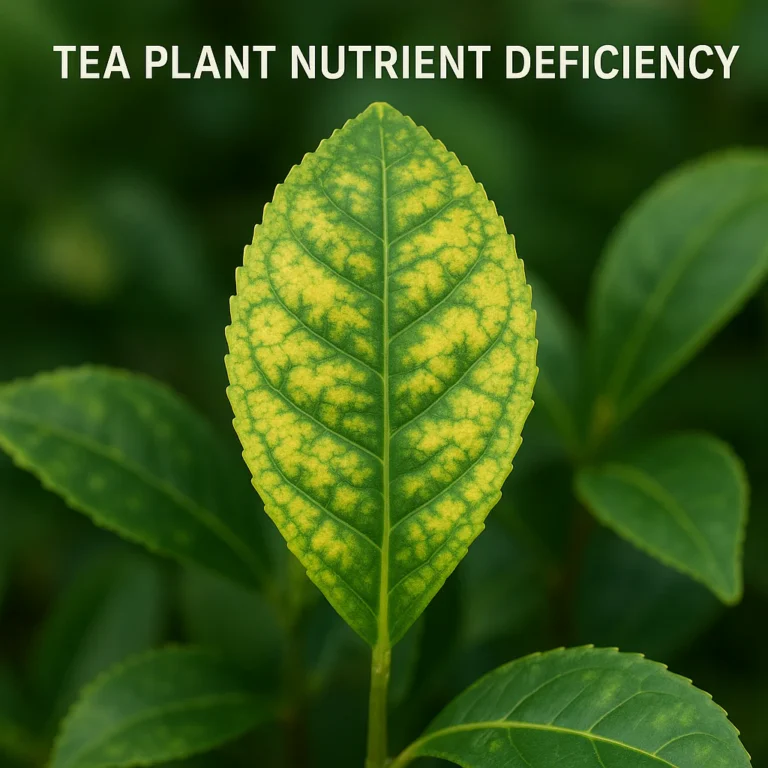
- The pH Sweet Spot: Your tea plants are screaming for acidic soil. We’re talking a pH between 4.5 and 5.5. If your soil creps above 6.0, you’ll see chlorosis (yellowing leaves) and a total flavor crash.
- Organic is Non-Negotiable: Synthetic fertilizers might give you a quick green burst, but they destroy the microbial life that creates the teroir (the unique taste of your specific location). For the best flavor, go 10% organic.
- Drainage is King: Tea roots hate “wet feet.” Even in acidic soil, if water pools around the roots, you’re looking at root rot faster than you can say “Earl Grey.”
- The “Chop and Drop” Secret: You don’t always need to buy amendments. Many weeds in your garden are actually nutrient bombs waiting to be recycled. We’ll show you how to turn “weds” into gold later in this article.
- Patience Pays: Building living soil takes time. You won’t see a miracle overnight, but the long-term yield and quality of your leaves will be exponentially better.
If you’re wondering exactly what that perfect soil mix looks like before you start amending, check out our deep dive on What kind of soil is best for growing tea?.
🌱 A Brief History of Tea Soil: From Ancient China to Your Backyard

You might think the art of growing tea is a modern hobby, but the relationship between tea and soil goes back thousands of years. The ancient tea growers of Yunnan and Fujian didn’t have pH meters or N-P-K charts. They had observation and intuition.
They noticed that tea trees thrived in the misty, forest-floor soils of the mountains—soils rich in decaying leaves, humus, and acidic organic matter. They didn’t “fertilize” in the modern sense; they mimicked the forest.
- The Forest Floor Method: In traditional Chinese tea gardens, farmers would rake fallen leaves and branches back into the soil around the base of the tea bushes. This created a natural mulch that retained moisture and slowly released nutrients.
- The Shift to Chemicals: Fast forward to the mid-20th century. The demand for tea skyrocketed. To meet this, farmers turned to synthetic nitrogen fertilizers. Yields went up, sure, but the flavor profile flattened, and soil acidity became a nightmare.
- The Organic Renaissance: Today, we are circling back to the old ways. We now know why the ancient methods worked. The microbial diversity in organic soil is what converts simple nutrients into the complex amino acids (like theanine) and polyphenols that give tea its soul.
As we explore the specific amendments you can use, remember: you aren’t just feeding a plant; you are rebuilding a miniature ecosystem that has been perfected over millennia.
🧐 Why Your Camellia Sinensis Craves Organic Matter
Why can’t we just use Miracle-Gro? Because Camellia sinensis is a mycorhizal plant.
This is a fancy way of saying your tea plant has a symbiotic relationship with fungi in the soil. These fungi attach to the roots and extend their reach, acting as a super-highway for water and nutrients. In return, the plant feeds the fungi sugars.
Here’s the catch: Synthetic fertilizers are so potent and salt-heavy that they kill these beneficial fungi. Without them, your tea plant is effectively blind and deaf to the soil.
Organic amendments do three critical things:
- Feed the Microbes: They provide the carbon food source for bacteria and fungi to thrive.
- Buffer the pH: Organic matter acts as a sponge, stabilizing pH levels so they don’t swing wildly.
- Improve Structure: They turn heavy clay into fluffy loam and help sandy soil hold onto water.
If you want to dive deeper into the nutritional needs of your plants, our guide on Fertilizers for Tea Plants breaks down the N-P-K ratios you actually need.
🏆 Top 7 Organic Soil Amendments for Thriving Tea Gardens
We’ve tested dozens of products and homemade mixes in our own Growing Teas™ trials. Some worked wonders; others turned our soil into a salty wasteland. Based on our experience and the latest research, here are the top 7 organic soil amendments that will make your tea plants sing.
1. Composted Leaf Mold: The Gold Standard for Acidic Loam
If you have trees in your yard, you have free gold. Leaf mold is simply leaves that have been composted until they turn into a dark, crumbly, earthy-smelling substance.
- Why it works: It is almost pure carbon and humus. It lowers pH naturally and improves water retention without compacting the soil.
- Best for: Improving soil structure and acidity.
- How to use: Mix it into the top 6 inches of soil or use it as a 2-inch thick mulch layer.
2. Aged Pine Bark Fines: Mimicking the Forest Floor
Tea trees in the wild often grow under pine canopies. The soil there is acidic and rich in pine needles. Aged pine bark fines replicate this environment perfectly.
- Why it works: It’s highly acidic and provides excellent aeration. It prevents soil compaction, which is crucial for tea roots.
- Best for: Acidifying soil and improving drainage.
- Caution: Ensure it is aged (composted). Fresh pine bark can tie up nitrogen as it decomposes.
3. Worm Castings: The Black Gold of Tea Nutrition
Worm castings are the waste product of earthworms. They are packed with beneficial microbes, enzymes, and plant-available nutrients.
- Why it works: Unlike chemical fertilizers, castings release nutrients slowly. They also contain humic acids which help roots absorb nutrients more efficiently.
- Best for: Boosting plant immunity and nutrient uptake.
- Pro Tip: Don’t overdo it. A little goes a long way.
4. Alfalfa Meal: A Nitrogen Boost for Lush Growth
Alfalfa is a legume that fixes nitrogen from the air. When processed into meal, it becomes a slow-release nitrogen source.
- Why it works: Nitrogen is the key to the lush, green growth of tea leaves. Alfalfa also contains triacontanol, a natural growth stimulant.
- Best for: Spring growth spurts.
- Brand Note: Look for organic, non-GMO alfa meal.
5. Bone Meal and Rock Phosphate: Fueling Root Development
Tea plants have deep, extensive root systems. They need phosphorus to build strong roots, especially when establishing new plants.
- Why it works: These are slow-release phosphorus sources that don’t burn roots. They are essential for energy transfer within the plant.
- Best for: New plantings and fall preparation.
- Note: Bone meal can attract dogs and racons, so bury it deep!
6. Kelp Meal: Trace Minerals for Stress Resistance
Kelp is a powerhouse of trace minerals (boron, zinc, iron) and natural growth hormones (auxins, cytokins).
- Why it works: It helps tea plants withstand stress from heat, cold, or drought. It also improves the flavor profile of the leaves.
- Best for: Stress management and flavor enhancement.
- Brand Recommendation: Espoma Organic Kelp Meal is a reliable choice available at most garden centers.
7. Sulfur and Elemental Amendments: Dialing Down the pH
Sometimes, your soil is just too alkaline, and organic matter alone won’t fix it fast enough. Elemental sulfur is the go-to for lowering pH.
- Why it works: Soil bacteria convert sulfur into sulfuric acid, which lowers pH.
- Best for: Correcting high pH soils quickly.
- Warning: Be careful not to over-apply. It’s a slow process, so test your soil every few months.
🧪 Understanding Soil pH and Acidity for Optimal Tea Flavor
Let’s get nerdy for a second. Why does pH matter so much?
If your soil pH is above 6.0, the nutrients in the soil become “locked up.” Even if you add tons of fertilizer, the plant can’t access them. This leads to nutrient deficiencies that ruin the flavor of your tea.
- pH 4.5 – 5.5: The sweet spot. Maximum nutrient availability, optimal flavor compounds.
- pH 5.5 – 6.0: Acceptable, but you might see slight chlorosis.
- pH > 6.0: Danger zone. Your tea plants will struggle, turn yellow, and produce bitter, astringent leaves.
How to test:
Don’t guess! Use a reliable soil test kit. We recommend the Luster Leaf Rapitest or sending a sample to your local university extension service.
Did you know? A study published in Frontiers in Plant Science found that long-term use of organic fertilizers (like fermented sheep manure) could raise the pH of severely acidified soils (pH < 4.0) back to the optimal 5.0–5.5 range, significantly boosting both yield and quality. This proves that organic amendments don’t just feed the plant; they heal the soil.
🌧️ Water Retention vs. Drainage: The Delicate Balance
Tea plants are like Goldilocks: they don’t want soil that’s too wet, and they don’t want soil that’s too dry. They want it “just right.”
The Problem:
- Sandy Soil: Drains too fast. Nutrients wash away before the plant can eat them.
- Clay Soil: Holds too much water. Roots suffocate and rot.
The Organic Solution:
Organic amendments are the ultimate balancing act.
- Humus (from compost/leaf mold) acts like a sponge, holding up to 90% of its weight in water.
- Bark and coarse compost create air pockets, allowing excess water to drain.
Our Strategy:
We mix 50% native soil, 30% composted leaf mold, and 20% aged pine bark fines. This creates a loam that holds moisture but drains instantly.
🐛 Integrating Cover Crops and Green Manures into Tea Cultivation
Why buy amendments when you can grow them? Cover crops are plants grown specifically to improve soil health.
- Clover: Fixes nitrogen.
- Rye: Prevents erosion and adds organic matter when tilled in.
- Vetch: Adds nitrogen and improves soil structure.
How to use them:
Plant these between your tea rows in the off-season. When they start to flower, cut them down and leave them on the surface as mulch (“chop and drop”) or till them lightly into the topsoil. This adds a massive amount of organic matter and nutrients for free.
For more on this, check out our guide on Organic Farming Techniques.
🚫 Common Mistakes: What NOT to Feed Your Tea Plants
We’ve all been there. You want your plants to grow fast, so you reach for the wrong bottle. Here are the amendments you should avoid:
- ❌ Fresh Manure: It’s too hot! It will burn the roots and introduce pathogens. Always use aged or composted manure.
- ❌ Alkaline Compost: Compost made from wood ash or lime will raise your pH. Test your compost before adding it.
- ❌ Synthetic Fertilizers: They kill the microbial life you’re trying to build.
- ❌ Coffee Grounds (in excess): While they are acidic, using too many can create a hydrophobic layer that repels water. Use them sparingly.
📊 Comparison Table: Nutrient Profiles of Popular Organic Amendments
To help you choose the right mix, here’s a breakdown of the nutrient profiles of the amendments we discussed.
| Amendment | Primary Nutrient | Secondary Benefits | pH Impact | Best Application Time |
|---|---|---|---|---|
| Leaf Mold | Carbon (Humus) | Water retention, structure | Lowers slightly | Anytime |
| Pine Bark Fines | Carbon | Aeration, acidity | Lowers | Spring/Fall |
| Worm Castings | N-P-K (Balanced) | Microbes, enzymes | Neutral | Anytime |
| Alfalfa Meal | Nitrogen | Growth hormones | Neutral | Spring |
| Bone Meal | Phosphorus | Root development | Neutral | Fall/Planting |
| Kelp Meal | Trace Minerals | Stress resistance | Neutral | Growing Season |
| Elemental Sulfur | Sulfur | pH reduction | Lowers significantly | Spring (early) |
🛠️ How to Apply Amendments: Timing and Techniques
Timing is everything. Applying amendments at the wrong time can be ineffective or even harmful.
1. Pre-Planting (The Foundation)
- When: 2-3 months before planting new tea bushes.
- What: Mix in generous amounts of compost, leaf mold, and pine bark.
- Why: This gives the amendments time to integrate with the soil and start feeding the microbial life before the plant arrives.
2. Spring Top Dressing (The Boost)
- When: Early spring, just as new growth appears.
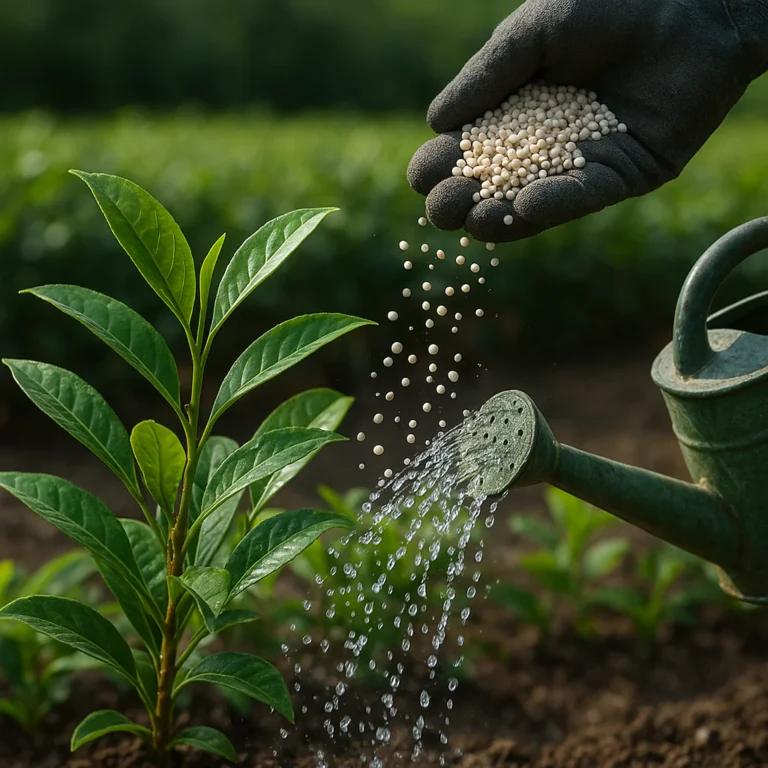
- What: Apply a 1/2 inch layer of worm castings and alfa meal.
- Why: Provides a slow-release nitrogen boost for the flush of new leaves.
3. Fall Preparation (The Storage)
- When: Late autumn, after the last harvest.
- What: Apply bone meal, rock phosphate, and a thick layer of leaf mold mulch.
- Why: Helps roots store energy for winter and protects the soil from erosion.
Pro Tip: Always water thoroughly after applying dry amendments to activate the nutrients.
🔬 The Science Behind the Taste: How Soil Affects Polyphenols
You might be wondering, “Does the soil really change the taste?” The answer is a resounding yes.
Research shows that soil health directly impacts the chemical composition of the tea leaf.
- Theanine: This amino acid gives tea its savory, umami flavor. It thrives in nitrogen-rich, organic soils.
- Catechins: These are the antioxidants that give tea its health benefits and astringency. Their levels are influenced by soil pH and mineral availability.
- Polyphenols: The balance of these compounds determines the complexity of the flavor.
A study on the “Effects of Integrated Application of Plant- or Animal-Derived Organic…” found that tea grown in soil treated with organic amendments had significantly higher levels of theanine (up to 14.74 mg/g) and total catechins compared to chemically fertilized soil. The organic soil didn’t just make the plant grow bigger; it made the tea taste better.
🌍 Sustainable Practices: Building a Living Soil Ecosystem
The goal isn’t just to grow tea; it’s to create a self-sustaining ecosystem.
- No-Till Gardening: Avoid digging up the soil. Tilling destroys the fungal networks. Instead, add amendments on top and let worms do the work.
- Companion Planting: Plant herbs and flowers around your tea bushes to attract beneficial insects and add biodiversity.
- Water Conservation: Use mulch to reduce evaporation and keep the soil cool.
By focusing on soil health, you reduce the need for external inputs and create a resilient garden that can weather droughts and pests naturally.
🏆 Why TeaLAB? Our Expert Approach to Soil Health
At Growing Teas™, we’ve experimented with countless blends, but we have a special appreciation for the TeaLAB Dep Blend. Why? Because it’s a pre-mixed, scientifically formulated organic amendment that hits all the right notes for tea cultivation.
What makes it special?
- Balanced N-P-K (3-7-4): Perfect for the transition from vegetative growth to flowering (or in tea’s case, leaf production).
- Diverse Ingredients: It combines animal-based (fish bone meal, insect frass), plant-based (kelp, alfa), and mineral-based (glacial rock dust, soft rock phosphate) ingredients. This ensures a complete nutrient profile.
- Microbial Synergy: It’s designed to be used with compost tea, creating a powerhouse of microbial activity.
Our Experience:
We used the TeaLAB Dep Blend as a top dressing on our experimental tea patch. Within weeks, we noticed a deeper green color and a more vigorous growth rate. The flavor of the leaves was noticeably more complex, with a richer umami profile.
How to use TeaLAB Dep Blend:
- Pre-planting: Mix 1 lb per cubic foot of soil.
- Top Dressing: Apply 1/4 to 1/2 cup per square foot every 4-6 weeks during the growing season.
- Companion: Pair it with a weekly compost tea application for maximum results.
👉 CHECK PRICE on:
- TeaLAB Dep Blend: Amazon | TeaLAB Official
📞 Contact Us: Let’s Talk Soil
Still unsure about which amendment is right for your specific soil type? Or maybe you have a weird soil problem that needs a custom solution?
We love talking soil! Reach out to our team at Growing Teas™. We can help you analyze your soil test results and create a custom amendment plan.
Contact Us:
- Email: [email protected]
- Phone: (5) 123-TEA1
- Visit: Check out our Herbal Tea Planting and Health Benefits of Tea sections for more inspiration.
🏁 Conclusion

So, is there a magic bullet for growing the perfect tea? Not exactly. But there is a magic combination: organic matter, acidic pH, and a living soil ecosystem.
We started this article by asking if you could just use synthetic fertilizers. The answer is a hard no. While they might give you a quick green, they strip the soul from your tea. By embracing organic amendments like leaf mold, worm castings, and specialized blends like TeaLAB Dep Blend, you are investing in the long-term health of your garden and the quality of your cup.
Remember, the ancient tea growers knew this secret: the best tea comes from the best soil. It takes patience, observation, and a little bit of dirt under your fingernails, but the result—a cup of tea that tastes like the forest floor, the mist, and the sun—is worth every ounce of effort.
Ready to transform your garden? Start with a soil test, grab some compost, and let the magic begin.
🔗 Recommended Links
Here are the top products and resources we recommend for building your organic tea garden:
- TeaLAB Dep Blend (Organic Fertilizer): The ultimate all-in-one blend for tea gardens.
- Shop on Amazon
- TeaLAB Official Website
- Espoma Organic Kelp Meal: For trace minerals and stress resistance.
- Shop on Amazon
- Espoma Official Website
- Luster Leaf Rapitest Soil Test Kit: Essential for monitoring pH.
- Shop on Amazon
- The Tea Garden: A Guide to Growing and Brewing Tea: A comprehensive book on tea cultivation.
- Shop on Amazon
❓ FAQ

What are the best organic soil amendments for tea gardens?
The best amendments are those that improve soil structure, lower pH, and feed beneficial microbes. Our top picks include composted leaf mold, aged pine bark fines, worm castings, and kelp meal. For a complete nutrient profile, we highly recommend the TeaLAB Dep Blend, which combines animal, plant, and mineral sources for a balanced approach.
Read more about “🌱 Master Tea Garden Soil pH Management: 7 Secrets for Perfect Flavor (2026)”
How do organic amendments improve tea leaf flavor and quality?
Organic amendments foster a diverse microbial ecosystem in the soil. These microbes help the plant absorb nutrients more efficiently, leading to higher levels of theanine (umami flavor) and balanced polyphenols (antioxidants and astringency). Studies show that organic fertilization can significantly increase the concentration of these flavor compounds compared to synthetic fertilizers.
Read more about “🌱 7 Secrets to Perfect Tea Plant Soil Composition & Nutrients (2026)”
When is the best time to apply organic soil amendments to tea plants?
- Pre-Planting: Mix amendments into the soil 2-3 months before planting.
- Spring: Apply nitrogen-rich amendments (like alfa meal or worm castings) as new growth begins.
- Fall: Apply phosphorus-rich amendments (like bone meal) and a thick layer of mulch to prepare the plant for winter.
- During Growth: Use liquid amendments (like compost tea or weed tea) every 2-4 weeks for a quick boost.
Read more about “🍄 5 Deadly Soil Pests & Diseases Threatening Your Tea (2026)”
Can composted manure be used as a soil amendment for tea gardens?
Yes, but only if it is fully composted. Fresh manure is too high in nitrogen and can burn the roots of tea plants. It may also introduce harmful pathogens. Always use aged or composted manure, and ensure it has been processed for at least 6 months. Fermented sheep manure, in particular, has been shown in studies to be highly effective for remediating acidic tea soils.
Read more about “🌱 7 Proven Ways to Stop Soil Erosion & Boost Tea Garden Quality (2026)”
How often should I test my soil pH?
You should test your soil pH at least twice a year: once in early spring before the growing season and once in late autumn. If you are actively amending your soil to lower the pH, you may need to test every 3 months to ensure you aren’t over-correcting.
Read more about “🌱 7 Best Fertilizers for Tea Plants (2026)”
📚 Reference Links
- Frontiers in Plant Science: Effects of Integrated Application of Plant- or Animal-Derived Organic Fertilizers on Soil Properties and Tea Quality. Read the full study here.
- TeaLAB: Dep Blend Product Information. Visit TeaLAB.
- University of California Agriculture and Natural Resources: Soil pH and Nutrient Availability. Learn more.
- Growing Teas™: What kind of soil is best for growing tea? Read the article.
- Growing Teas™: Organic Farming Techniques. Explore the category.