Support our educational content for free when you purchase through links on our site. Learn more
🌱 Can Tea Plants Be Propagated from Seed? The Ultimate Guide (2026)

Can you really grow a tea plant from a seed, or is that a myth that will leave you with a withered husk? The short answer is a resounding yes, but the journey is far more complex—and rewarding—than simply tossing a seed into the dirt. Unlike the predictable clones used in commercial estates, growing Camellia sinensis from seed is a genetic lottery that offers the thrill of discovering a unique flavor profile you won’t find anywhere else.
We’ve all been there: you collect those shiny brown seeds from your neighbor’s tea bush, plant them with hope, and wait. But here is the twist most beginners miss: tea seeds are recalcitrant. They cannot survive drying out, and they demand a cold, moist winter (stratification) to wake up. If you skip this step, your seeds will remain dormant forever. In this guide, we’ll walk you through the exact 7-step process we use at Growing Teas™ to turn those hard nuts into lush, aromatic bushes, including the secret “float test” that separates the winners from the duds.
Whether you are a seasoned gardener looking to expand your collection or a curious beginner eager to brew your first cup from a plant you nurtured from scratch, this article covers everything from stratification techniques to troubleshooting mold and rot. By the end, you’ll know exactly how to navigate the genetic variability of seed-grown tea and why the wait is worth every second.
Key Takeaways
- ✅ Yes, it works: Tea plants can be successfully propagated from seed, but the resulting plants will not be clones of the mother plant.
- 🧊 Stratification is non-negotiable: Seeds must undergo a cold, moist period (3–4 months) to break dormancy; skipping this guarantees failure.
- 🎲 Genetic Diversity: Expect unique flavor profiles and a stronger taproot system, making seed-grown plants more resilient but less predictable than clones.
- ⏳ Patience is key: Germination can take 2 weeks to 3 months, and harvesting your first leaves may take 3 to 5 years.
- 🌊 The Float Test: Always test seeds in water; sinkers are viable, while floaters are likely dead.
Table of Contents
- ⚡️ Quick Tips and Facts
- 📜 A Brief History of Tea Seed Propagation: From Ancient China to Your Backyard
- 🌱 Can Tea Plants Be Propagated from Seed? The Definitive Answer
- 🧬 Understanding Tea Plant Genetics: Why Seeds Don’t Always Equal Clones
- 🔍 Finding the Perfect Camellia sinensis Seed: Harvesting and Selection
- 🧊 The Critical Step: Stratification and Chilling the Tea Seed
- 🌿 Step-by-Step Guide: Planting Tea Seeds for Maximum Germination
- 🔄 Alternative Propagation Methods: Cutings vs. Grafting vs. Seeds
- 🐛 Troubleshooting Common Issues: Mold, Rot, and Dormancy
- 🌍 Growing Tea Plants from Seed: Regional Considerations and Climate Zones
- 🍵 From Seed to Cup: How Seed-Grown Tea Differs in Flavor and Quality
- 🛠️ Essential Tools and Supplies for Successful Tea Seed Germination
- 📊 Comparison Table: Seed Propagation vs. Clonal Propagation
- 💡 Expert Insights: 7 Common Mistakes to Avoid When Growing Tea from Seed
- 🏆 Conclusion
- 🔗 Recommended Links
- ❓ FAQ: Frequently Asked Questions About Propagating Tea Plants
- 📚 Reference Links
⚡️ Quick Tips and Facts
Before we dive into the deep end of the tea seed pool, let’s get the absolute essentials down. If you’re in a rush, here is your cheat sheet for growing Camellia sinensis from scratch.
- ✅ Yes, it works: Tea plants can be propagated from seed, but they are not clones. You are gambling on genetics!
- ❌ The “True-to-Type” Myth: Unlike cutings, a seed-grown plant will not taste exactly like its mother. It’s a genetic roll of the dice.
- ⏳ Time is Money: Patience is your best fertilizer. Expect 6 to 12 months just for germination, and 3 to 5 years before you can harvest a decent cup.
- 🧊 The Chill Factor: Tea seeds require stratification (a cold, moist period) to break dormancy. If you skip the fridge or the winter freeze, they likely won’t sprout.
- 🌊 The Float Test: Fresh seeds that sink in water are usually viable. Those that float? They’re likely duds.
For a deeper dive into the mechanics of getting those roots started, check out our comprehensive guide on How do I propagate tea plants?.
📜 A Brief History of Tea Seed Propagation: From Ancient China to Your Backyard

Did you know that the very first tea plants were likely grown from seeds found in the wild? Long before the industrial age of cloning and tissue culture, ancient Chinese farmers relied on the natural cycle of seed dispersal to cultivate their fields.
In the wild, Camellia sinensis is a wody shrub that produces a capsule containing 1 to 3 large, round seeds. Historically, these seeds were scattered by gravity, wind, and the occasional hungry bird. The ancient method was simple: plant the seed, wait, and hope.
However, as tea culture exploded during the Tang and Song dynasties, the need for consistent flavor profiles became paramount. Farmers noticed that while seed-grown plants were hardy and vigorous, the resulting tea leaves varied wildly in taste, aroma, and caffeine content. One bush might produce a grassy, astringent brew, while its neighbor offered a sweet, floral note.
This inconsistency led to the development of clonal propagation (using cutings) in the 19th and 20th centuries, particularly in Japan and India. Today, commercial tea estates almost exclusively use clones to ensure that every bag of “Earl Grey” or “Sencha” tastes exactly the same.
But here at Growing Teas™, we believe there is a romantic, albeit challenging, beauty in the seed-to-cup journey. Growing from seed connects you to the ancient roots of the plant. It’s the method used for the rare Zairai (native) varieties in Japan, prized by conoisseurs for their unique, teroir-driven complexity.
Fun Fact: In Japan, seed-propagated tea plants are known as Zairai (在来). While they make up less than 1% of commercial production, they are highly sought after by small-batch artisans who value the genetic diversity and resilience they offer.
🌱 Can Tea Plants Be Propagated from Seed? The Definitive Answer
So, the million-dollar question: Can you actually grow a tea plant from a seed?
The short answer: Yes, absolutely.
The long answer: It’s a journey of patience, and the result is a unique individual, not a carbon copy.
When you propagate Camellia sinensis from seed, you are engaging in sexual reproduction. This means the offspring inherits a mix of 50% of the mother plant’s DNA and 50% of the father’s. In the wild, the “father” could be any neighboring tea bush, leading to a genetic lottery.
The Pros and Cons of Seed Propagation
| Feature | Seed Propagation | Clonal Propagation (Cutings) |
|---|---|---|
| Genetic Consistency | ❌ Variable: Flavor, leaf size, and growth habit vary. | ✅ Identical: Exact clone of the mother plant. |
| Root System | ✅ Taproot: Develops a strong, deep taproot, making the plant more drought-resistant. | ❌ Fibrous: Shallow root system, more dependent on consistent moisture. |
| Vigor | ✅ High: Seedlings often grow faster and are hardier against pests/disease. | ⚠️ Moderate: Can be more susceptible to stress if not managed well. |
| Time to Harvest | ❌ Slow: 3–5 years to first harvestable leaves. | ✅ Fast: 1–2 years to first harvest. |
| Flavor Profile | 🎲 Unique: Can produce surprising, complex, or “wild” flavors. | 🎯 Predictable: Consistent with the known cultivar (e.g., Yabukita). |
| Difficulty | ⚠️ Hard: Requires stratification and careful moisture management. | ✅ Easier: Higher success rate with proper humidity. |
Why do we still do it?
At Growing Teas™, we encourage seed propagation for three main reasons:
- Resilience: The taproot makes the plant a tough survivor in varying climates.
- Discovery: You might accidentally breed a new, delicious variety!
- Connection: There is no greater satisfaction than sipping tea from a plant you grew from a tiny, hard nut.
🧬 Understanding Tea Plant Genetics: Why Seeds Don’t Always Equal Clones
Let’s get a little nerdy for a moment. Why does your seed-grown tea taste different from the bush it came from?
Imagine you have a favorite tea bush that produces a sweet, umami-rich leaf. You collect its seeds. If you plant those seeds, the resulting plants will not all produce sweet, umami-rich leaves. Why? Because of Mendelian genetics.
- The 50/50 Split: The seed carries a random mix of genes from the mother and the pollen donor (which could be a completely different bush nearby).
- Phenotypic Variation: You might get a plant with larger leaves, another with higher caffeine, and a third with more astringency.
- The “Zairai” Effect: In Japan, these variable plants are called Zairai. They are often described as having a “wild” or “rustic” character. Some tea masters argue that this variability creates a more nuanced and complex cup than the uniform clones used in mass production.
The Risk:
If you are trying to replicate a specific cultivar like Yabukita or Sayama Kaori, seeds are not the way to go. You will lose the specific traits that make those cultivars famous.
The Reward:
If you are an explorer, a breder, or just someone who loves the surprise of nature, seeds are your best friend. You might discover a plant that is more cold-hardy than its parents, or one that produces leaves with a unique floral aroma.
Expert Insight: “Growing from seed is like opening a blind box. You know it’s a tea plant, but you don’t know exactly what kind of tea it will be until you brew it.” — Senior Grower, Growing Teas™
🔍 Finding the Perfect Camellia sinensis Seed: Harvesting and Selection
You can’t just pick up any seed from the ground and expect a miracle. Seed viability is time-sensitive. Tea seeds are recalcitrant, meaning they cannot survive drying out. If a seed dries out, it dies. Period.
Where to Get Seeds
- From Your Own Bush: If you have a mature Camellia sinensis (usually 3+ years old), it will produce small, green, wody capsules in the autumn.
- From Neighbors: If you don’t have a bush, ask a neighbor. Just ensure they aren’t spraying pesticides!
- Online Retailers: You can buy fresh seeds, but be wary of old stock. Look for sellers who guarantee fresh harvest.
The Harvesting Process
- Wait for the Split: The green capsule will turn brown and split open, revealing 1 to 3 shiny, brown seeds.
- Don’t Wait Too Long: As soon as the capsule splits, collect the seeds. If they fall to the ground, birds and rodents will eat them, or they will dry out.
- Visual Inspection: Look for seeds that are plump, round, and shiny. Avoid any that are shriveled, cracked, or have holes (signs of insect damage).
The Float Test: Your First Filter
This is the most critical step to save time and space.
- Step 1: Fill a bowl with room-temperature water.
- Step 2: Drop your seeds in.
- Step 3: Discard the floaters. These seeds are likely hollow or empty.
- Step 4: Keep the sinkers. These are dense, viable seeds with the potential to grow.
Pro Tip: If you are buying seeds online, ask the seller if they have performed a float test or a germination rate guarantee. Reputable sellers will be transparent about this.
🧊 The Critical Step: Stratification and Chilling the Tea Seed
Here is where most beginners fail. You plant the seed, water it, and… nothing. Why? Because tea seeds have a built-in dormancy mechanism. In nature, they fall in autumn, sit through the cold winter, and sprout in spring. If you plant them in a warm room in winter, they think it’s still autumn and stay dormant.
You must simulate winter. This process is called stratification.
Method A: The Refrigerator Method (Controled)
This is the most reliable method for home growers.
- Preparation: Soak your viable seeds in water for 24 hours (see next section).
- Medium: Mix moist peat moss, vermiculite, or conut coir with a little water. It should feel like a wrung-out sponge—damp, not sogy.
- Bag It: Place the seeds and medium in a ziplock bag. Squeeze out excess air but leave a tiny bit for oxygen.
- The Fridge: Place the bag in the vegetable crisper of your refrigerator.
- Duration: Keep them there for 3 to 4 months.
- Check Weekly: Open the bag to check for mold. If you see mold, rinse the seeds and replace the medium.
Method B: The Outdoor Method (Natural)
If you live in a climate with a cold winter (USDA Zone 7+), you can let nature do the work.
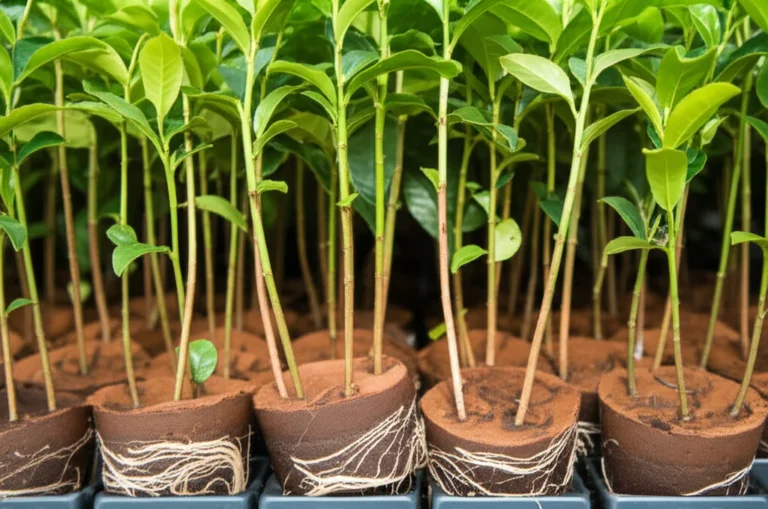
- Plant in Pots: Plant the seeds in a pot with well-draining soil.
- Bury or Protect: Bury the pot in the ground or place it in a cold frame to protect it from extreme drying winds and predators.
- Wait: Let the winter freeze and thaw cycles do their work.
- Spring: Bring the pot indoors or to a greenhouse when the weather warms up.
Why does this work?
The cold, moist environment breaks down the germination inhibitors in the seed coat and triggers the hormonal changes needed for sprouting.
Warning: Never let the seeds freeze solid if using the fridge method, and never let them dry out. Moisture is life.
🌿 Step-by-Step Guide: Planting Tea Seeds for Maximum Germination
Once your seeds have been stratified (or if you are using the “soak and crack” method described in the video summary), it’s time to plant!
Step 1: The Soak and Crack (Optional but Recommended)
Before planting, many growers find success with a hydration cycle:
- Soak: Place seeds in warm water for 24 to 36 hours.
- Observe: Viable seeds will swell.
- Dry/Moist Cycle: Wrap seeds in a damp paper towel. Let them dry slightly, then re-wet. Repeat for a few days until the hard outer shell cracks.
Why? This mimics the natural weathering process and speeds up germination.
Video Insight: As noted in our featured video, “The soaking super saturates the hull and makes it swell with water. So that in the next phase, when we dry it, that hole will crack and it will allow the actual seed to grow.”
Step 2: Prepare the Soil Mix
Tea plants hate “wet feet.” They need acidic, well-draining soil.
- The Mix: 50% peat moss or conut coir + 50% perlite or vermiculite.
- pH Level: Aim for a pH of 4.5 to 6.0. You can add a little sulfur if your soil is too alkaline.
Step 3: Planting
- Pot Size: Use a 4-inch pot with drainage holes.
- Depth: Plant the seed 1 to 1.5 inches deep.
- Orientation: If the seed has a crack, place it with the crack facing down or sideways. If no crack, just plant it flat.
- Water: Water gently until the soil is moist but not dripping.
Step 4: The Warmth Phase
- Location: Place the pots in a warm, bright location (70°F–75°F / 21°C–24°C). A heat mat can help, but it’s not strictly necessary if the room is warm.
- Humidity: Cover the pot with a plastic dome or a clear plastic bag to maintain high humidity.
- Wait: Germination can take 2 weeks to 3 months. Don’t give up!
Step 5: Seedling Care
Once the sprout emerges:
- Light: Move to bright, indirect light. Direct sun can scorch the tender leaves.
- Watering: Keep the soil consistently moist but never sogy.
- Hardening Off: Before moving outside, aclimate the plant to outdoor conditions over 7–10 days.
🔄 Alternative Propagation Methods: Cutings vs. Grafting vs. Seeds
While seeds are the focus of this article, it’s important to understand the alternatives so you can choose the right path for your goals.
1. Softwood Cutings (The Commercial Standard)
- Process: Take a 4–6 inch tip of a young, flexible branch in late spring.
- Hormones: Dip in rooting hormone (IBA or NAA).
- Environment: High humidity (mist system) and bottom heat.
- Success Rate: 90%+ with proper care.
- Best For: Replicating specific cultivars (e.g., Yabukita) for consistent flavor.
2. Semi-Hardwood Cutings
- Process: Taken in late summer when the wood is firmer.
- Pros: Easier to handle than softwood.
- Cons: Slower to root.
3. Grafting
- Process: Attaching a scion (desired variety) to a rootstock (hardy root system).
- Usage: Rare for tea, more common for fruit trees.
- Pros: Combines the best of both worlds (vigor + flavor).
- Cons: Requires advanced skill.
4. Air Layering
- Process: Wounding a branch on the parent plant and wrapping it in moist moss until roots form.
- Pros: 10% success rate for cloning.
- Cons: Slow and labor-intensive.
Which should you choose?
- For Flavor Consistency: Cutings.
- For Resilience and Fun: Seeds.
- For a Challenge: Grafting or Air Layering.
🐛 Troubleshooting Common Issues: Mold, Rot, and Dormancy
Even with the best intentions, things can go wrong. Here is how to fix the most common problems.
Problem 1: Mold on the Seed
- Cause: Too much moisture, poor air circulation.
- Solution: Remove the seed, rinse it with a mild hydrogen peroxide solution (1 part peroxide to 10 parts water), and replace the medium with fresh, dry vermiculite. Ensure the bag isn’t sealed airtight.
Problem 2: Roting Seeds
- Cause: Waterlogged soil or seeds that were already dead.
- Solution: Check the seed. If it’s mushy and smells bad, it’s gone. If it’s firm, it might be salvageable. Improve drainage immediately.
Problem 3: No Germination After 3 Months
- Cause: Insufficient stratification or dead seed.
- Solution: If you didn’t stratify, put them back in the fridge for another month. If you did, the seed might have been a floater (dead) or dried out during storage.
Problem 4: Legy Seedlings
- Cause: Not enough light.
- Solution: Move to a brighter spot or add a grow light. Legy seedlings are weak and may topple over.
🌍 Growing Tea Plants from Seed: Regional Considerations and Climate Zones
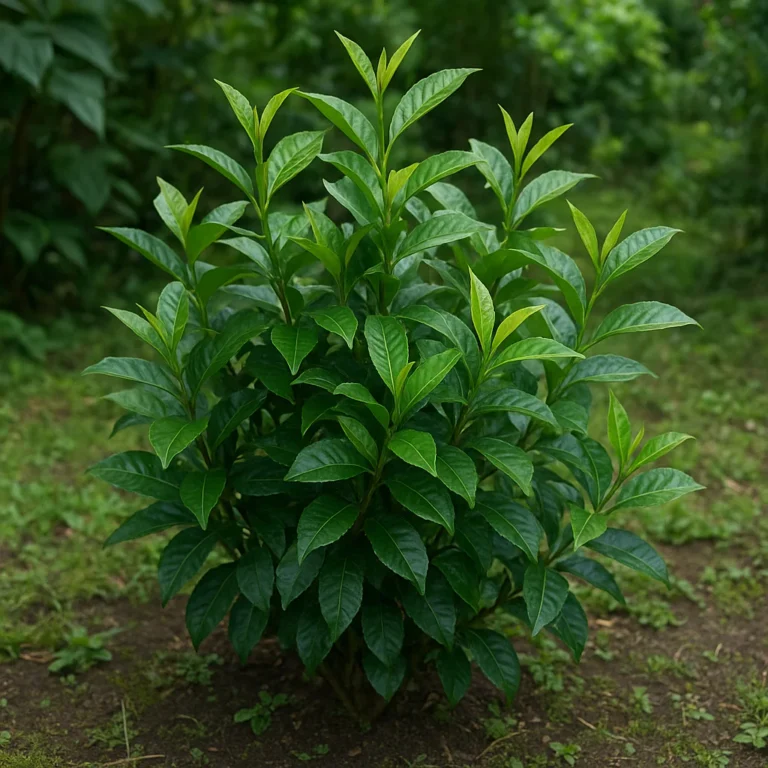
Tea plants (Camellia sinensis) are semi-tropical. They love warmth but can handle some cold.
USDA Hardiness Zones
- Zones 7–9: Ideal for outdoor growing. The plant will go dormant in winter but survive.
- Zone 6: Possible with heavy mulching and protection.
- Zone 10+: Watch out for heat stress. Provide afternoon shade.
Indoor vs. Outdoor
- Indors: Great for seedlings. Use a grow light for 12–14 hours a day. Keep humidity high.
- Outdoors: Only move outside when the temperature is consistently above 50°F (10°C). Tea plants hate frost.
Soil pH
Tea is an acid-loving plant. If your soil is alkaline (pH > 7), the plant will turn yellow (chlorosis) and struggle.
- Fix: Add sulfur, pine bark, or peat moss to lower the pH.
🍵 From Seed to Cup: How Seed-Grown Tea Differs in Flavor and Quality
So, you’ve waited 3 years. Your plant is finally big enough to harvest. What does it taste like?
The “Wild” Profile:
Seed-grown tea often has a more complex, unpredictable flavor profile.
- Astringency: Can be higher or lower than the parent.
- Aroma: Might have floral, fruity, or earthy notes not found in the mother plant.
- Body: Often feels “heavier” or more robust due to the taproot system.
The “Zairai” Experience:
In Japan, Zairai teas are prized for their teroir expression. Because the plants are genetically diverse, they adapt uniquely to the local soil and climate. This results in a tea that tastes uniquely of its place, rather than a standardized flavor.
The Trade-off:
You won’t get a consistent “Yabukita” flavor every year. But you might discover a new favorite flavor that no one else has. It’s the ultimate tea adventure.
🛠️ Essential Tools and Supplies for Successful Tea Seed Germination
You don’t need a fancy lab, but having the right tools makes a huge difference.
| Tool | Purpose | Recommended Brand/Type |
|---|---|---|
| Ziplock Bags | Stratification storage | Hefty or Glad (Freezer grade) |
| Vermiculite | Moisture retention medium | Miracle-Gro or generic horticultural grade |
| Peat Moss | Acidic soil base | Sphagnum Peat Moss (e.g., Espoma) |
| Perlite | Drainage | Miracle-Gro |
| Heat Mat | Bottom heat for germination | Vivosun or Mars Hydro |
| Grow Light | Indoor lighting | Spider Farmer or Mars Hydro |
| pH Meter | Soil testing | Apera Instruments or Bluelab |
| Pruning Shears | Harvesting leaves | Felco or Fiskars |
Where to Buy:
You can find most of these at your local garden center or online.
- Vermiculite & Peat Moss: Search on Amazon
- Grow Lights: Search on Amazon
- Pruning Shears: Felco Official Website
📊 Comparison Table: Seed Propagation vs. Clonal Propagation
Let’s summarize the differences one last time to help you decide.
| Feature | Seed Propagation | Clonal Propagation (Cutings) |
|---|---|---|
| Genetic Identity | Unique (50% Mom, 50% Dad) | Identical Clone (10% Mom) |
| Root System | Deep Taproot (Drought resistant) | Fibrous/Shallow (Needs water) |
| Time to Harvest | 3–5 Years | 1–2 Years |
| Flavor Consistency | Variable (Wild/Complex) | Consistent (Predictable) |
| Difficulty | High (Stratification needed) | Medium (Humidity control) |
| Cost | Low (Free seeds) | Medium (Hormones, equipment) |
| Best For | Breeders, Explorers, Resilience | Commercial, Flavor Replication |
💡 Expert Insights: 7 Common Mistakes to Avoid When Growing Tea from Seed
We’ve seen it all at Growing Teas™. Here are the top 7 mistakes that kill tea seeds:
- ❌ Using Dried Seeds: Tea seeds must be fresh. If they dried out, they are dead.
- ❌ Skipping Stratification: Planting in warm soil without a cold period = no sprout.
- ❌ Overwatering: Sogy soil leads to rot. Keep it moist, not wet.
- ❌ Planting Too Deep: 1 inch is enough. Too deep, and the seed runs out of energy.
- ❌ Ignoring pH: Alkaline soil will turn your leaves yellow and stunt growth.
- ❌ Expecting Clones: Don’t be disappointed if the tea tastes different. That’s the point!
- ❌ Giving Up Too Soon: Germination can take 3 months. Patience is key.
Final Thought: “Growing tea from seed is a test of character. If you can wait 3 years for a cup of tea, you truly understand the spirit of the tea plant.”
🏆 Conclusion

So, can tea plants be propagated from seed? The answer is a resounding yes, but with a caveat: you are growing a unique individual, not a clone.
If you are looking for a specific flavor profile like Yabukita or Darjeling, stick to cutings. But if you want to embark on a genetic adventure, build a resilient plant with a deep taproot, and experience the thrill of discovering a new flavor profile, then seed propagation is your path.
It requires patience, a bit of science (stratification!), and a willingness to embrace the unknown. But the reward—a cup of tea grown from a seed you harvested, nurtured, and watched grow—is unparalleled.
Our Recommendation:
Start with 5 to 10 seeds. Even if only 2 or 3 germinate, you’ll have a beautiful, unique tea plant. Treat them like the precious gems they are.
Ready to start your journey?
- Check out our guide on Green Tea Cultivation for more tips on caring for your new plant.
- Learn about Organic Farming Techniques to keep your tea chemical-free.
- Discover the Health Benefits of Tea to stay motivated!
🔗 Recommended Links
👉 Shop Essential Supplies:
- Horticultural Vermiculite: Search on Amazon | Search on Walmart
- Sphagnum Peat Moss: Search on Amazon | Search on Etsy
- Full Spectrum Grow Light: Search on Amazon | Search on Walmart
- Pruning Shears (Felco): Felco Official Website | Search on Amazon
Books & Resources:
- “The Tea Tree: A Guide to Growing and Using Camellia sinensis” (Available on Amazon)
- “Tea: A History of the Leaf” by William Ukers (Classic reference, available on Amazon)
❓ FAQ: Frequently Asked Questions About Propagating Tea Plants

How long does it take for tea seeds to germinate?
H3: How long does it take for tea seeds to germinate?
Germination times vary wildly. After stratification, you might see sprouts in 2 weeks, but it can take up to 3 months. Some seeds are just slower. Don’t throw them away too soon!
Read more about “🌱 12 Essential Tips for Growing Tea Seeds for Planting (2026)”
What is the best soil mix for starting tea seeds?
H3: What is the best soil mix for starting tea seeds?
Tea loves acidic, well-draining soil. A mix of 50% peat moss and 50% perlite or vermiculite is ideal. Avoid heavy garden soil, which can suffocate the roots.
Read more about “🌸 7 Tea Plant Pollination Methods to Skyrocket Seed Yields (2026)”
Should I soak tea seeds before planting them?
H3: Should I soak tea seeds before planting them?
Yes! Soaking for 24–36 hours helps identify viable seeds (they sink) and can speed up germination by softening the hard shell. Some growers even cycle the soaking and drying to crack the shell.
Read more about “💧 How Often to Water Tea Plants: 10 Golden Rules (2026)”
Can I grow tea plants indoors from seed?
H3: Can I grow tea plants indoors from seed?
Absolutely. In fact, starting indoors is often safer. Just ensure you have bright, indirect light or a grow light, and maintain high humidity. Move them outside only when the weather is consistently warm (above 50°F).
Read more about “🌱 Tea Plant Growth Stages & Timeline: From Seed to Cup (2026)”
Why are my tea seeds floating in water?
H4: Why are my tea seeds floating in water?
Floating seeds are usually empty or dead. They lack the density of a viable embryo. Discard them and keep the ones that sink.
How do I know if my tea seed is viable?
H4: How do I know if my tea seed is viable?
The float test is the first indicator. If it sinks, it’s likely viable. After stratification, look for a crack in the shell or a tiny root tip emerging. If it’s mushy or smells bad, it’s not viable.
Read more about “🌿 Tea Plant Sustainable Harvesting: The 7 Rules for Eternal Bushes (2026)”
📚 Reference Links
- University of Georgia Extension: Propagating Sweet Tea Olive (Osmanthus fragrans) – A detailed look at propagation methods for related wody plants.
- Japan Tea Association: Tea Plant Propagation in Japan – Insights into Zairai vs. Clonal methods.
- Tea Break Gardener: Growing Magnolia from Seed – A comparative study on seed propagation for wody ornamentals.
- Growing Teas™: How do I propagate tea plants? – Our internal guide on propagation techniques.
- Growing Teas™: Green Tea Cultivation – Tips for growing green tea varieties.
- Growing Teas™: Organic Farming Techniques – Sustainable practices for tea growers.