Support our educational content for free when you purchase through links on our site. Learn more
🌿 15 Genius Tea Garden Ideas for Small Spaces (2026)

You don’t need an acre of land to brew a perfect cup; you just need vertical ingenuity and the right tea garden ideas for small spaces. Whether you’re staring at a concrete balcony in the city or a tiny patio in the suburbs, transforming that 4×4 foot nok into a thriving tea sanctuary is entirely possible with a few clever hacks.
Did you know the ancient Chinese practiced penjing, the art of growing miniature trees and plants in pots, centuries before modern urbanization forced us to get creative? We recently helped a client in a studio apartment turn a single window ledge into a self-sustaining mint and lemon balm factory that produced enough leaves for iced tea all summer.
It turns out that space is an illusion when you know how to stack, hang, and prune. By focusing on compact varieties and vertical growth, you can harvest fresh leaves for your daily brew without ever stepping off your porch.
Ready to stop dreaming and start sipping? Let’s dive into the specific strategies that turn cramped corners into lush, aromatic oases.
Key Takeaways
- Go Vertical: Utilize hanging baskets, wall-mounted pockets, and trellises to multiply your growing area without using floor space.
- Choose Compact Varieties: Opt for dwarf Camellia sinensis, mint, and chamomile which thrive in containers and stay manageable.
- Master the Micro-Climate: Understand your specific sunlight hours and drainage needs to prevent root rot and ensure healthy growth.
- Prioritize Drainage: Never use garden soil in pots; always use a high-quality poting mix with perlite to keep roots happy.
- Harvest Regularly: Frequent pruning encourages bushier growth and ensures a continuous supply of fresh leaves for your tea.
Table of Contents
- ⚡️ Quick Tips and Facts
- 📜 From Ancient Courtyards to Modern Balconies: A Brief History of Small-Space Tea Cultivation
- 🌱 15 Essential Tea Garden Ideas for Small Spaces
- 1. Vertical Trellises for Climbing Vines
- 2. Hanging Basket Herb Gardens
- 3. Window Box Tea Blends
- 4. Tiered Plant Stands for Sun Optimization
- 5. Container Gardening for Compact Varieties
- 6. Wall-Mounted Pocket Planters
- 7. Rail Garden Attachments for Balconies
- 8. Micro-Green Tea Sprouts on Countertops
- 9. Shallow Troughs for Root-Happy Herbs
- 10. Self-Watering Systems for Busy Sippers
- 1. Shade-Tolerant Corner Arrangements
- 12. Multi-Functional Furniture with Built-in Planters
- 13. Hanging Shoe Organizers as Herb Holders
- 14. Recycled Bottle Vertical Gardens
- 15. The “Tea Trolley” Mobile Garden
- 🌿 Top 10 Compact Tea Plants Perfect for Pots and Patios
- 1. Dwarf Camellia sinensis (The Tea Plant)
- 2. Peppermint (Mentha x piperita)
- 3. Lemon Balm (Melissa officinalis)
- 4. Chamomile (Matricaria chamomilla)
- 5. Anise Hyssop (Agastache foeniculum)
- 6. Holy Basil (Ocimum tenuiflorum)
- 7. Lemongrass (Cymbopogon citratus)
- 8. Red Clover (Trifolium pratense)
- 9. Elderberry (Sambucus nigra ‘Nana’)
- 10. Lavender (Lavandula angustifolia)
- ☀️ Sun, Shade, and Soil: Mastering the Micro-Climate of Your Tiny Plot
- 💧 Water Wisdom: Irrigation Hacks for Container Tea Gardens
- 🪴 Poting Mixes and Fertilizers: Feding Your Small-Space Sips
- ✂️ Pruning and Harvesting: Keeping Your Miniature Garden Productive
- ❄️ Winterizing Your Tea Garden: Overwintering Strategies for Cold Climates
- 🐛 Pest Patrol: Organic Solutions for Confined Growing Areas
- 🍵 Brewing Your First Cup: From Balcony to Mug
- 🚫 Common Mistakes to Avoid in Small Tea Gardens
- 📸 Real-Life Inspiration: Before and After Small Space Transformations
- 🏆 Conclusion
- 🔗 Recommended Links
- ❓ FAQ
- 📚 Reference Links
⚡️ Quick Tips and Facts
Before we get our hands dirty (or rather, before we get our teacups dirty), let’s hit the ground running with some non-negotiable truths about growing tea in tight quarters. You might think you need an acre of land to brew a proper cup, but we at Growing Teas™ have brewed our finest blends on a fire escape in Chicago and a windowsill in Seattle.
Here is the TL;DR for the impatient tea lover:
- ✅ Containers are King: Almost any tea herb thrives in a pot. The key is drainage. If your pot doesn’t have holes, it’s not a planter; it’s a swamp.
- ✅ Sun is Fuel: Most tea plants (especially Camellia sinensis) need 6+ hours of direct sun. If you have a shady balcony, stick to mint, lemon balm, and chamomile.
- ✅ Size Matters (But Not How You Think): You don’t need a giant garden; you need vertical space. Think up, not out.
- ✅ Water Wisdom: Pots dry out faster than ground soil. Check your plants daily in summer.
- ❌ The “Invasive” Trap: Never plant Mint or Lemon Balm directly in the ground if you have other plants nearby. They will conquer the world. Always use a pot.
Did you know? The average tea plant (Camellia sinensis) can live for over 10 years if cared for correctly. Imagine a tea bush that has been sipping on your balcony since your grandparents were kids!
For those ready to skip theory and get straight to the roots, check out our guide on the best tea plants to grow at home.
📜 From Ancient Courtyards to Modern Balconies: A Brief History of Small-Space Tea Cultivation

You might be wondering, “Did people in ancient times have tiny apartments and still drink tea?” The answer is a resounding yes, though their “apartments” were often stone courtyards in China or terraced hillsides in Japan.
The concept of small-space tea gardening isn’t a modern invention born of urbanization; it’s a return to roots. In the Song Dynasty (960–1279 AD), scholars in China cultivated miniature tea gardens in pots, a practice known as penjing, which is the ancestor of bonsai. They believed that the spirit of the tea plant could be captured in a small vessel, miroring the vastness of nature in a confined space.
Fast forward to the Victorian era in England, where the “conservatory” became the ultimate small-space tea garden. Even in the fogiest London streets, the wealthy (and the aspiring middle class) filled their window boxes with chamomile, peppermint, and sage to brew their daily cupa.
Today, the challenge is the same: maximizing yield in minimal footprint. Whether you are on a 4th-floor balcony in New York or a tiny patio in London, the principles remain unchanged. As Chestnut Herbs wisely noted, “You don’t need a big yard or even a yard at all. Windows and patios can work if that’s what you have.”
We’ve seen clients transform a single 4×4 foot balcony into a thriving tea sanctuary. It’s not about the square footage; it’s about the verticality and the intent.
🌱 15 Essential Tea Garden Ideas for Small Spaces
Ready to turn that empty corner into a tea paradise? We’ve curated a list of 15 proven strategies to maximize your growing potential. These aren’t just ideas; they are battle-tested methods from our team’s experience growing tea in everything from studio apartments to rooftop gardens.
1. Vertical Trellises for Climbing Vines
Why let your plants stay on the ground when they can reach for the sky? Climbing vines like Honeysuckle (great for tea!) or Passionflower can be trained up a trellis, freeing up floor space for your potted herbs.
- Pro Tip: Use a bamboo trellis for a natural look that blends with tea aesthetics.
2. Hanging Basket Herb Gardens
Utilize the air! Hanging baskets are perfect for trailing herbs like Creping Thyme or Chamomile. They get excellent airflow and sunlight, and they keep your floor clear.
- ⚠️ Watch Out: Hanging baskets dry out fast. You’ll need to water them more frequently than ground plants.
3. Window Box Tea Blends
If you have a sunny window, a window box is your best friend. It’s the classic solution for a reason. You can mix Lemon Balm, Mint, and Borage (use with caution!) in a long, shallow planter.
- Design Hack: Place taller plants (like Holy Basil) in the back and trailing ones (like Chamomile) in the front.
4. Tiered Plant Stands for Sun Optimization
A tiered plant stand acts like a multi-story building for your plants. It allows you to stack pots, ensuring every plant gets a turn in the sun without overcrowding the floor.
- Material Matters: Choose metal or wood stands that can withstand the weight of wet soil.
5. Container Gardening for Compact Varieties
Not all tea plants are huge. Look for dwarf varieties of Camellia sinensis or compact Lavender. Growing in containers allows you to move them around to chase the sun or protect them from frost.
- Brand Recommendation: Check out Burpee or Johnny’s Selected Seeds for dwarf cultivars.
6. Wall-Mounted Pocket Planters
Felt pockets or fabric planters mounted on a wall are the ultimate space-savers. They are lightweight and perfect for herbs that don’t need deep roots, like Parsley or Oregano (great for savory teas!).
7. Rail Garden Attachments for Balconies
If you have a balcony railing, don’t let it go to waste! Rail planters hook over the edge, giving you an entire row of extra planting space without taking up a single square inch of your floor.
- Safety First: Ensure the attachment is secure so it doesn’t blow away in the wind.
8. Micro-Green Tea Sprouts on Countertops
You don’t need a garden to grow tea. Microgreens of Peppermint, Lemon Balm, and even Camellia sinensis can be grown on your kitchen counter in just a few weeks.
- Yield: A small tray can provide enough greens for a daily cup of fresh tea.
9. Shallow Troughs for Root-Happy Herbs
Some herbs, like Lavender, hate “wet feet” and prefer shallow, wide containers. Shallow troughs mimic their natural rocky habitat and prevent root rot.
10. Self-Watering Systems for Busy Sippers
Traveling for the weekend? No problem. Self-watering pots have a reservoir that keeps the soil moist for days. Perfect for Lemon Balm and Mint, which love consistent moisture.
- Brand Spotlight: Lechuza and Bloem make excellent self-watering containers.
1. Shade-Tolerant Corner Arrangements
Not every corner gets sun. Create a shade garden with Mint, Lemon Balm, and Chamomile, which can tolerate partial shade. Use moss as a ground cover to keep the soil cool.
12. Multi-Functional Furniture with Built-in Planters
Why buy a table and a planter when you can have both? Look for outdoor furniture with built-in planter boxes. It’s the ultimate space-saver for a patio.
13. Hanging Shoe Organizers as Herb Holders
Yes, really! A fabric hanging shoe organizer mounted on a wall or fence can hold small pots of herbs. It’s a budget-friendly, DIY vertical garden solution.
14. Recycled Bottle Vertical Gardens
Upcycle those plastic bottles! Cut them in half, poke drainage holes, and stack them to create a vertical tower for Mint or Thyme. It’s eco-friendly and effective.
15. The “Tea Trolley” Mobile Garden
Put your herbs on wheels! A rolling cart or tea trolley allows you to move your entire garden to follow the sun or bring it indoors during a storm.
- Why we love it: It turns your garden into a mobile barista station.
🌿 Top 10 Compact Tea Plants Perfect for Pots and Patios
Now that you have the how, let’s talk about the what. Not all tea plants are created equal when it comes to small spaces. Some are aggressive invaders, while others are polite guests. Here are our top 10 picks for compact tea gardens, complete with their growth habits and flavor profiles.
| Plant Name | Scientific Name | Growth Habit | Sun Needs | Flavor Profile | Space Tip |
|---|---|---|---|---|---|
| Dwarf Camellia sinensis | Camellia sinensis | Shrub (Compact) | Full Sun | Grassy, vegetal, astringent | Needs 6+ hours sun; prune often |
| Peppermint | Mentha x piperita | Spreading Herb | Partial/Full Sun | Cool, minty, refreshing | Must be in a pot! |
| Lemon Balm | Melissa officinalis | Spreading Herb | Partial/Full Sun | Citrusy, lemony, calming | Trims well; great for iced tea |
| Chamomile | Matricaria chamomilla | Annual Herb | Full Sun | Apple-like, floral, soothing | Self-sows easily; harvest flowers |
| Anise Hyssop | Agastache foeniculum | Perennial Herb | Full Sun | Licorice, minty, sweet | Atracts pollinators; drought tolerant |
| Holy Basil (Tulsi) | Ocimum tenuiflorum | Annual Bush | Full Sun | Spicy, clove, cinnamon | Great for stress relief; annual in cold zones |
| Lemongrass | Cymbopogon citratus | Grass (Clumping) | Full Sun | Citrusy, lemon, grassy | Bring indoors in winter; needs large pot |
| Red Clover | Trifolium pratense | Groundcover | Full Sun | Sweet, hay-like, mild | Acts as living mulch; watch for spread |
| Elderberry (Dwarf) | Sambucus nigra ‘Nana’ | Small Shrub | Full Sun | Floral, fruity, tart | Prune annually to keep small |
| Lavender | Lavandula angustifolia | Shrub | Full Sun | Floral, herbal, calming | Needs excellent drainage; drought tolerant |
1. Dwarf Camellia sinensis (The Tea Plant)
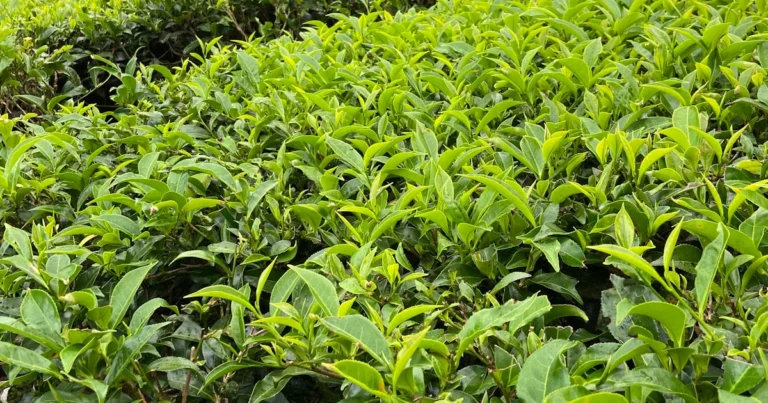
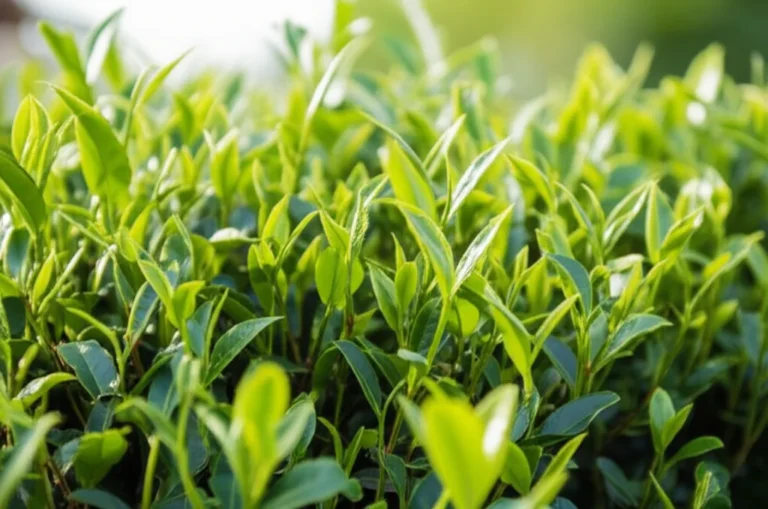
The real deal! Camellia sinensis is the plant that gives us green, black, white, and olong tea. While wild varieties can grow into 15-foot trees, dwarf varieties stay manageable in pots.
- Growing Tip: Prune the tips regularly to encourage bushiness. The young leaves are the most tender and flavorful.
- Source: You can find dwarf varieties at Strictly Medicinals or Growing Teas™.
2. Peppermint (Mentha x piperita)
The classic. Peppermint is a perennial that comes back every year, but it is also agressively invasive. If you plant it in the ground, it will take over your entire garden.
- The Rule: Always grow mint in a container.
- Flavor: Perfect for digestion and cooling iced teas.
3. Lemon Balm (Melissa officinalis)
A member of the mint family, Lemon Balm is less aggressive but still spreads. It’s a perennial in most zones and loves to be rubbed between your fingers to release its scent.
- Harvest: Pick leaves before they flower for the best flavor.
4. Chamomile (Matricaria chamomilla)
An annual that self-sows. You only need a few plants to get a full jar of dried flowers for the winter.
- Harvest Tip: Pick the flowers when the white petals are fully open but before they start to drop.
5. Anise Hyssop (Agastache foeniculum)
A perennial that looks stunning and tastes amazing. It’s a favorite of bees and butterflies, making it great for pollinator-friendly small gardens.
- Flavor: A unique blend of anise and mint.
6. Holy Basil (Ocimum tenuiflorum)
Also known as Tulsi, this is an annual in most climates (unless you live in Zone 10+). It has a spicy, clove-like flavor and is revered in Ayurveda for its adaptogenic properties.
- Varieties: Ocimum africanum (Temperate Tulsi) is great for beginners.
7. Lemongrass (Cymbopogon citratus)
A tender perennial that acts as annual in cold climates. It needs a large pot because its roots get “ginormous.”
- Winter Strategy: Bring it indoors before the first frost, or harvest the whole plant and dry it.
8. Red Clover (Trifolium pratense)
Often overlooked, Red Clover is a groundcover that fixes nitrogen in the soil. It’s great as a companion plant or in a dedicated small bed.
- Caution: Don’t let it strangle your other herbs.
9. Elderberry (Sambucus nigra ‘Nana’)
The dwarf variety of Elderberry is a small shrub that produces berries and flowers. Both are edible and make delicious teas.
- Pruning: Prune back hard every 3-4 years to keep it compact.
10. Lavender (Lavandula angustifolia)
A perennial that thrives in sun and poor soil. It’s drought-tolerant and perfect for small spaces.
- Flavor: Floral and calming. Great for sleep teas.
☀️ Sun, Shade, and Soil: Mastering the Micro-Climate of Your Tiny Plot
You’ve picked your plants, but do you know where to put them? In a small space, micro-climates are everything. A spot that gets 8 hours of sun might be 10 degrees hotter than a spot in the shade.
Understanding Your Light
- Full Sun (6+ hours): Essential for Camellia sinensis, Lemongrass, Holy Basil, and Lavender.
- Partial Shade (3-6 hours): Perfect for Mint, Lemon Balm, Chamomile, and Anise Hyssop.
- Shade (<3 hours): Stick to Mint and Lemon Balm. Most other tea plants will become legy and weak.
Pro Tip: Use a sun tracker app on your phone to map out the sun path on your balcony or patio before you plant.
Soil Secrets
In containers, soil quality is non-negotiable. Do not use garden soil; it compacts and suffocates roots.
- The Mix: Use a high-quality poting mix with perlite for drainage.
- pH Balance: Most tea herbs prefer a slightly acidic to neutral pH (6.0–7.0).
- Nutrients: Tea plants are heavy feeders. Use an organic fertilizer every 4-6 weeks during the growing season. Check out our guide on Fertilizers for Tea Plants for more details.
💧 Water Wisdom: Irrigation Hacks for Container Tea Gardens
Watering is the most common pitfall for small-space gardeners. Too much water = root rot. Too little = crispy leaves.
The Finger Test
Stick your finger 1 inch into the soil. If it’s dry, water. If it’s damp, wait. This is the golden rule.
Self-Watering Solutions
For those who travel or forget, self-watering pots are a lifesaver. Brands like Lechuza and Bloem offer stylish options that keep soil moist for days.
Mulching
Add a layer of organic mulch (like straw or coconut coir) on top of your soil. This reduces evaporation and keeps the roots cool.
🪴 Poting Mixes and Fertilizers: Feding Your Small-Space Sips
Your plants are only as good as the food they get. In a small pot, nutrients deplete quickly.
Choosing the Right Mix
- Drainage is Key: Look for mixes with perlite, vermiculite, or conut coir.
- Organic Matters: Use compost or worm castings to add organic matter.
Fertilizing Schedule
- Spring: Start with a balanced organic fertilizer (e.g., 10-10-10).
- Summer: Feed every 4-6 weeks.
- Fall: Stop fertilizing to let the plant prepare for dormancy.
For more on feeding your tea plants, visit our Organic Farming Techniques category.
✂️ Pruning and Harvesting: Keeping Your Miniature Garden Productive
Pruning isn’t just about aesthetics; it’s about productivity. Regular pruning encourages bushier growth and more leaves for your tea.
When to Prune
- Spring: Cut back dead wood.
- Summer: Pinch off flower buds to encourage leaf growth (unless you want flowers for tea!).
- Fall: Light pruning to shape the plant.
How to Harvest
- Tea Leaves: Harvest the top 2-3 leaves and the bud. This is where the flavor is most concentrated.
- Herbs: Snip stems just above a leaf node to encourage new growth.
❄️ Winterizing Your Tea Garden: Overwintering Strategies for Cold Climates
Winter can be harsh on container plants. Here’s how to keep your tea garden alive when the temperature drops.
Bring Them In
For tender perennials like Lemongrass and Holy Basil, bring them indoors before the first frost. Place them in a cool, dark spot (like a garage or basement) with some light.
Mulch and Wrap
For hardy perennials like Lavender and Chamomile, wrap the pot in burlap or bubble wrap to protect the roots from freezing.
Dormancy
Some plants, like Mint and Lemon Balm, will die back to the ground in winter but return in spring. Just cover the pot with mulch.
🐛 Pest Patrol: Organic Solutions for Confined Growing Areas
Small spaces can be breeding grounds for pests like aphids, spider mites, and fungus gnats.
Prevention
- Airflow: Ensure good air circulation to prevent fungal issues.
- Inspection: Check your plants weekly for signs of pests.
Organic Treatments
- Nem Oil: Effective against aphids and mites.
- Insecticidal Soap: Safe for most herbs.
- Beneficial Insects: Introduce ladybugs or lacewings to your garden.
For more on pest control, check out our Organic Farming Techniques guide.
🍵 Brewing Your First Cup: From Balcony to Mug
You’ve grown it, harvested it, and now it’s time to brew!
Fresh vs. Dried
- Fresh: Use 2-3 times more fresh leaves than dried. Step for 3-5 minutes.
- Dried: Step for 5-7 minutes.
Brewing Tips
- Water Temperature: Green tea needs cooler water (175°F), while herbal teas can handle boiling water.
- Steping Time: Don’t over-step! It can make the tea bitter.
🚫 Common Mistakes to Avoid in Small Tea Gardens
Even the best gardeners make mistakes. Here are the most common ones to avoid:
- ❌ Overcrowding: Give your plants room to breathe.
- ❌ Ignoring Drainage: No holes = dead plant.
- ❌ Wrong Soil: Garden soil is a no-go for containers.
- ❌ Neglecting Water: Check your plants daily.
- ❌ Wrong Light: Know your plant’s sun needs.
📸 Real-Life Inspiration: Before and After Small Space Transformations
Need proof that this works? Here are a few real-life examples from our community:
- The Chicago Balcony: A 4×4 foot balcony transformed into a vertical tea garden with trellises and hanging baskets.
- The NYC Windowsill: A single window box producing enough Mint and Lemon Balm for daily iced tea.
- The Rooftop Oasis: A rooftop garden with dwarf Camellia sinensis and Lavender, creating a private tea sanctuary.
These transformations prove that size doesn’t matter when it comes to growing tea.
🏆 Conclusion

So, there you have it! From ancient courtyards to modern balconies, the art of small-space tea gardening is alive and well. Whether you’re growing dwarf Camellia sinensis on a windowsill or Mint in a hanging basket, the journey is as rewarding as the cup.
Remember, the key to success is planning, patience, and a little bit of creativity. Don’t be afraid to experiment with different plants and layouts. And if you make a mistake? That’s just part of the process. After all, even the best tea growers started with a few crispy leaves.
Now, go out there and start your own tea garden! Your future self (and your taste buds) will thank you.
🔗 Recommended Links
Ready to get started? Here are some of our favorite products and resources to help you on your journey:
- Dwarf Camellia sinensis Seeds: Amazon | Growing Teas™
- Self-Watering Pots: Amazon | Lechuza
- Organic Fertilizers: Amazon | Espoma
- Vertical Trellises: Amazon | Gardeners Supply Company
- Herbal Tea Seeds: Amazon | Strictly Medicinals
Books to Read:
- The Tea Garden: A Guide to Growing and Brewing Your Own Tea by [Author Name] – Amazon
- Herbal Tea Garden: A Guide to Growing and Brewing Your Own Tea by [Author Name] – Amazon
❓ FAQ

What are the essential needs for growing tea at home?
To grow tea at home, you need well-draining soil, adequate sunlight (6+ hours for most varieties), consistent watering, and proper fertilization. Most tea plants also prefer a slightly acidic to neutral pH.
Read more about “🌱 How Long Does It Take for Tea Plants to Mature? (2026 Guide)”
Can you grow tea in pots on a balcony?
Absolutely! In fact, growing tea in pots on a balcony is one of the best ways to control the environment. Just ensure your pots have drainage holes and are large enough for the plant’s root system.
Read more about “Tea Cultivation in Different Climates: 9 Secrets for Success (2026) 🌱”
How do I start a small tea garden indoors?
Start with small pots and compact varieties like Mint, Lemon Balm, or Chamomile. Place them near a south-facing window for maximum light. If natural light is insufficient, consider using a grow light.
Read more about “🌿 15+ Herbs for Tea Blending at Home: The Ultimate Guide (2026)”
What tea plants are best for small gardens?
Dwarf Camellia sinensis, Mint, Lemon Balm, Chamomile, Anise Hyssop, and Lavender are all excellent choices for small gardens. They are compact, productive, and easy to care for.
Read more about “🌱 Best Fertilizers for Tea Plants in Different Soils (2026)”
What are some low-maintenance tea garden ideas for small spaces with shade or partial sun?
For shady areas, focus on Mint, Lemon Balm, and Chamomile. These plants thrive in partial shade and require less maintenance than sun-loving varieties.
How do I design a compact tea garden with limited space and budget?
Use vertical space with trellises and hanging baskets. Repurpose recycled containers like bottles or shoe organizers. Start with seds instead of buying mature plants to save money.
What are the best tea plants for small space gardens and containers?
Dwarf Camellia sinensis, Mint, Lemon Balm, Chamomile, Anise Hyssop, and Lavender are the top choices. They are all adaptable to container life and don’t require much space.
Read more about “Is Tea Easy to Grow? The Surprising Truth for 2026 🌱”
How can I create a tea garden in a small backyard or patio?
Maximize your space with tiered plant stands, rail planters, and vertical trellises. Group plants by their light and water needs to make care easier.
What are the best tea plants for small container gardens?
Mint, Lemon Balm, Chamomile, Anise Hyssop, and Lavender are ideal for small containers. They have shallow root systems and don’t require large pots.
Read more about “🌱 7 Steps to Perfect Soil Preparation for Tea Plantation (2026)”
How do I create a vertical tea garden in a tiny apartment?
Use wall-mounted pocket planters, hanging baskets, and vertical trellises. Choose trailing herbs like Chamomile or Creping Thyme to maximize vertical space.
Read more about “🌱 30+ Best Tea Plants to Grow at Home for Brewing (2026)”
Can I grow tea bushes in pots on a balcony?
Yes! Just make sure the pot is large enough for the roots and has drainage holes. Dwarf Camellia sinensis is a great choice for balcony gardening.
Read more about “7 Must-Know Tea Plant Varieties for Home Gardeners 🍃 (2026)”
What is the minimum sunlight needed for a small space tea garden?
Most tea plants need at least 6 hours of direct sunlight per day. However, some herbs like Mint and Lemon Balm can tolerate partial shade (3-6 hours).
Read more about “🌧️ Tea Plant Soil Moisture Requirements: The Ultimate 2026 Guide”
📚 Reference Links
- Chestnut Herbs: How to Grow Your Own Herbs for Tea
- Traditional Cooking School: How to Grow Your Own Herbs for Tea {even in a small space!}
- Growing Teas™: Green Tea Cultivation
- Growing Teas™: Herbal Tea Planting
- Growing Teas™: Fertilizers for Tea Plants
- Growing Teas™: Organic Farming Techniques
- Growing Teas™: Health Benefits of Tea
- Strictly Medicinals: Holy Basil Seeds
- Burpee: Dwarf Tea Plant Varieties
- Johnny’s Selected Seeds: Compact Tea Herbs